
Why Clean Gutters Matter More Than You Think: Preventing Foundation Cracks, Basement Floods, and Siding Rot
As a contractor with over 15 years in the home improvement game, I've seen my fair share of gutter disasters. Picture this: a beautiful suburban home with pristine landscaping, but underneath, the foundation is cracking like an eggshell because the gutters haven't been touched in years. It's not just an eyesore—it's a ticking time bomb for your wallet. Gutters might seem like a simple part of your roofline, but they're your home's first line of defense against water damage. In this post, we'll dive into why clean gutters matter more than you think, connecting overflowing gutters to major problems like foundation cracks, basement water intrusion, and siding rot. We'll also cover why seasonal cleaning is non-negotiable and share pro tips to keep your system in top shape.
The Hidden Dangers of Overflowing Gutters
Gutters are designed to collect rainwater from your roof and direct it away from your home through downspouts. When they're clogged with leaves, debris, twigs, and even bird nests, water can't flow properly. Instead, it overflows, spilling over the edges and cascading down your home's exterior like a waterfall during every rainstorm.
This isn't just messy—it's destructive. Water that overflows seeks the path of least resistance, often soaking into the soil around your foundation or splashing against walls and siding. Over time, this constant moisture exposure leads to erosion, wood decay, and structural weakening. According to the Insurance Information Institute, water damage is one of the most common and costly home insurance claims, averaging over $10,000 per incident. And guess what? Clogged gutters are often the culprit.
Homeowners often overlook gutters because they're out of sight and out of mind, especially on single-story homes. But pros like us know: ignoring them is like leaving your front door unlocked in a storm. The overflow starts small—a puddle here, a wet spot there—but it snowballs into big problems.
How Overflowing Gutters Cause Foundation Cracks
Your home's foundation is the bedrock of its stability, but it's surprisingly vulnerable to water. When gutters overflow, the excess water pools around the base of your house, saturating the soil. This soil expands when wet (especially clay-heavy soils common in many regions) and contracts when dry, creating uneven pressure on your foundation walls or slab.
Over months or years, this cycle leads to settling, shifting, and—yep—cracks. I've repaired countless foundations where hairline fractures started from something as simple as neglected gutters. These cracks might seem minor at first, but they allow more water to seep in, worsening the issue. In severe cases, you could see bowing walls, uneven floors, or even doors that stick because the frame has warped.
The cost? Foundation repairs can run from $2,000 for minor fixes to $20,000 or more for extensive work like underpinning. And it's not just the structure—cracks invite pests like termites and mold growth, adding health hazards to the mix. A quick visual check: If you notice cracks wider than 1/8 inch or water stains near your baseboards, overflowing gutters could be to blame. The fix starts with cleaning, but if damage is done, call a structural engineer ASAP.
Basement Water Intrusion: A Flood Waiting to Happen
Nothing strikes fear into a homeowner's heart like a soggy basement. Overflowing gutters are a prime suspect here. When water dumps directly next to your foundation instead of being diverted 5-10 feet away (as downspouts should do), it infiltrates through sump pumps, window wells, or even cracks in the walls.
In basements, this leads to standing water, high humidity, and mold proliferation. Mold isn't just gross—it's a respiratory hazard, especially for kids or those with allergies. I've pulled families out of homes where black mold took over because gutters backed up during a heavy rain season, turning a rec room into a biohazard zone.
Preventing this is straightforward: Ensure your downspouts extend far from the house with splash blocks or underground lines. But first, clean those gutters. Signs of trouble include musty smells, efflorescence (white powdery deposits on walls), or water marks on floors. If your basement floods seasonally, inspect your gutters immediately—it's often the missing link.
Siding Rot: When Water Attacks Your Exterior
Your home's siding is like its skin, protecting against the elements. But constant splashing from overflowing gutters soaks it relentlessly, leading to rot, peeling paint, and insect infestations. Wood siding swells and warps; vinyl can crack from freeze-thaw cycles; even fiber cement isn't immune if water traps behind it.
Rot starts subtly—soft spots or discoloration—but progresses to holes and structural failure. In humid climates, this accelerates, and I've seen siding sections literally fall off because gutters overflowed unchecked. Repairing rotted siding? Expect $500-$5,000 depending on the extent, plus potential underlying damage to sheathing or insulation.
Pro tip: After cleaning gutters, inspect your siding for soft areas by pressing with a screwdriver. If it sinks in, rot has set in. Regular maintenance keeps water flowing away, preserving your curb appeal and equity.
Why Seasonal Gutter Cleaning Is Essential
Gutters don't clog themselves overnight—it's a buildup over time. Fall leaves are the biggest offenders in many areas, but spring pollen, summer storms with debris, and winter ice dams all contribute. Cleaning seasonally—at least twice a year, or four times in tree-heavy or rainy regions—stops problems before they start.
Why seasonal? Fall clears leaf buildup to prevent winter overflows that freeze and expand, cracking gutters. Spring removes winter gunk to handle heavy rains. In arid spots, even dust and sand accumulate. Skipping this? You're rolling the dice on the damages we discussed. Budget $150-$300 for pro cleaning, or DIY to save cash—but safety first.
Benefits extend beyond prevention: Clean gutters improve roof longevity by reducing ice dams and extend your home's overall life. It's low-effort insurance against high-cost repairs.
Pro Tips for Safe Gutter Cleaning
Ready to tackle it yourself? As contractors, we recommend caution—falls from ladders cause thousands of injuries yearly. Here's a step-by-step guide:
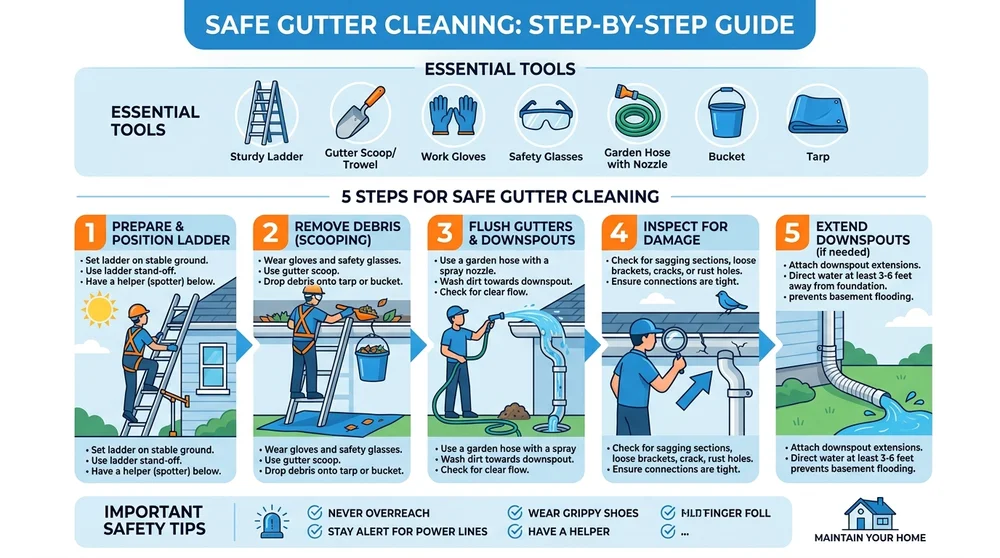
Gather Tools: Ladder, gloves, gutter scoop or trowel, garden hose, leaf blower (optional), and a sturdy bucket or debris bag.
Safety First: Choose a stable ladder on level ground. Work with a spotter. Avoid cleaning in wind or rain.
Start from the Bottom: Work from the downspout end toward the far side to flush debris.
Scoop and Flush: Remove large debris by hand, then hose down to clear finer particles. Check downspouts with a plumber's snake if clogged.
Inspect as You Go: Look for loose brackets, rust, or sagging sections. Tighten or note for repair.
Extend Downspouts: Ensure they direct water away—add extensions if needed.
For multi-story homes or if you're uncomfortable, hire pros via platforms like ContractorLink.pro. We use professional-grade tools and safety gear for thorough, hazard-free service.
Install gutter guards? They help but aren't foolproof—still clean annually. And consider seamless gutters for fewer seams where clogs form.
Final Thoughts from the Field
Gutters might not be glamorous, but they're crucial for protecting your biggest investment. By connecting the dots from overflow to foundation cracks, basement woes, and siding rot, I hope you see why seasonal cleaning isn't optional—it's essential home maintenance. Stay proactive, and your home will thank you with fewer headaches and repair bills. If you're spotting signs of trouble, reach out to a licensed contractor today.
(Word count: approximately 1180)