What That Humming Sound From Your Electrical Panel Means: Normal or Nightmare?
Ever heard a low hum coming from your electrical panel and wondered if it's something to worry about? As contractors who've installed and repaired countless electrical systems, we've fielded this question more times than we can count. That mysterious buzz can range from a benign background noise to a red flag for electrical hazards. In this post, we'll break it down so you can tell the difference between what's normal and what's not, empowering you to make smart decisions about your home's safety.
Understanding Your Electrical Panel Basics
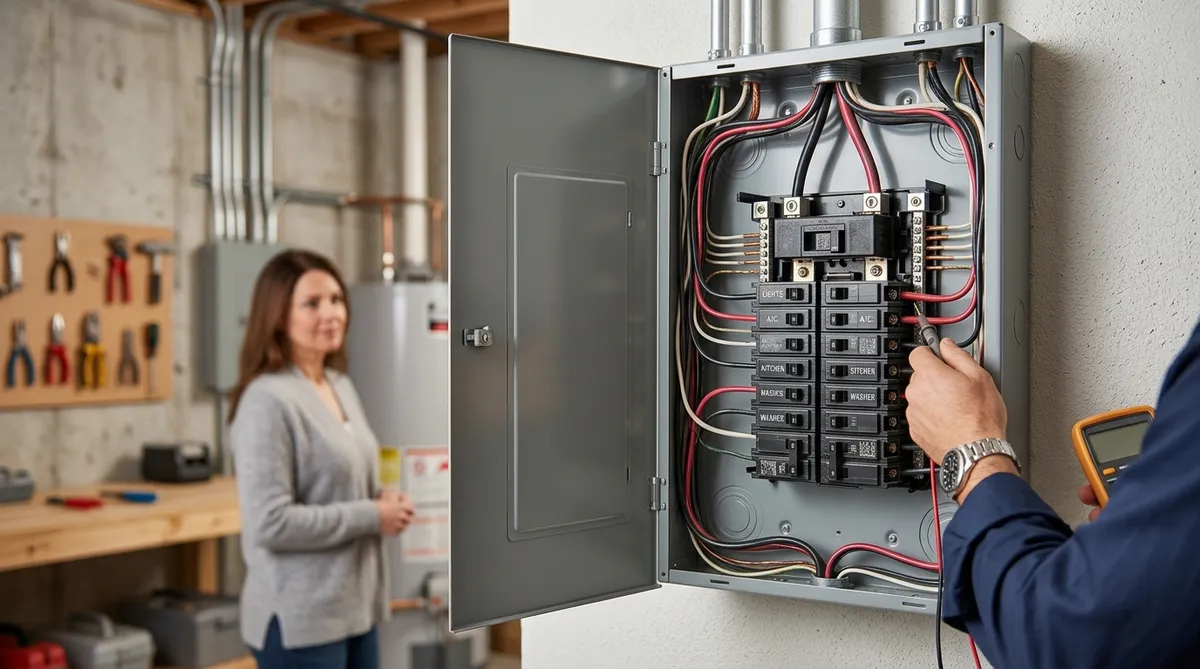
Your electrical panel, often called the breaker box, is the heart of your home's electrical system. It's where power from the utility company enters and gets distributed to your circuits via breakers or fuses. Modern panels use circuit breakers that trip under overload to prevent fires, while older homes might still have fuse boxes.
A faint humming or buzzing sound isn't uncommon in electrical panels. It can stem from the transformers, relays, or even the vibration of components as electricity flows through them. Think of it like the hum of a refrigerator—steady and unassuming. But if the noise is loud, irregular, or accompanied by other symptoms, it might indicate issues like loose connections, overloaded circuits, or failing components.
As pros, we always advise homeowners to approach the panel with caution. Never tamper with it yourself unless you're qualified; electricity doesn't forgive mistakes. Instead, observe from a safe distance and note details like the sound's pitch, volume, and timing.
Normal Humming: When It's Just Business as Usual
Not all hums are harbingers of doom. In many cases, that soft drone is simply the sound of your electrical system doing its job efficiently. Here's how to recognize benign noise:
Transformer Hum: If your home has a whole-house transformer or certain appliances draw heavy power (like an AC unit), you might hear a low-frequency hum from electromagnetic vibrations. This is normal and often more noticeable in quiet rooms near the panel.
Breaker Chatter: Circuit breakers can make a subtle buzzing when they're engaged, especially under load. For instance, when your HVAC kicks on, the increased current can cause a mild vibration. If it's consistent and doesn't change with usage patterns, it's likely fine.
Environmental Factors: Sometimes, the 'hum' isn't even electrical. Loose panels, nearby appliances, or even wind against the house can mimic or amplify sounds. We've seen cases where a washing machine's spin cycle resonated through the wall, fooling homeowners into thinking the panel was the culprit.
To check if it's normal, listen during different times of day. Does the hum intensify when high-power devices like dryers or ovens are running? If so, and there's no flickering lights or warmth from the panel, it's probably just operational noise. A good rule of thumb: If the sound is under 50 decibels (about as loud as a quiet conversation) and steady, breathe easy.
Abnormal Humming: Signs of a Dangerous Connection
On the flip side, a problematic hum can signal loose wiring, arcing, or other faults that risk fire or shock. Distinguishing these requires attention to details beyond just the noise. Here's what to watch for:
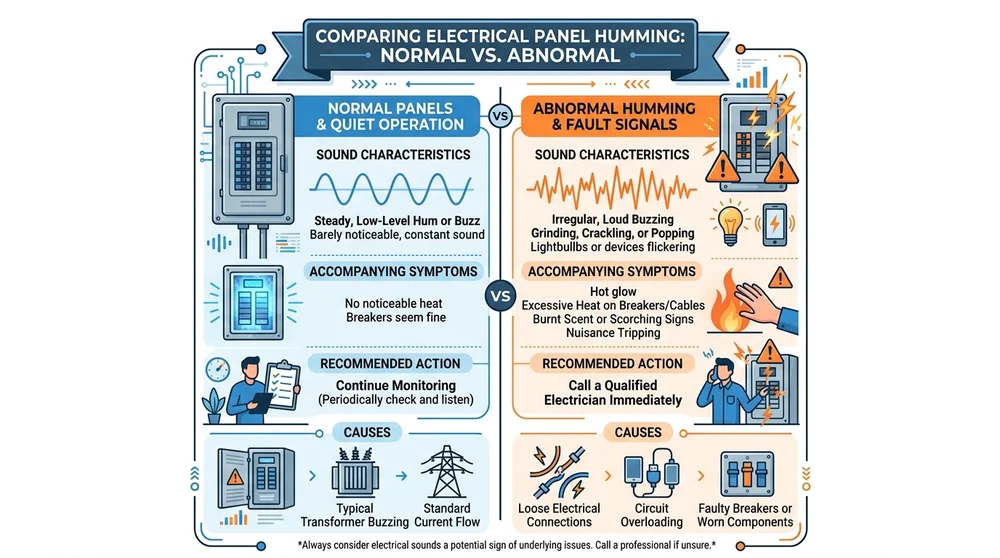
Loud or Irregular Buzzing: A sharp, crackling, or sizzling sound often points to arcing—where electricity jumps between loose connections. This isn't a hum; it's more like electrical popcorn. If it's intermittent and worsens over time, it could mean deteriorating insulation or corrosion.
Accompanying Symptoms: Does the hum come with hot spots on the panel (feel the door—don't open it), burning smells, or tripped breakers? Flickering lights throughout the house or appliances that won't start properly are also clues. In our experience, these combos scream 'call an electrician now.'
Sudden Onset: If the noise starts abruptly after a power surge, storm, or recent renovations, it might indicate damaged components. Older panels (pre-1960s) are prone to this, as their wiring can degrade, leading to poor connections that vibrate and hum loudly.
One homeowner we worked with ignored a growing buzz for months, only to discover a loose neutral wire causing uneven power distribution. It could have sparked a fire. The key? Trust your instincts—if it sounds 'off' or feels wrong, it probably is.
Common Causes of Humming in Electrical Panels
Diving deeper, let's explore the usual suspects behind that panel noise. Understanding these can help you pinpoint issues without playing detective yourself.
Loose or Corroded Connections
Over time, vibrations from daily use or thermal expansion can loosen screws and terminals inside the panel. This creates resistance, generating heat and a humming vibration as current struggles to flow. Corrosion from humidity or poor ventilation exacerbates it, especially in basements or garages.
Pro Tip: If your panel is in a damp area, consider adding a dehumidifier nearby. But for fixes, only licensed pros should tighten connections—improper handling can cause shorts.
Overloaded Circuits
Modern homes pack in more gadgets than ever, from smart fridges to EV chargers. When circuits exceed their amp rating, breakers can buzz as they strain. A 15-amp circuit handling 20 amps? That's a recipe for humming and potential meltdown.
Practical Advice: Map your circuits (label breakers with what's on them) and avoid daisy-chaining extension cords. If humming spikes during peak usage, redistribute loads or upgrade your panel—many older ones max out at 100 amps, while today's needs often hit 200.
Faulty Breakers or Components
Double-pole breakers for heavy appliances can wear out, causing internal arcing that hums. AFCI (Arc-Fault Circuit Interrupter) breakers, designed to detect dangers, might also chatter if they're malfunctioning.
We've replaced countless faulty breakers that started as 'just a hum' and escalated to full failures. Listen for changes: If the noise pulses or stops/starts erratically, it's time for inspection.
External Influences
Utility-side issues, like a faulty meter or neighborhood surges, can transmit hums to your panel. Rarely, pests chewing wires (yes, squirrels love electrical boxes) create intermittent noises.
When to Call a Professional Electrician
Safety first—always. If the hum is loud, accompanied by heat/smoke, or you're unsure, shut off the main breaker (if safe) and call a licensed electrician immediately. Delaying can lead to costly damage or worse.
Even for milder cases, schedule an annual inspection. Pros use tools like thermal imaging cameras to spot hot connections invisible to the eye. In our line of work at ContractorLink.pro, we recommend panels be checked every 3-5 years, or sooner if your home is over 30 years old.
What to expect: An electrician will open the panel (with power off), inspect for wear, tighten connections, and test loads. Costs vary—$100-300 for a diagnostic visit—but it's pennies compared to fire restoration.
Safety Tips for Living with Your Electrical Panel
While waiting for help or monitoring normal hums, here's actionable advice to keep things safe:
Keep It Clear: Ensure at least 3 feet of space around the panel—no storage boxes or holiday decorations. This prevents accidental contact and aids ventilation.
Install Smoke and CO Detectors: Place them near the panel and bedrooms. Early warnings can save lives.
Upgrade if Needed: If your panel is outdated (e.g., Federal Pacific or Zinsco brands, known for failures), consider a full replacement. It's a worthwhile investment for peace of mind.
Monitor Usage: Use a kill-a-watt meter on big appliances to track power draw. Avoid running multiple high-load items simultaneously.
Family Education: Teach household members not to touch the panel and to report odd noises or smells right away.
By staying vigilant, you can catch issues early. Remember, electricity is invisible but powerful—respect it.
Wrapping Up the Buzz
That humming from your electrical panel doesn't have to keep you up at night. Most times, it's a sign of a healthy system at work, but knowing the difference between normal vibrations and dangerous connections is crucial for homeowner safety. We've shared these insights from years in the trenches, hoping it arms you with the knowledge to act wisely.
If the noise persists or worries you, err on the side of caution and get a pro involved. Your home—and your family's well-being—deserves it. Stay safe out there.