What Is a GFCI Outlet? Your Essential Guide to Ground Fault Protection and Where to Install Them
Understanding GFCI Outlets: The Basics of Ground Fault Protection
As a homeowner, you've probably seen those outlets with the two buttons between the sockets—Test and Reset. That's a GFCI outlet, short for Ground Fault Circuit Interrupter. These devices are lifesavers in disguise, designed to prevent electrical shocks by quickly cutting power when a ground fault occurs. If you're dealing with wet areas or high-moisture spots in your home, understanding GFCIs is crucial for safety.
A ground fault happens when electrical current strays from its intended path, often due to water or faulty wiring, and flows through you or another unintended path. Without protection, this can lead to serious injury or even electrocution. GFCIs monitor the current flowing out to an appliance and back; if there's a difference—even as small as 4-6 milliamps—they trip the circuit in milliseconds, shutting off power before harm occurs. It's like having an invisible guardian for your electrical system.
From our experience as contractors at ContractorLink.pro, we've installed countless GFCIs and seen firsthand how they prevent accidents. They're not just code-compliant; they're practical peace of mind. Let's dive deeper into how they work and why every homeowner should know about them.
How GFCI Outlets Work: The Science Behind the Safety
At its core, a GFCI outlet uses a sensor to detect imbalances in electrical current. Electricity flows in a balanced loop: out through the hot wire and back through the neutral. In a ground fault, some current leaks to ground—think water splashing into an outlet or a frayed cord touching a metal surface. The GFCI's transformer senses this tiny imbalance and triggers a solenoid to open the circuit, stopping the flow almost instantly.
There are a few types of GFCIs to know:
- Receptacle GFCIs: The familiar wall outlets with built-in protection.
- Circuit Breaker GFCIs: Installed at your main electrical panel to protect entire circuits.
- Portable GFCIs: Plug-in adapters for temporary use, like on job sites.
GFCIs are rated for 15 or 20 amps, matching standard household circuits, and they can protect downstream outlets too—meaning one GFCI can safeguard multiple sockets on the same line. We've recommended these in renovations where wiring older homes to meet modern standards, and they're a game-changer for safety without major rewiring.
One pro tip: GFCIs don't protect against overloads or short circuits; that's what your regular circuit breakers are for. They specialize in shock prevention, making them ideal for damp environments where faults are more likely.
National Electrical Code Requirements: Where GFCIs Are Mandatory
The National Electrical Code (NEC), updated every three years, dictates where GFCIs must be installed to keep homes safe. As of the 2023 NEC, these rules ensure protection in high-risk areas. Remember, local codes might be stricter, so always check with your area's building department or a licensed electrician.
Here's a room-by-room breakdown of where GFCIs are required:
Kitchens
Kitchens are ground zero for GFCI needs due to sinks and appliances. All countertop outlets within 6 feet of the sink must be GFCI-protected. That includes receptacles behind the fridge or dishwasher if they're within that zone. We've seen kitchens where only some outlets were protected—big no-no that can lead to failed inspections.
Bathrooms
Every outlet in a bathroom requires GFCI protection, no exceptions. This covers the space within 3 feet of the tub or shower exterior. Even if you don't use extensions there, water and electricity don't mix well. Pro advice: Install them at least 3 feet from the tub edge to avoid accidental trips from humidity alone.
Garages and Basements
All outlets in garages, unfinished basements, and similar spaces need GFCI coverage. This includes any receptacle used for tools or chargers. If your basement has a workshop, protect every plug to guard against spills or damp floors.
Outdoor Areas
Any outdoor outlet—patios, decks, porches—must be GFCI-protected. The NEC requires them for all exterior receptacles, including those for holiday lights or garden tools. We've upgraded many homes with weatherproof GFCI covers to handle rain exposure without false trips.
Laundry Rooms and Utility Sinks
Outlets within 6 feet of a laundry sink or in the laundry area itself require GFCIs. Water from washing machines or sinks makes this a must.
Other Locations
- Crawlspaces and unfinished attics: If accessible and containing outlets.
- Boiler rooms or near HVAC equipment: For maintenance safety.
- Within 6 feet of pools, hot tubs, or fountains: Extra protection here is non-negotiable.
If your home was built before 1987, it likely lacks GFCIs in many spots. Retrofitting is straightforward and often DIY-friendly, but for whole-house updates, call a pro to avoid code violations. In our projects, we've found that adding GFCIs during remodels saves headaches later.
How to Test Your Existing GFCI Outlets: Simple Steps for Homeowners
Testing GFCIs is quick and ensures they're ready to protect you. The NEC recommends monthly tests, but we suggest doing it quarterly or after storms. Here's how:
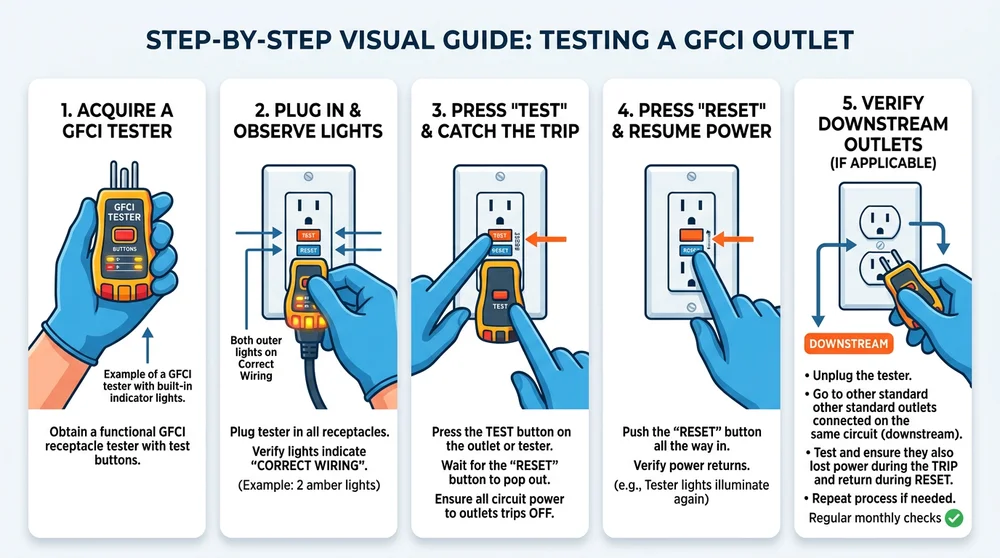
- Plug in a tester or lamp: Use a simple outlet tester (under $10 at hardware stores) or plug in a working lamp or radio to confirm power.
- Press the Test button: This simulates a ground fault. You should hear a click, and the outlet (and any downstream ones) should lose power—the light goes out.
- Check for trip: If it doesn't trip, the GFCI might be faulty. Unplug everything first to avoid surges.
- Reset the outlet: Press the Reset button firmly until it clicks. Power should return.
- Verify downstream protection: If you have other outlets on the circuit, test them too by plugging in there and hitting Test on the GFCI.
If the Test button doesn't trip the circuit, replace the GFCI immediately—worn-out ones fail silently. For circuit breaker GFCIs in your panel, look for a Test button there and follow similar steps.
A word of caution: If you're uncomfortable with electrical work, skip the DIY and hire a licensed electrician. Tampering with wiring can void warranties or cause fires. In our line of work, we've fixed plenty of botched tests that led to bigger issues.
When to Install or Upgrade GFCIs: Practical Advice from Pros
If your home needs GFCIs, installation is often simple. For a single outlet swap, turn off the breaker, remove the old receptacle, wire the new GFCI (hot to brass, neutral to silver, ground to green), and test. But if you're protecting multiple outlets, use the 'load' terminals to extend protection downstream.
Upgrading older homes? Consider AFCI (Arc-Fault Circuit Interrupter) breakers alongside GFCIs for fire prevention. Costs range from $20 for a basic GFCI to $100+ for pro installation per outlet.
Signs you need them: Frequent trips on unprotected circuits, visible wear, or if you're selling your home—inspectors flag missing GFCIs.
In humid climates, opt for tamper-resistant GFCIs with weatherproof covers. We've installed tamper-resistant models in family homes to childproof outlets while maintaining protection.
Final Thoughts on Keeping Your Home Electrically Safe
GFCI outlets are a small investment in a big way to safeguard your family. By understanding ground fault protection, following NEC guidelines for placement, and regularly testing, you can avoid shocks and stay code-compliant. If you're unsure about your setup, a quick inspection by a pro can give you confidence.
At The Pipeline, we're all about empowering homeowners with pro tips. Stay safe out there—your home's electrical system deserves the best protection.