Tankless vs Traditional Water Heater: Which One is Right for Your Home?
Introduction
When it comes to hot water in your home, few things are as essential as a reliable water heater. But with options like traditional tank-style heaters and the increasingly popular tankless models, choosing the right one can feel overwhelming. As contractors who've installed hundreds of these systems, we've seen firsthand how the decision affects everything from your utility bills to your daily routine. In this post, we'll compare tankless versus traditional water heaters, highlighting their differences, benefits, and drawbacks to help you decide which fits your lifestyle and budget.
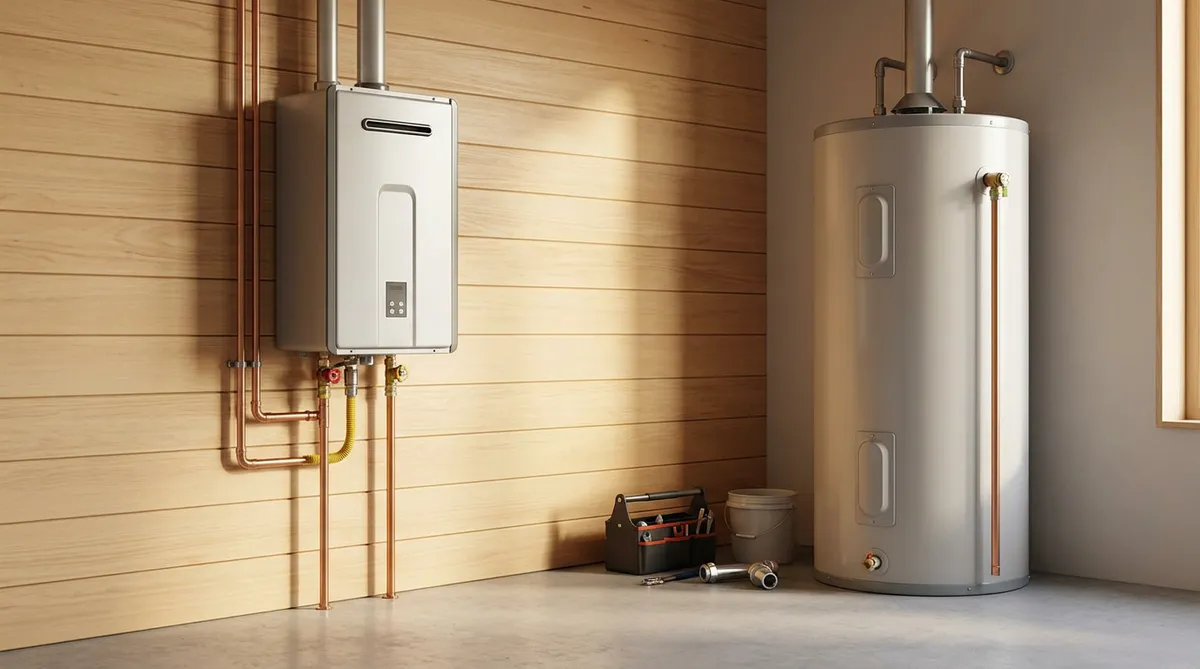
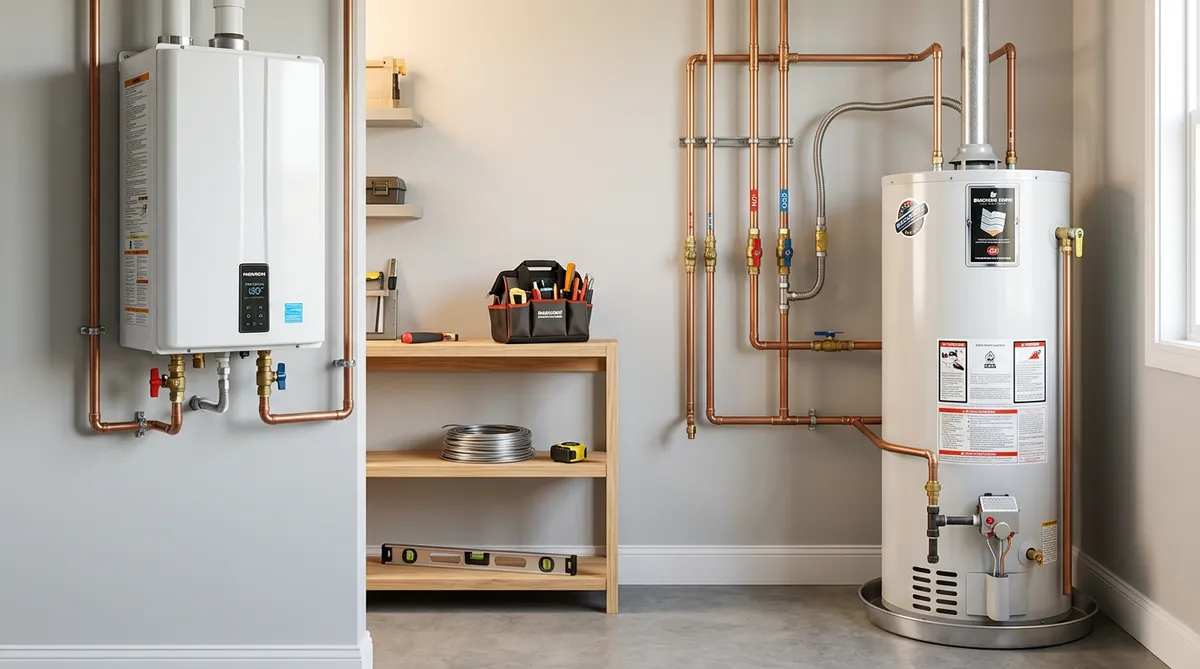
Traditional water heaters have been the go-to for decades, storing hot water in a large tank ready for use. Tankless water heaters, on the other hand, heat water on demand, eliminating the need for storage. Both have their place, but the best choice depends on your household size, hot water needs, and long-term goals. Let's dive in.
What is a Traditional Water Heater?
A traditional water heater, often called a tank water heater, is the classic setup most homes have. It consists of an insulated tank—usually 30 to 80 gallons—that holds water heated by either gas or electricity. The heater keeps the water at a set temperature, ready to draw from whenever you turn on a faucet or shower.
These units are straightforward and familiar. Gas models use a burner at the bottom, while electric ones rely on heating elements inside the tank. They're typically installed in basements, garages, or utility closets. If you've never thought about your water heater until it starts leaking or runs cold, you're probably dealing with a traditional one.
Pros of traditional water heaters include their lower upfront cost and ability to provide a large volume of hot water quickly for multiple uses. However, they do have limitations, like standby heat loss—where energy is wasted keeping the water hot even when you're not using it.
What is a Tankless Water Heater?
Tankless water heaters, also known as on-demand or instantaneous heaters, work differently. Instead of storing water, they heat it as it flows through the unit. When you open a hot water tap, cold water enters the heater, passes over a heat exchanger (powered by gas or electricity), and comes out hot—almost instantly.
These compact units can be wall-mounted and are often installed near high-use areas like bathrooms or kitchens to minimize heat loss in pipes. Gas tankless heaters are common for whole-home systems, while electric ones suit smaller setups or point-of-use applications.
The appeal lies in their efficiency: no tank means no standby losses. But they require proper sizing to handle your flow rate—think gallons per minute (GPM)—to avoid lukewarm water during peak times.
Pros and Cons of Traditional Water Heaters
Pros
- Affordable Initial Cost: Expect to pay $500 to $1,500 for the unit itself, plus installation. This makes them accessible for budget-conscious homeowners.
- High Capacity for Large Households: A 50-gallon tank can supply hot water to multiple fixtures simultaneously without temperature drops.
- Simple Installation and Repairs: Most plumbers are experts with these, and parts are widely available and inexpensive.
- Consistent Hot Water Supply: Once filled, it's always ready—no waiting for heating cycles.
Cons
- Energy Inefficiency: Standby losses can account for 10-20% of your water heating energy use. Older models are especially wasteful.
- Limited Lifespan: They typically last 8-12 years, shorter if water quality is poor or maintenance is neglected.
- Space Hog: That bulky tank takes up valuable floor space and can be heavy when full (up to 500 pounds).
- Higher Operating Costs Over Time: Constant reheating drives up utility bills, especially in cold climates.
From our experience, traditional heaters shine in homes with steady, high hot water demand, like families with kids taking back-to-back showers. But if energy savings are a priority, they might not be ideal.
Pros and Cons of Tankless Water Heaters
Pros
- Energy Efficiency: They only heat water when needed, potentially saving 20-30% on energy bills. Look for Energy Star-rated models for maximum savings.
- Endless Hot Water: As long as the unit isn't overwhelmed, you get continuous supply—no running out mid-shower.
- Longer Lifespan: With proper care, they can last 20 years or more, reducing replacement frequency.
- Space-Saving Design: Compact size frees up room for storage or other appliances.
- Lower Long-Term Costs: Despite higher upfront prices, the efficiency pays off in 5-10 years through reduced utilities.
Cons
- Higher Upfront Cost: Units range from $1,000 to $3,000, with installation adding $1,000-$2,000 more, especially for gas models needing venting upgrades.
- Flow Rate Limitations: A single unit might only handle 2-5 GPM, so large homes may need multiple units or a powerful whole-house model.
In our installs, tankless systems are game-changers for eco-conscious homeowners or those in smaller spaces. But they're not one-size-fits-all—undersized units lead to frustration.
Cost Comparison: Upfront and Ongoing
Let's talk numbers, as they're a major deciding factor. For a traditional 50-gallon gas water heater, the total installed cost averages $1,000-$2,500. Electric versions are slightly cheaper at $800-$2,000.
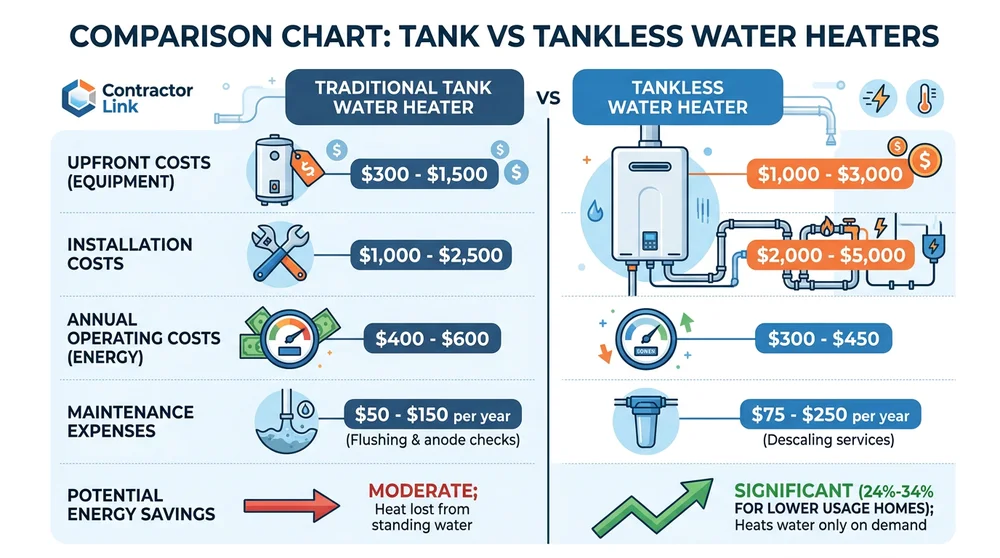
Tankless heaters start higher: $2,000-$5,000 installed for a whole-home gas unit. Electric tankless options for point-of-use (like under a sink) are more affordable at $300-$800 but won't cover your entire home.
Ongoing costs favor tankless. Traditional heaters might cost $400-$600 annually in energy, while tankless could drop that to $300-$450, depending on usage and fuel type. Factor in rebates from utilities or governments for efficient models—up to $800 off for tankless.
Don't forget maintenance: Annual flushing for traditional tanks costs $100-$200, while tankless descaling (to prevent mineral buildup) is similar but less frequent if you have soft water.
Energy Efficiency and Environmental Impact
Efficiency is where tankless pulls ahead. Traditional heaters have a Uniform Energy Factor (UEF) of 0.5-0.7, meaning much of the energy is lost. Tankless models boast UEFs of 0.8-0.99, especially condensing gas units that recapture exhaust heat.
For the environment, tankless reduces your carbon footprint by using less fuel. If you're switching from an old, inefficient tank, the upgrade could cut emissions significantly. Electric tankless paired with solar panels? Even better for green living.
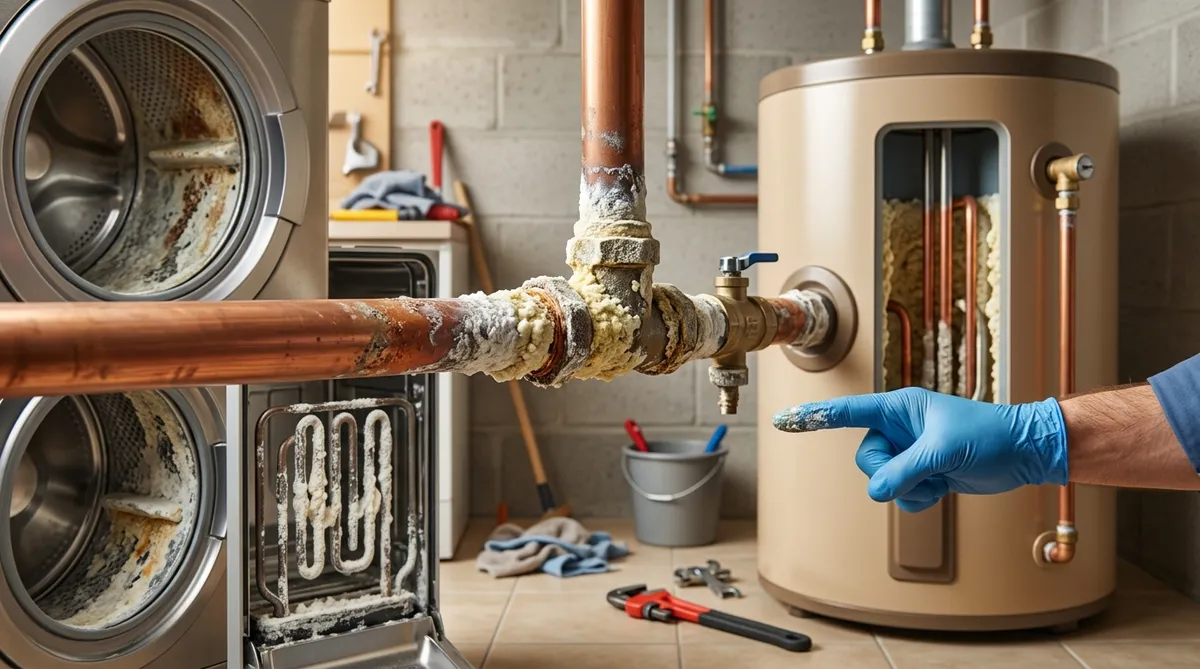
Pro tip: Check your local water hardness. Hard water shortens both types' life, but tankless suffers more from scale buildup, so consider a water softener.
Installation Considerations
Installation isn't DIY territory—always hire a licensed plumber to avoid code violations or safety issues.
For traditional heaters, it's often a straightforward swap if you're replacing an existing tank. Gas lines and venting are usually in place, taking 4-6 hours.
Tankless requires more planning. Gas models need upgraded venting (like stainless steel for efficiency) and possibly larger gas lines. Electric ones demand a hefty electrical panel upgrade—200-300 amps for whole-home use. Placement matters too; tankless should be close to fixtures to save energy.
In renovations, tankless offers flexibility for tight spaces. We've installed them in attics or exteriors to free up indoor room. Expect permits and inspections, especially for gas conversions.
Maintenance and Longevity
Both types need annual checkups, but routines differ. For traditional heaters, flush the tank yearly to remove sediment, inspect the anode rod every 3-5 years, and test the pressure relief valve. Neglect leads to leaks or explosions—scary but preventable.
Tankless maintenance involves descaling the heat exchanger (vinegar flush works wonders) and cleaning filters. Gas units need burner checks for safety. With good care, they outlast tanks by double.
Homeowners, set a calendar reminder. Or better yet, sign up for a service plan with your plumber—we see it extends life and catches issues early.
Which One Should You Choose?
It boils down to your needs:
- Choose Traditional If: You have a large family with simultaneous hot water use (e.g., laundry, dishwasher, and showers), a tight budget, or an existing setup that's easy to replace. They're reliable workhorses for most American homes.
- Choose Tankless If: You're in a smaller household, value energy savings, want space efficiency, or plan to stay in your home long-term. Ideal for new builds or remodels.
Assess your GPM needs: Time how long showers last and count fixtures. A pro can calculate this during a free consult.
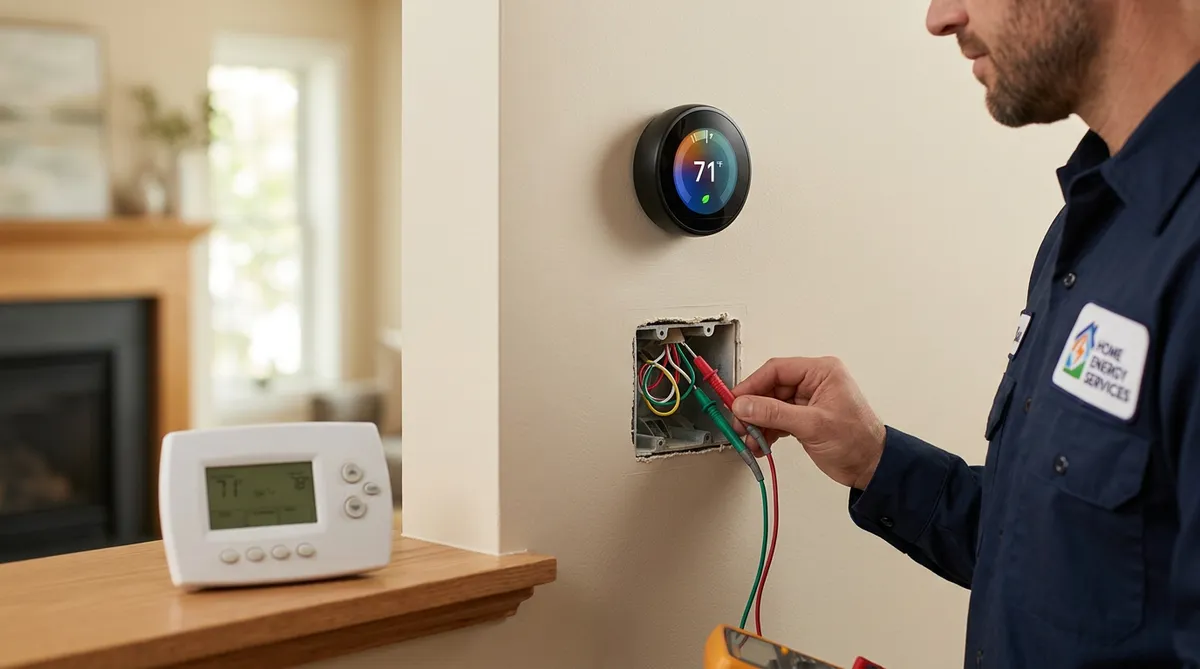
Other factors: Local climate (tankless excels in milder areas), fuel availability (natural gas favors tankless), and future-proofing (tankless aligns with smart home trends).
Final Thoughts
Tankless or traditional? Neither is universally better—it's about matching the system to your home. From our years in the trenches, we've seen happy clients on both sides: families loving endless hot water from tankless, and others appreciating the simplicity of tanks.
Weigh the costs, efficiency, and your usage patterns. Consult a local contractor via ContractorLink.pro for personalized advice. With the right choice, you'll enjoy reliable hot water for years to come.