How Ductwork Affects Your Energy Bill More Than You Think: The Hidden Waste in Your HVAC System
Introduction to the Unsung Hero of Home Comfort
As contractors who've installed and repaired countless HVAC systems, we've seen it time and again: homeowners pour thousands into a new furnace or air conditioner, only to scratch their heads when the energy bills don't drop as expected. The culprit? Often, it's not the shiny new unit—it's the ductwork snaking through your walls, attic, and crawlspaces. These metal or flexible tubes are the highways that deliver heated or cooled air throughout your home, but when they're leaky, undersized, or poorly designed, they can waste a shocking amount of energy. In fact, the U.S. Department of Energy estimates that duct leaks alone can account for up to 30% of a home's heating and cooling losses. That's money literally vanishing into thin air. In this post, we'll break down how ductwork impacts your energy bill more than you might think, even with a top-of-the-line HVAC system, and share pro tips to get your setup working efficiently.
Understanding Ductwork Basics
Ducts are essentially the distribution network for your HVAC system. They carry conditioned air from your furnace, AC unit, or heat pump to rooms via vents and registers. A well-designed system ensures even temperatures and minimal energy use, but many homes—especially older ones—have ductwork that's seen better days. Built from sheet metal, fiberglass, or flexible materials, ducts can be hidden away, making problems easy to overlook.
Why does this matter for your wallet? Your HVAC system works hard to heat or cool the air, but if the ducts aren't up to par, much of that effort escapes before reaching you. Imagine running a marathon only to have half your water bottle leak out midway—frustrating and inefficient. Poor ductwork forces your system to run longer and harder, spiking your energy consumption. According to energy experts, fixing duct issues can cut heating and cooling costs by 10-20%, sometimes more in severe cases. As pros, we always recommend evaluating ducts during any HVAC upgrade because a new system paired with old, faulty ducts is like putting premium gas in a car with a hole in the tank.
The Sneaky Problem of Leaky Ducts
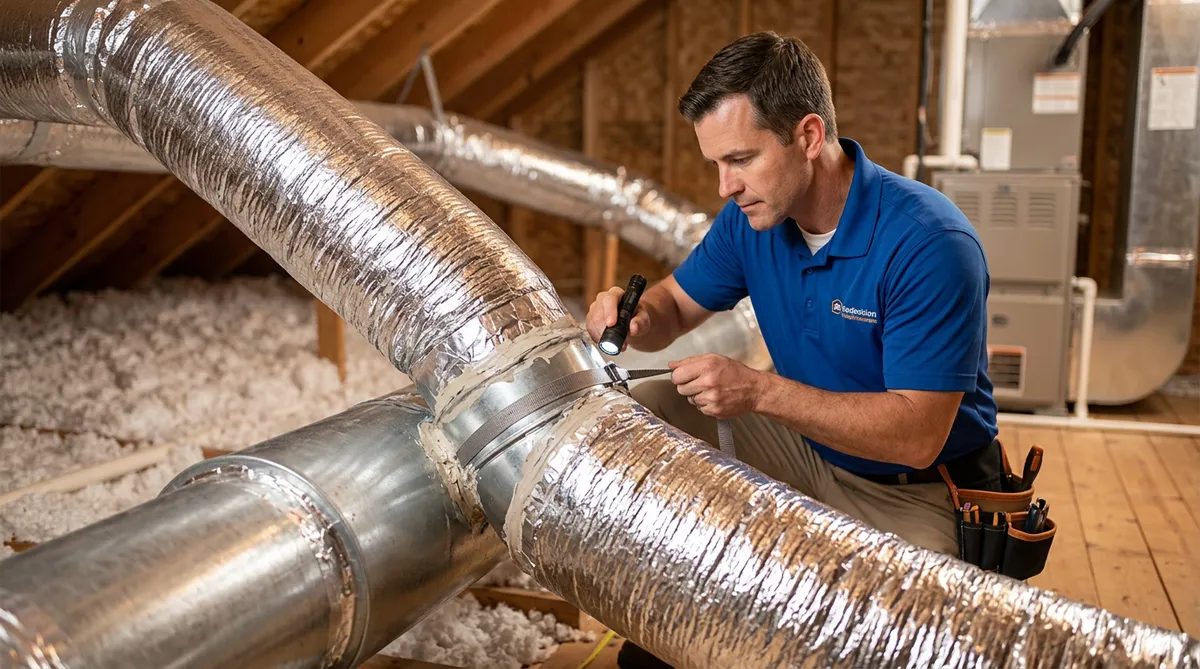
Leaky ducts are one of the most common and costly issues we encounter. Over time, joints loosen, seals degrade, and holes form from wear, pests, or poor installation. Air that's been expensively conditioned—heated in winter or cooled in summer—escapes into unconditioned spaces like attics, basements, or walls. This not only wastes energy but also pulls in dusty, humid, or polluted air from those areas, making your system work overtime to compensate.
How much waste are we talking? Studies from the Lawrence Berkeley National Laboratory show that in a typical home, duct leakage can siphon off 20-30% of airflow. That's equivalent to throwing away a quarter of your energy dollars. In a house with average ducts, this could add hundreds to your annual bill. We've fixed systems where leaks were so bad that rooms felt unevenly heated, and the thermostat read one temperature while the actual air delivery was spotty.
Practical tip: If your home is older than 20 years, assume some leakage exists. Hot or cold spots in rooms, higher-than-expected bills, or dust buildup around vents are red flags. To quantify it, consider a simple duct blaster test— a professional tool that pressurizes the system to measure leakage rates. It's like a health checkup for your ducts and can pinpoint exactly where money is slipping away.
Undersized Ducts: When Less is Definitely Not More
Another stealthy saboteur is undersized ductwork. This happens when ducts are too narrow to handle the airflow from your HVAC system, creating resistance like traffic jams in your airways. Air moves slower, pressure builds, and your blower fan has to rev harder, guzzling more electricity. In extreme cases, it reduces overall efficiency and can even shorten the life of your HVAC components due to strain.
Undersizing often stems from original construction shortcuts or renovations that didn't account for added square footage. For instance, if you've expanded your home but kept the old ducts, they might now be overwhelmed. The Air Conditioning Contractors of America (ACCA) guidelines specify duct sizes based on cubic feet per minute (CFM) needs—too small, and you're looking at 15-25% efficiency loss. We've redesigned duct runs for clients who installed powerful new units only to find their bills climbing because the ducts couldn't keep up.
Spotting undersized ducts isn't always obvious, but listen for loud whooshing from vents or weak airflow. Rooms farthest from the unit might feel stuffy. A quick pro advice: Measure your duct diameters and compare to ACCA charts online, but for accuracy, get a Manual D calculation from a certified contractor. This ensures ducts match your system's capacity, preventing that hidden energy drain.
Why Duct Issues Linger After a New HVAC Install
Here's a scenario we've heard a hundred times: 'I just got a new AC, but my bills are still high!' The truth is, a new HVAC system is only as good as the ducts it relies on. Manufacturers rate efficiency with metrics like SEER for cooling, but those assume optimal duct performance. If your ducts leak or are undersized, you're not getting the full benefit—your system might achieve 16 SEER on paper, but effectively operate at 12 or less in reality.
During installs, we always inspect ducts, but if you're working with a less thorough contractor, problems can slip through. Retrofitting ducts in existing homes is tricky due to space constraints, so old systems get paired with new units without upgrades. The result? Conditioned air lost in transit, uneven comfort, and bills that mock your investment. Energy Star recommends sealing and insulating ducts as a first step in any HVAC project to maximize returns.
Key Signs Your Ductwork is Driving Up Costs
Don't wait for the bill shock—watch for these telltale signs that your ducts need attention:
Uneven Temperatures: Some rooms too hot, others too cold? Leaks or poor sizing could be redistributing air unevenly.
Increased Humidity or Dust: Leaky ducts pull in outside air, leading to musty smells, excess moisture, or more dusting.
Noisy Operation: Rattling, whistling, or straining sounds indicate resistance from undersized or loose ducts.
Higher Bills Despite Efficiency Upgrades: If costs haven't dropped after a new system, ducts are likely the weak link.
Poor Airflow: Weak breezes from vents suggest blockages, leaks, or sizing issues.
As contractors, we use tools like anemometers to measure airflow and thermal cameras to spot leaks via temperature differences. Homeowners can start with a visual inspection: Check accessible ducts for gaps, tears, or disconnected sections, and feel for air escaping around joints.
DIY Steps to Tackle Duct Problems
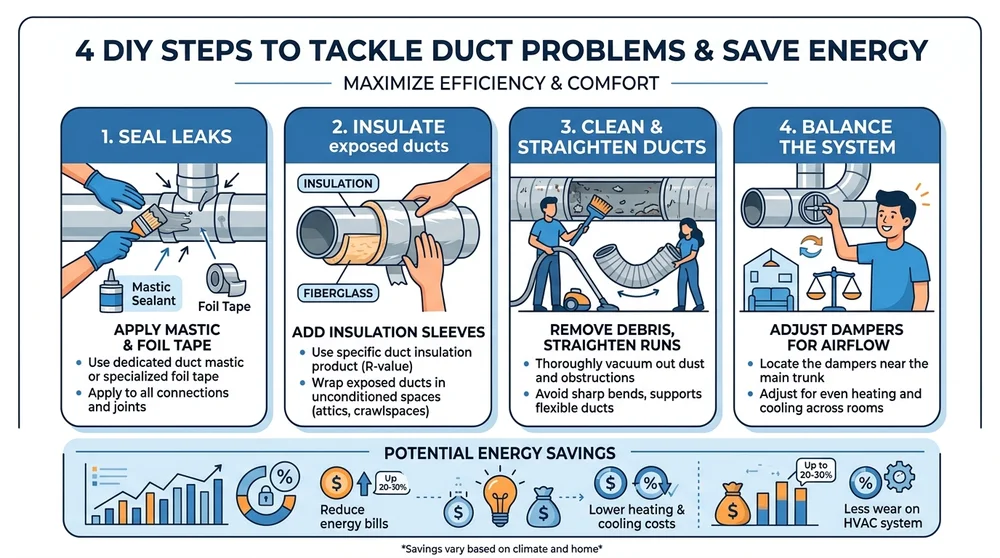
While major overhauls need pros, you can take actionable steps to improve efficiency right away:
Seal Leaks: Use mastic sealant or foil tape (not duct tape—it degrades) on joints and seams. Crawl into your attic or basement and apply to visible gaps. This simple fix can recover 10% of lost energy.
Insulate Exposed Ducts: Wrap uninsulated ducts in R-6 or higher fiberglass sleeves, especially in attics or unheated spaces. This prevents heat gain/loss, saving up to 15% on bills.
Clean and Straighten: Remove dust buildup with a vacuum and brush, and ensure flexible ducts aren't kinked.
Balance the System: Adjust dampers (valves in ducts) to direct more air to needy rooms—mark them first to avoid over-adjusting.
These tweaks are low-cost and can yield quick wins, but always turn off the HVAC before working to stay safe.
When to Call in the Pros for Duct Repairs
For leaky or undersized ducts, professional intervention is key. We recommend hiring an ACCA-certified contractor for a full audit, including leakage testing and proper sizing redesign. Costs vary—sealing might run $300-800, while resizing could be $1,500-5,000 depending on home size—but the ROI is fast, often within a year through lower bills.
Pros use advanced methods like aerosealing (injecting sealant into leaks via the system) or rigid metal replacements for longevity. In our experience, addressing ducts upfront prevents costly HVAC failures down the line. If your home has asbestos-wrapped ducts (common in pre-1980s builds), leave it to experts for safe handling.
Reaping the Rewards: Efficiency and Comfort Gains
Fixing ductwork isn't just about savings—it's a game-changer for home comfort. Even air distribution means no more thermostat wars, healthier indoor air from less infiltration, and a quieter system. Environmentally, it's a win too, reducing your carbon footprint by optimizing energy use. We've had clients report 20-30% bill drops after duct tune-ups, plus the bonus of a more reliable HVAC that lasts longer.
In wrapping up, ductwork might be out of sight, but it's far from out of mind when it comes to your energy bill. By understanding leaks and sizing issues, you can take control and ensure your HVAC investment pays off. Stay proactive, and your home will thank you with comfort and efficiency year-round.