5 Essential Questions to Ask Before Hiring a Home Service Contractor
Hiring a contractor for home improvements or repairs is a big decision. Whether you're tackling a kitchen remodel, fixing a leaky roof, or installing new HVAC, the right contractor can turn your vision into reality without headaches. But with so many options out there, how do you separate the pros from the pitfalls? As contractors who've seen it all on the job site, we at The Pipeline recommend starting with a simple checklist of questions. These five essentials—covering licensing, insurance, warranty, timeline, and payment terms—will help you vet candidates and set clear expectations from the get-go.
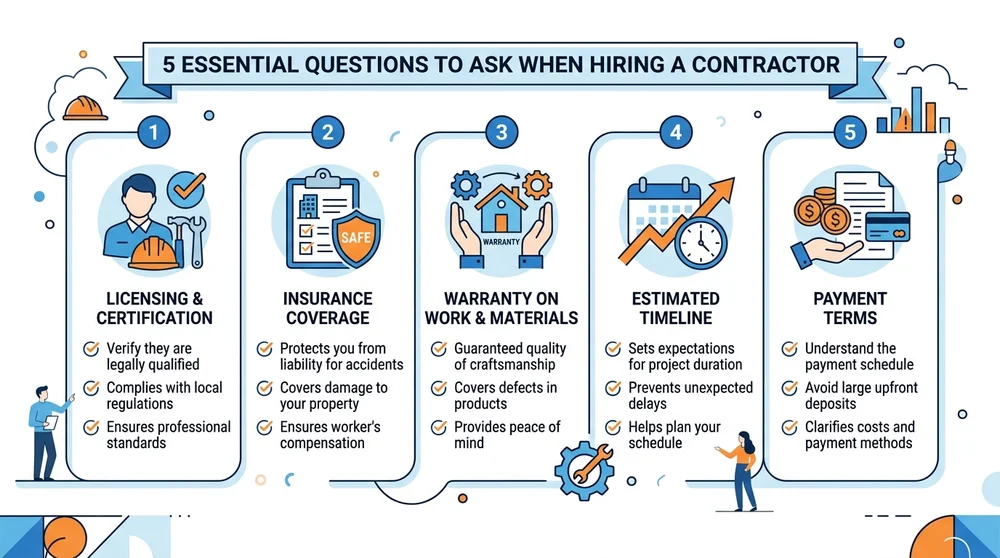
We've helped countless homeowners avoid costly mistakes by emphasizing due diligence. Think of this as your shield against shoddy work, delays, or surprise bills. Let's dive into each question, why it matters, and what to listen for in the answers. By the end, you'll feel confident making a smart hire.
1. Are You Properly Licensed and Certified for This Work?
Licensing is non-negotiable—it's the first line of defense against unqualified workers. In most states, contractors need a license to perform certain jobs, especially those involving electrical, plumbing, or structural changes. This isn't just bureaucracy; it's proof they've met training standards and passed exams on local building codes.
Why ask this? Unlicensed contractors often cut corners to save on overhead, leading to subpar results that could fail inspections or even violate safety regs. For instance, a DIY-savvy handyman might tackle a simple paint job unlicensed, but for wiring your home? That's a recipe for fire hazards.
What to look for: Request their license number and verify it through your state's contractor board website (like California's CSLB or Texas's TDLR). Ask about any specialties—e.g., is your roofer certified in asphalt shingles or metal roofing? A legit pro will provide this info proudly and without hesitation.
Pro tip: If they're licensed, check for any complaints or disciplinary actions. We've seen homeowners skip this step only to deal with revoked licenses mid-project. Better safe than sorry—spend 10 minutes online to confirm.
Expanding on this, licensing also ties into bonding. Many states require contractors to be bonded, meaning there's financial protection if they skip out on the job or damage your property. Ask if they're bonded and for the bond number. This question alone weeds out fly-by-night operators who might vanish after a deposit.
In our experience, licensed contractors are more likely to stick to ethical practices. They invest in their business, so they're invested in your satisfaction. If the answer is vague like "I don't need one for small jobs," politely show them the door.
2. What Insurance Coverage Do You Carry?
Insurance is your safety net. Home service work involves tools, ladders, and sometimes heavy machinery—accidents happen. A contractor without proper coverage could leave you liable for injuries or damages, turning a routine bathroom reno into a legal nightmare.
Break it down: General liability insurance covers property damage or third-party injuries, like if a worker dents your neighbor's car. Workers' compensation is crucial if they have employees; it protects you from lawsuits if someone gets hurt on your site. Ask for certificates of insurance (COIs) naming you as an additional insured.
Why it matters: We've heard horror stories of uninsured roofers falling and homeowners footing massive medical bills. Or worse, shoddy siding installation that leaks and ruins your interior—without liability coverage, you're out of pocket for repairs.
What to probe: "Can I see your current COI? Does it cover at least $1 million in liability?" Reputable contractors carry policies from established insurers and will email the docs right away. If they dodge or say "It's handled," that's a red flag.
From the contractor's side, good insurance keeps premiums manageable by preventing claims. It also signals professionalism—we always advise clients to verify expiration dates, as lapsed policies are common tricks. Don't just take their word; call the insurer to confirm.
Remember, your homeowner's insurance might cover some incidents, but it's not designed for contractor mishaps. This question ensures peace of mind, letting you focus on the excitement of your project rather than worst-case scenarios.
3. What Kind of Warranty Do You Offer on Your Work and Materials?
Warranties are promises in writing—your assurance that the job won't crumble after the crew packs up. Without one, you're gambling on quality, and fixes could cost you double down the line.
Key elements: Labor warranties typically last 1-2 years, covering workmanship issues like crooked tiles or faulty installations. Material warranties vary—e.g., a new furnace might have a 10-year manufacturer guarantee, but the contractor's install warranty is shorter. Ask for both and get everything in the contract.
Why prioritize this? Poorly installed windows might fog up in a year, or a patched foundation could crack again. We've fixed countless jobs botched by contractors who offered no recourse, leaving homeowners stressed and spending more.
What to ask: "What's the warranty duration for labor and materials? Does it cover callbacks? Are there exclusions?" Top pros offer transferable warranties if you sell your home, adding value. If they mumble about "verbal guarantees," insist on paper—verbal means nothing legally.
Pro insight: Warranties reflect confidence. We stand by our work with clear terms because we use quality materials and follow best practices. Encourage homeowners to read fine print for triggers like "normal wear" clauses that could void coverage.
This question also reveals communication style. A contractor who explains warranties thoroughly is likely detail-oriented on the job. It's a small ask that pays big dividends in longevity and trust.
4. What's Your Estimated Timeline for This Project, and How Flexible Is It?
Timelines keep projects on track—delays mean dust, disruption, and mounting frustration. A clear schedule from the start aligns expectations and minimizes surprises.
Break it down: For a kitchen remodel, expect 4-6 weeks; a simple deck might take a weekend. Ask for a phased breakdown: demo, framing, finishing. Inquire about buffers for weather or supply issues, especially for outdoor work.
Why it counts: Rushed jobs lead to errors, like uneven countertops from skipping cure times. Extended timelines disrupt life—imagine living without a functional bathroom for months. We've seen projects balloon from two weeks to two months due to poor planning.
What to seek: "How long will this take, start to finish? What factors could delay it? Do you have a completion penalty clause?" Reliable contractors use software for Gantt charts and communicate weekly updates. If they're vague ("As long as it takes"), seek someone with a proven track record.
From our toolbox: Always factor in permitting time—licensed pros handle this, but delays at city hall are common. Discuss your availability too; coordinating with subs like electricians prevents bottlenecks.
This question tests realism. Overly optimistic timelines scream inexperience, while padded ones might inflate costs. Aim for a balance that respects your home as a living space.
5. What Are Your Payment Terms and Schedule?
Payment talks can be awkward, but they're vital to avoid disputes. Clear terms prevent the "pay now or we walk" drama and ensure fair value for your dollar.
Standard setup: Deposits (10-30%) kick off materials; progress payments tie to milestones like framing complete; final balance on punch list sign-off. Never pay in full upfront—that's a scammer's dream.
Why essential: Front-loading payments incentivizes slow work, while withholding too much stalls progress. We've mediated payment fights where vague terms led to liens on homes—nightmarish for sellers.
What to clarify: "What's the deposit amount? How are payments structured? Do you accept credit cards? Any late fees?" Insist on a detailed contract outlining each draw. Ethical contractors provide invoices with line items.
Pro advice: Use checks or electronic transfers for records. For big jobs, consider escrow services. If they push for cash-only, that's suspicious—legit businesses track finances.
This wraps your checklist, ensuring financial transparency. It also gauges respect; pros who negotiate fairly value long-term relationships over quick bucks.
Wrapping Up Your Contractor Checklist
There you have it—five powerhouse questions to transform hiring from gamble to guarantee. By grilling candidates on licensing, insurance, warranties, timelines, and payments, you're not just protecting your wallet; you're paving the way for a smooth, successful project. We've built our reputations on these principles, and they work for homeowners every time.
Take notes during interviews, compare answers, and trust your gut. A great contractor won't mind the scrutiny—they welcome informed clients. Your home deserves the best, so choose wisely and enjoy the results.