Sump Pump Battery Backup: Do You Really Need One? Essential Protection for Stormy Seasons
The Nightmare of a Flooded Basement
Picture this: It's a dark, stormy night, and heavy rain is pounding against your windows. Thunder rumbles as lightning flashes illuminate the sky. Suddenly, the power goes out—right when your sump pump, the unsung hero keeping your basement dry, needs electricity the most. Without power, water starts seeping in, and before you know it, your finished basement is a soggy mess. Valuable belongings are ruined, mold threatens to take hold, and you're facing a costly cleanup. As contractors who've seen this scenario play out too many times, we at The Pipeline can tell you: this doesn't have to happen. Enter the sump pump battery backup—a game-changer for homeowners in flood-prone areas.
In this post, we'll dive deep into why you really do need a battery backup for your sump pump, especially during those intense storms when power failures are most likely. We'll cover the basics, the risks of going without, how to choose the right system, installation pointers, and ongoing maintenance tips. By the end, you'll have the practical advice to protect your home like a pro.
Understanding Sump Pumps and Their Critical Role
First things first: What's a sump pump, and why is it so vital? A sump pump is a submersible or pedestal device installed in a sump basin (a pit in your basement floor) that automatically activates when water levels rise due to groundwater, heavy rain, or melting snow. It pumps the excess water out through a discharge pipe, away from your foundation, preventing flooding.
We've installed hundreds of these systems over the years, and they're essential in regions with high water tables or during wet seasons. Without a functioning sump pump, basements can flood quickly—sometimes in minutes—leading to structural damage, electrical hazards, and health risks from mold and mildew. But here's the catch: sump pumps rely on electricity. In the U.S., severe weather events like hurricanes, thunderstorms, and blizzards often knock out power for hours or even days. According to the National Weather Service, power outages during storms affect millions annually, and basements are among the first casualties.
That's where the primary vulnerability lies. Your sump pump works flawlessly under normal conditions, but when it's needed most—during a deluge with rising water—it's most likely to fail due to a blackout. Skipping a battery backup is like driving without a spare tire: fine until you hit that pothole.
The Real Risks of Relying Solely on Primary Power
Let's get real about the dangers. We've responded to countless emergency calls where homeowners ignored the backup option, only to regret it. During a storm, if the power cuts out and your sump pump stops, water accumulates rapidly. Even a few inches can cause thousands in damages: warped floors, ruined drywall, destroyed electronics, and spoiled furniture. Worse, standing water can compromise your home's foundation, leading to cracks and long-term settling issues that cost tens of thousands to repair.
Insurance might cover some losses, but deductibles are high, and not all policies include flood damage from sump failure. Plus, the hassle of restoration—drying out, removing debris, and preventing mold—disrupts your life for weeks. In extreme cases, like during Hurricane Ida in 2021, entire neighborhoods in the Northeast faced basement flooding precisely because primary pumps went offline without backups.
From a contractor's perspective, we've seen basements turn into indoor pools overnight. One client in Pennsylvania lost $15,000 worth of home theater equipment and family heirlooms because their pump quit during a nor'easter. Power outages aren't rare; FEMA reports that 40% of small businesses and homes suffer water damage from such events. Don't wait for the storm to test your setup—proactive protection is key.
Why a Battery Backup is a Must-Have Investment
So, do you really need a sump pump battery backup? Absolutely, yes—especially if you live in an area prone to storms, heavy rains, or power grid vulnerabilities. A battery backup system kicks in seamlessly when the primary power fails, keeping your pump running for hours (typically 7-10, depending on the model and water inflow). It's like having a guardian angel for your foundation.
The case for backups strengthens during storm season. Storms don't just bring rain; they bring wind, lightning, and downed lines that overload the grid. In fact, the U.S. Energy Information Administration notes that weather-related outages have increased by 20% over the past decade due to climate shifts. Your primary pump might handle routine water, but backups ensure reliability when stakes are high.
Beyond storms, backups provide peace of mind for other scenarios: brownouts, tripped breakers, or even grid failures from non-weather events. They're not overly expensive—starting at $150 for basic units and up to $1,000 for advanced models with alarms and auto-charging. Compared to flood repair costs averaging $5,000 per incident (per HomeAdvisor), it's a no-brainer ROI. As pros, we always recommend them for new installations or upgrades; they've saved our clients from headaches time and again.
Choosing the Right Sump Pump Battery Backup System
Not all battery backups are created equal, so selecting the right one requires some homework. Start by assessing your needs: How often does your area flood? What's the capacity of your primary pump (usually 1/3 to 1/2 HP for homes)? Look for systems compatible with your pump type—most work with both submersible and pedestal models.
Key features to prioritize:
Runtime and Capacity: Aim for at least 8-12 hours of operation. Deep-cycle marine or AGM batteries (absorbent glass mat) are ideal as they're maintenance-free and spill-proof.
Automatic Switching: The system should detect power loss and switch within seconds—no manual intervention needed.
Monitoring and Alarms: High-end units include battery level indicators, low-water shutoff, and audible alarms to alert you via app or text if issues arise.
Charging System: Ensure it has a smart charger that maintains the battery without overcharging, extending life to 3-5 years.
Popular brands like Basement Watchdog, Zoeller, and Liberty Pumps offer reliable options. For a standard 2,000 sq ft home, a mid-range kit with a 12V battery and 1,200 amp-hours might suffice. Check reviews on sites like Amazon or consult a local contractor for sizing—factors like pump draw (around 5-10 amps) matter.
Pro tip: If your basement is prone to high water volume, consider a dual-pump system with backup for redundancy. We've installed these in coastal areas, and they handle surges like pros.
Installation: DIY or Call in the Experts?
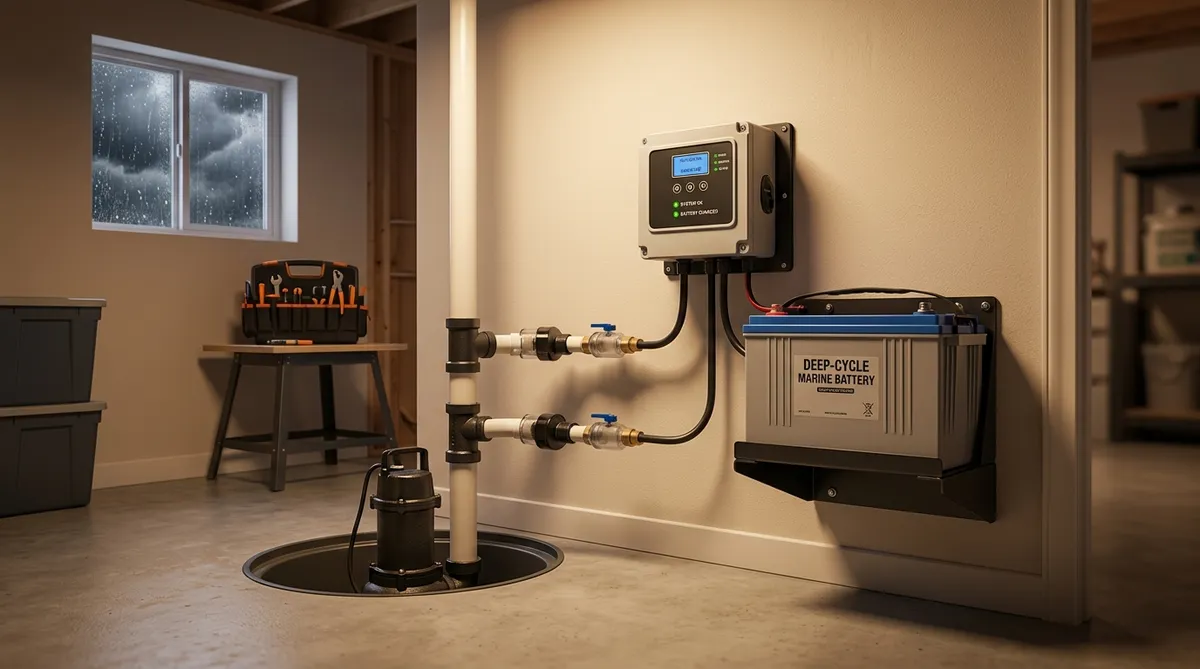
Installing a sump pump battery backup isn't rocket science, but it's not always a solo job. If you're handy, a basic setup involves mounting the controller near the sump pit, connecting the battery (often in a vented enclosure), wiring to your pump's power line, and testing. Tools needed: screwdriver, wire strippers, and a multimeter. Follow the manufacturer's manual—most take 1-2 hours.
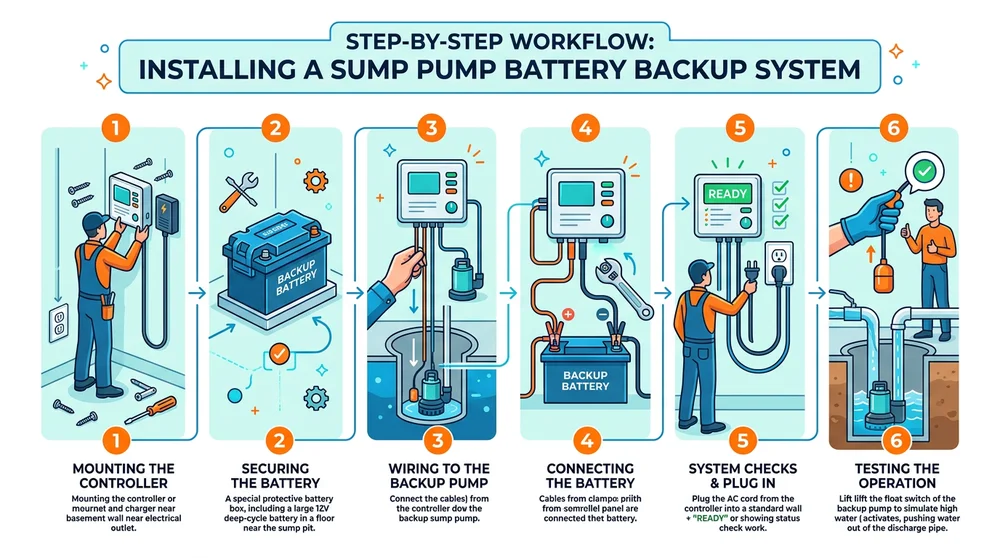
However, we strongly advise hiring a licensed electrician or plumber for safety and code compliance. Electrical work around water is risky; improper wiring can lead to shocks or fires. In our experience, professional installs ensure proper grounding and integration with your home's GFCI outlets. Expect to pay $200-500 for labor, depending on complexity.
Placement matters: Keep the battery in a cool, dry spot (above 32°F to prevent freezing) and away from the sump water. Route discharge pipes downhill to a storm drain or yard, avoiding neighbors' properties. Test post-install by unplugging the primary power—your backup should activate the pump immediately.
Maintenance: Keeping Your Backup Ready for Action
A battery backup is only as good as its upkeep. Neglect it, and it'll fail when you need it most. Schedule monthly checks: Inspect the battery terminals for corrosion (clean with baking soda solution), verify charge levels (should read 12.5-13.5V), and run a simulated test by pulling the plug.
Replace the battery every 3 years or sooner if it holds less than 80% charge—use the same type for compatibility. Clean the controller vents to prevent dust buildup, and monitor for unusual noises or leaks. In winter, if temps drop below freezing, consider an indoor heater for the battery compartment.
We've seen backups last over a decade with proper care. One tip from the field: Integrate it with a whole-home generator if you have one for ultimate protection, but the battery alone covers short outages effectively.
Final Thoughts: Don't Let Storms Catch You Off Guard
In the world of home improvement, few additions offer such straightforward protection as a sump pump battery backup. When storms rage and power flickers, it's the difference between a dry, safe home and a watery disaster. As contractors dedicated to helping homeowners stay ahead of issues, our advice is clear: Yes, you really need one. Assess your setup today, weigh the options, and invest in reliability. Your basement—and your sanity—will thank you.
(Word count: 1,248)