Demystifying Your Septic System: How It Works and Key Warning Signs of Failure
Introduction to Septic Systems
If you're a homeowner with a septic system, you know it's a vital part of your property's infrastructure—handling all that wastewater from your sinks, showers, and toilets. But how exactly does it work? And more importantly, what are the red flags that signal it's on the fritz? As contractors who've installed, repaired, and maintained countless septic setups, we're here to break it down for you in simple terms. Understanding your system can save you from headaches (and hefty bills) down the line. Let's dive in.
The Basics: What Is a Septic System?
A septic system is an onsite wastewater treatment solution for homes not connected to municipal sewers. It's essentially a self-contained setup that treats household sewage right on your property. The main components are the septic tank and the drain field (also called a leach field). Together, they process about 50-100 gallons of wastewater per person daily, depending on your household size.
Unlike city sewers that whisk waste away, your septic system relies on natural processes—bacteria, gravity, and soil filtration—to break down and purify the effluent. It's eco-friendly when functioning properly, but neglect it, and you could face backups, contamination, or environmental issues. Pro tip: If your home was built before the 1980s, check if it's an older concrete or steel tank; modern ones use fiberglass or plastic for durability.
How the Septic Tank Works
The septic tank is the heart of the system—a buried, watertight container typically made of concrete, fiberglass, or polyethylene. It sits underground, usually 10-20 feet from your house, and holds 1,000 to 2,000 gallons depending on your home's needs.
Here's the step-by-step process:
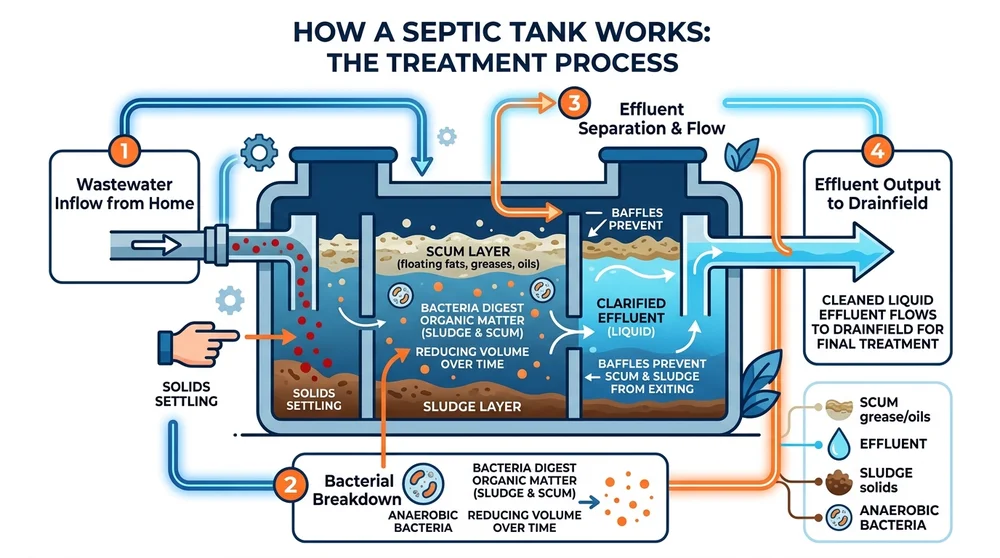
Wastewater Inflow: All household wastewater flows into the tank via a pipe from your home. Solids settle to the bottom as sludge, while lighter materials like oils and grease float to the top as scum.
Bacterial Breakdown: Anaerobic bacteria (those that thrive without oxygen) naturally present in the waste start digesting the organic matter. This reduces the volume of solids by about 50% over time.
Effluent Separation: The clearer middle layer, called effluent, is mostly liquid. Baffles or tees inside the tank prevent scum and sludge from flowing out, ensuring only treated water exits.
The tank needs pumping every 3-5 years to remove accumulated sludge—don't skip this! We've seen tanks fail prematurely because homeowners ignored the schedule, leading to clogs and overflows. A good rule: Pump when sludge depth reaches one-third of the tank's height, which a pro can measure during service.
The Role of the Drain Field
Once effluent leaves the tank, it travels through a distribution box to the drain field—a network of perforated pipes buried in gravel-filled trenches or beds. This is where the magic of soil treatment happens.
Percolation Process: The effluent slowly seeps into the surrounding soil, where aerobic bacteria and filtration further purify it. The soil acts like a natural filter, trapping pathogens, nutrients, and fine particles.
Design Factors: Drain fields are sized based on soil type, home size, and water usage. Sandy soils drain faster, while clay-heavy ones need larger fields. In wet climates, raised or mound systems might be used to avoid saturation.
Keep heavy traffic away from this area—no parking RVs or building patios over it. Compaction can crush pipes or block percolation. Also, plant only shallow-rooted grasses; trees like willows can invade and clog lines with roots.
Common Types of Septic Systems
Not all systems are created equal. The conventional gravity-fed setup we described is the most common, but alternatives exist for tricky sites:
Aerobic Treatment Units (ATUs): These use oxygen-loving bacteria for better breakdown, ideal for high-water tables or poor soils. They require electricity and more maintenance.
Mound Systems: Elevated drain fields on engineered sand mounds for shallow bedrock or groundwater.
Drip Irrigation or Low-Pressure Systems: For steep slopes, these pump effluent evenly to the field.
If you're unsure about your type, check your property records or call a licensed inspector. Upgrading an old system? Consider these for efficiency, but expect costs from $10,000 to $30,000.
Early Warning Signs Your Septic System Is Failing
Spotting trouble early can prevent a full meltdown. We've responded to emergencies where ignored signs led to sewage backups into homes—nasty and expensive. Watch for these indicators:
1. Slow Drains and Gurgling Sounds
If toilets flush sluggishly or sinks drain like molasses, sludge might be backing up into your lines. Gurgling in pipes? That's air escaping from a partial blockage. Don't just plunge— this could signal tank overload.
2. Sewage Odors Around the Property
A healthy system shouldn't smell. Foul odors near the tank or drain field mean gases are escaping, possibly from a full tank or cracked components. Indoor smells? Check vents first, but it could be a venting issue or worse.
3. Wet Spots or Pooling Water
Soggy grass or standing water over the drain field, especially after rain or use, indicates poor drainage. This effluent surfacing can contaminate groundwater— a health hazard. In winter, frost mounding might mimic this, but persistent issues need attention.
4. Lush, Green Patches in the Yard
Excess nitrogen from effluent fertilizes grass unusually well. If you see vibrant streaks over the field while the rest of your lawn struggles, it's a percolation problem.
5. Backup into Fixtures
The nightmare scenario: Sewage rising in tubs or toilets. This means the system is overwhelmed—stop using water immediately and call pros. Causes? Full tank, collapsed pipes, or saturated soil.
6. High Nitrate Levels in Well Water
If you have a private well, test annually. Elevated nitrates suggest septic leakage contaminating your supply, risking blue-baby syndrome in infants.
Other subtle signs: Frequent dye tests showing quick breakthrough (professionals use this), or unexplained plumbing issues after heavy rain.
What Causes Septic System Failure?
Failures aren't always sudden. Common culprits include:
Overuse or Poor Habits: Too much water from long showers or garbage disposals overloads the system. Pro tip: Space out laundry loads and fix leaky faucets to conserve.
Tree Roots and Invading Vegetation: Roots seek moisture and infiltrate pipes. Use root barriers during install if trees are nearby.
Chemical Overload: Bleach, drain cleaners, and antibiotics kill beneficial bacteria. Opt for septic-safe products.
Poor Maintenance: Skipping pumps or ignoring inspections. Annual checks cost $100-200 but catch issues early.
Soil Saturation: Heavy rains or poor site grading flood the field. Ensure proper landscaping slopes away.
Aging Infrastructure: Tanks over 20-30 years may crack; lines can shift with ground movement.
Practical Tips for Maintenance and Prevention
Keep your system humming with these contractor-recommended steps:
Water Conservation: Install low-flow fixtures to reduce load by 20-30%.
Regular Pumping Schedule: Base it on usage—larger families need more frequent service.
Inspections: Every 1-3 years, have a pro scope lines and check levels.
Landscaping Smarts: Avoid deep-root plants; mow but don't fertilize over the field.
What Not to Flush: No wipes, tampons, grease, or chemicals. Educate your household.
DIY Checks: Listen for unusual noises, watch drains, and note yard changes. But for diagnostics, leave it to experts—guessing can worsen damage.
If failure looms, act fast. Repairs like jetting lines might run $300-500, but full replacements? $15,000+. Early intervention pays off.
When to Call a Professional
Don't DIY major issues—septic work requires licenses for safety and compliance. Signs like backups demand immediate pros. For routine care, find certified pumpers via your local health department. In our experience, addressing small problems prevents big ones, keeping your home safe and your wallet intact.
Final Thoughts
Your septic system quietly does the dirty work, but a little knowledge goes a long way. By understanding its components and heeding warning signs, you empower yourself as a homeowner. Stay proactive, and it'll serve you reliably for decades. Got questions? Local contractors are your best resource for tailored advice.