Repair or Replace: Tackling Foggy Double-Pane Windows Like a Pro
Hey there, homeowners! If you've noticed a hazy or foggy appearance in your double-pane windows, you're not alone. This common issue can make your views less clear and your energy bills creep up. As pros at ContractorLink.pro, we've seen it all—from minor seal hiccups to full-blown window woes. In this post, we'll break down what causes that frustrating fog, how to spot seal failure, and help you decide between a quick repair or a smart replacement. Let's clear the air (pun intended) so you can make an informed choice for your home.
Understanding Double-Pane Windows and Why They Fog Up
Double-pane windows, also known as insulated glass units (IGUs), are a staple in modern homes for their energy efficiency. Each window consists of two layers of glass separated by a spacer bar, sealed around the edges to create an airtight space. This cavity is often filled with an inert gas like argon, which provides better insulation than air alone by reducing heat transfer.
The magic happens because of that seal—it's what keeps moisture and outside air out while trapping the insulating gas inside. But over time, seals can fail due to several reasons:
- Temperature Fluctuations: Extreme heat and cold cause the glass to expand and contract, stressing the seal.
- Manufacturing Defects: Not all windows are created equal; poor-quality seals might degrade faster.
- Physical Damage: Impacts from weather, accidents, or even settling foundations can compromise the integrity.
- Age: Most seals last 10-20 years, but exposure to UV rays and humidity speeds up wear.
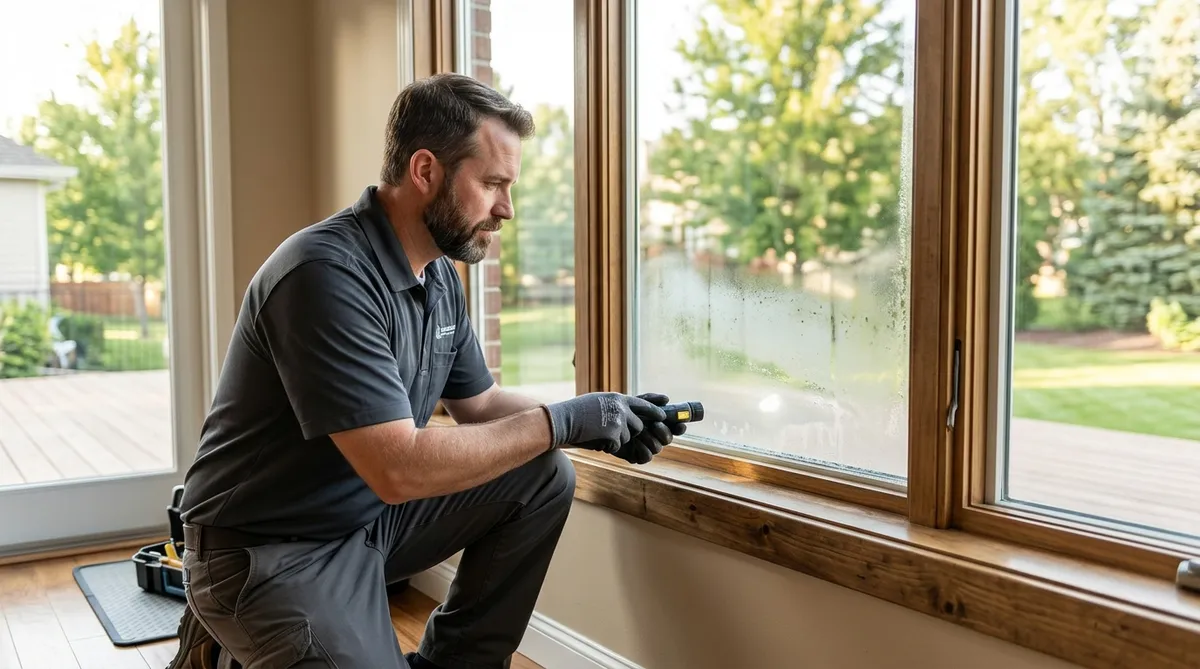
When the seal breaks, the gas escapes, and humid air sneaks in. On cold days, this moisture condenses between the panes, creating that foggy look. It's like dew on the inside of your window, but trapped where you can't wipe it away. If left unchecked, this condensation can lead to mold growth, further reducing your window's insulating properties and letting drafts slip through.
From our experience on job sites, foggy windows are one of the top complaints in older homes or those in humid climates. The good news? Recognizing the problem early can save you from bigger headaches down the line.
Spotting the Signs of Seal Failure and Condensation Issues
Not all fog is created equal—sometimes it's just external condensation from high humidity, which clears up when the weather changes. But if the haze persists or appears between the panes, it's likely seal failure. Here's how to tell:
- Visible Condensation: Look closely—if you see moisture droplets or frost forming inside the window (not on the surface), that's a red flag. You might even notice water pooling at the bottom of the pane on rainy days.
- Reduced Clarity: The fog can distort your view, making it hard to see outside. In severe cases, it might look like a permanent cloud.
- Energy Inefficiency Clues: Feel for drafts around the window frame. Your heating or AC might work harder, spiking utility bills. We often hear homeowners say their rooms feel colder near the window.
- Noise Increase: Insulated windows muffle sound; a failed seal lets more outside noise in.
- Other Damage: Check for discoloration, bubbling, or cracks in the glass, which can accompany seal issues.
To confirm, try the fingernail test: Place your finger against the glass. If your reflection shows two fingernails (one from each pane), the space is intact. A single reflection means the panes are touching due to pressure changes from a broken seal. Simple, right? If you're unsure, snap a photo and show it to a local contractor—they can diagnose it quickly during a free inspection.
Repair Options: Can You Fix a Foggy Window Without Replacing It?
The million-dollar question: Is repair worth it? In many cases, yes—for minor issues or if your windows are relatively new. But repairs aren't always a slam dunk, and DIY attempts can backfire. Let's dive into the options.
DIY Defogging Kits: A Temporary Band-Aid?
You'll find defogging kits online for $20-50 that involve drilling small holes in the glass, injecting a cleaning solution, and sealing them back up. The idea is to dry out the moisture and prevent more from forming.
Pros:
- Cheap and quick—do it yourself in an afternoon.
- Clears the fog temporarily, restoring visibility.
Cons:
- It doesn't fix the broken seal, so fog often returns within months.
- Drilling risks further damaging the glass or frame.
- Voids warranties on many windows.
We've advised against these for most folks. As contractors, we've cleaned up more messes from botched DIYs than successful fixes. If you're handy and the fog is light, it might buy time—but don't expect miracles.
Professional Seal Repair: When It's Feasible
A licensed window pro can replace the seal or even the entire IGU (the glass unit) without swapping the whole window frame. This involves:
- Removing the old glass unit.
- Installing a new sealed IGU that matches your window's size and style.
- Reinstalling and testing for leaks.
Costs typically run $150-400 per window, depending on size and location. It's ideal if:
- The frame is in good shape (no rot or warping).
- The window is under 10 years old.
- You have energy-efficient glass you want to preserve.
In our line of work, this works well for high-end vinyl or aluminum frames. But for wood frames, moisture damage might have spread, making full replacement necessary. Always get quotes from at least two pros to compare.
When Full Replacement Makes More Sense: The Smarter Long-Term Spend
Sometimes, repair just kicks the can down the road. If your windows are over 15-20 years old, or the fog is widespread, replacement is often the way to go. Here's why:
- Energy Savings Pay Off: New double-pane (or even triple-pane) windows with low-E coatings and better seals can cut energy loss by 20-30%. In a typical home, that means $100-300 annual savings on bills—recouping costs faster than you think.
- Improved Home Value: Updated windows boost curb appeal and can increase resale value by 70% of the installation cost, per real estate pros.
- Warranties and Durability: Modern windows come with 20-50 year guarantees on seals and glass. No more foggy surprises!
- Addressing Multiple Issues: If you have drafts, noise, or UV fading on blinds, new windows tackle it all.
Opt for replacement if:
- More than one window is affected (sign of systemic issues).
- The frame is damaged or outdated.
- You're remodeling anyway—combine for efficiency.
From job sites, we've replaced foggy windows in bulk for whole-home upgrades, and homeowners rave about the difference. Brands like Andersen, Pella, or Milgard offer customizable options that fit any budget.
Crunching the Numbers: Repair vs. Replacement Costs
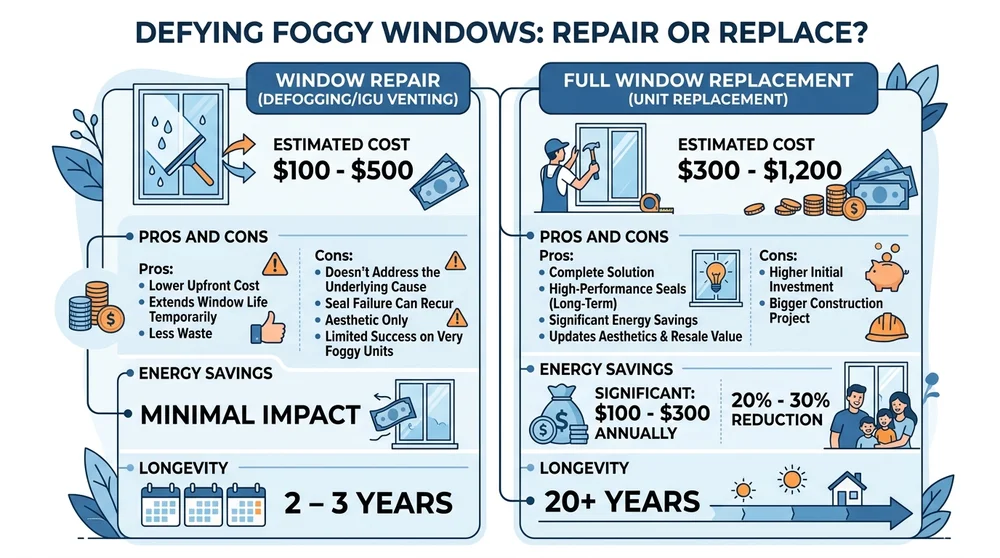
Let's talk dollars—because no one wants a surprise bill.
- Repair Costs: $100-500 per window for pro seal work. DIY is cheaper but risky.
- Replacement Costs: $300-1,200 per window installed, varying by material (vinyl cheapest, wood priciest) and size. For a standard 3x4 foot window, expect $400-700.
Factor in longevity: A $300 repair might fail in 2-3 years, costing more overall. A $600 replacement lasts 20+ years, plus those energy savings. Use online calculators from sites like EnergyStar.gov to estimate your ROI.
Pro Tip: Check for rebates! Many utilities offer incentives for energy-efficient windows, knocking 10-30% off the price.
Preventing Future Fog: Maintenance Tips from the Pros
An ounce of prevention is worth a pound of cure. Keep your windows fog-free longer with these habits:
- Regular Cleaning: Wipe frames with mild soap and water; avoid harsh chemicals that degrade seals.
- Inspect Annually: Look for cracks or gaps, especially after storms.
- Control Humidity: Use dehumidifiers in damp areas to reduce moisture stress.
- Trim Nearby Vegetation: Keep bushes from rubbing against glass, which can nick seals.
- Professional Tune-Ups: Every 5 years, have a contractor check seals during routine maintenance.
Small steps like these extend window life and catch issues early.
Wrapping It Up: Choose What's Right for Your Home
Foggy double-pane windows don't have to be a foggy decision. Start by assessing the damage—if it's just one pane and the frame's solid, repair might suffice. But for lasting peace of mind and efficiency, lean toward replacement, especially in older setups. Either way, consult a licensed pro through ContractorLink.pro to get eyes on it.
We've helped countless homeowners navigate this, turning frustrating fog into crystal-clear views. Your home deserves windows that work as hard as you do—here's to brighter, cozier days ahead!