Demystifying Your Electric Bill: The Homeowner's Guide to kWh, Demand Charges, and Seasonal Spikes
Ever stared at your electric bill, scratching your head over terms like kWh and demand charges, wondering why your costs skyrocket in summer or winter? As contractors who've wired countless homes and troubleshot energy hogs for years, we at The Pipeline get it—those bills can feel like a cryptic puzzle. But decoding them isn't just about paying up; it's about spotting inefficiencies that could be draining your wallet and your home's comfort. In this guide, we'll walk you through the essentials of reading your electric bill, empowering you to make smart changes that save money and energy. Let's dive in and turn those numbers into actionable insights.
What Is kWh and Why Does It Matter?
At the heart of every electric bill is the kilowatt-hour (kWh), the standard unit for measuring electricity usage. Think of it like miles on your car's odometer: it tracks how much energy your home consumes over a billing period, usually a month. One kWh equals 1,000 watts of power used for one hour—for example, running a 100-watt light bulb for 10 hours.
Your bill typically shows two key numbers: your total kWh used and the rate per kWh, which might vary by time of day or season (more on that later). Multiply them, and you get your base energy cost. But rates aren't uniform; in many areas, they're tiered, meaning you pay more for higher usage levels to encourage conservation.
As pros, we've seen homeowners shocked by bills jumping from 500 kWh to 1,200 in a month. Often, it's not mystery—it's inefficiency. To spot issues, compare your monthly kWh to past bills or your home's average. The U.S. Energy Information Administration pegs the national average at about 877 kWh per month for a single-family home, but this varies by climate and home size.
Practical Tips to Track and Reduce kWh Usage
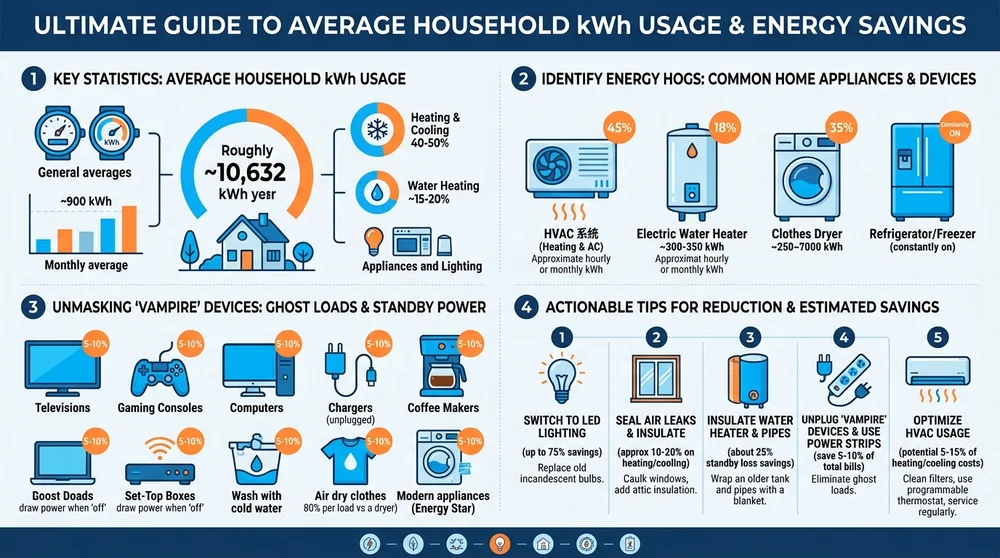
Start by auditing your appliances. That old fridge from the '90s? It could guzzle 1,500 kWh a year—up to twice as much as a modern Energy Star model. Unplug vampire devices like chargers and TVs that draw power even when off; they can add 5-10% to your bill.
Install a smart meter if your utility offers one—it provides real-time kWh data via an app, letting you see spikes from things like laundry cycles or AC blasts. For a deeper dive, use a plug-in energy monitor on major appliances. We recommend starting with your water heater, which often accounts for 15-20% of usage. Set it to 120°F and insulate the tank to cut standby losses by up to 25%.
Lighting is low-hanging fruit: Swap incandescents for LEDs, which use 75% less energy and last 25 times longer. If you're handy, add motion sensors or timers to outdoor lights. Over time, these tweaks can shave 10-20% off your kWh without sacrificing convenience.
Unpacking Demand Charges: The Hidden Cost of Peak Power
If your bill includes a 'demand charge' line, don't ignore it—it's not just jargon for big commercial users; more residential plans are incorporating it to reflect grid strain. Demand charges bill you based on your home's peak power draw (in kilowatts, or kW) during the billing period, not total usage. It's like paying for the widest part of a river, even if the flow is low most of the time.
Utilities measure this over short intervals, say 15-30 minutes, and charge per kW of maximum demand. For homeowners, it kicks in with high-draw setups like electric vehicle chargers, pool pumps, or whole-home backups. In peak summer hours, firing up AC, oven, and dryer simultaneously could spike your demand to 10-15 kW, triggering charges of $5-15 per kW.
We've installed demand-response systems in homes where peaks were the bill-killer. One client in Texas saw $200 monthly demand fees drop to $50 after we staggered their loads. Spot it on your bill as a separate fee or embedded in your total—look for terms like 'peak demand' or 'capacity charge.'
How to Manage and Minimize Demand Charges
Time your usage: Shift laundry, dishwashing, and EV charging to off-peak hours, often evenings or weekends when rates and demand are lower. Smart thermostats like Nest or Ecobee learn your patterns and adjust AC to avoid peaks, potentially saving 10-15% on demand-related costs.
Upgrade your electrical panel if it's outdated—older 100-amp services can't handle modern loads efficiently, leading to artificial peaks. Consider a load-monitoring device that alerts you to high draws in real-time. For larger homes, soft-start kits on AC units reduce startup surges by 50-70%, a game-changer for demand bills.
If your utility offers time-of-use (TOU) plans, switch to one that aligns demand charges with lower evening rates. Pro tip: Map your home's circuit loads with a clamp meter (under $50 online) to identify hotspots before they hit your wallet.
Decoding Seasonal Spikes: Why Your Bill Jumps in Summer and Winter
Bills don't stay flat year-round—seasonal spikes are normal but can signal waste. In hot climates, summer AC use can double kWh from 600 to 1,200 monthly. Winter heating in cold areas does the same with furnaces or space heaters. Your bill might show higher rates during these 'peak seasons' via seasonal pricing, where summer tiers start at lower kWh thresholds.
Look for the billing period dates; a hot July spanning two cycles can inflate numbers. Fixed-rate plans smooth this, but variable ones tie to wholesale costs, spiking with heatwaves or cold snaps. We've fielded calls from homeowners panicking over 50% jumps—usually, it's not a leak but unchecked usage.
Identifying and Taming Seasonal Inefficiencies
Seal the envelope: Drafty windows and doors let conditioned air escape, forcing your HVAC to work overtime. Caulk gaps and add weatherstripping—DIY for under $20, saving 10-20% on heating/cooling. In summer, close blinds during peak sun to block heat; in winter, open them for passive solar gain.
Tune up your HVAC annually. Dirty filters restrict airflow, spiking energy use by 15%. We clean coils and check refrigerant—often overlooked, low levels can increase consumption by 20-30%. Programmable thermostats set back 7-10°F when away or asleep cut spikes without discomfort.
For electric heat homes, layer insulation in attics to R-49 levels; it pays back in one season. In humid areas, dehumidifiers prevent AC overwork—run them on low during mild days. Track weather correlations: If spikes align with 90°F days, your insulation or ductwork needs pro inspection.
Spotting Broader Inefficiencies: Red Flags and Next Steps
Beyond basics, watch for anomalies like a steady 10% rise year-over-year—could be aging wiring or phantom loads. Bills over $200/month for a small home? Time for an energy audit. Utilities often provide free ones, or hire a certified pro for $300-500; they'll use blowers and infrared cameras to pinpoint leaks.
Compare your kWh per square foot (national average ~5-7) to gauge efficiency. If wiring feels warm or lights flicker, call an electrician—faulty circuits waste power and risk fires. Smart home integrations, like whole-home energy monitors, give granular data to catch issues early.
We've retrofitted homes where simple fixes—like LED bulbs, insulation, and load balancing—dropped bills 30%. Start small: Pick one section of your bill each month to tackle. Over time, you'll not only save but boost your home's value and comfort.
By understanding kWh, demand charges, and seasonal patterns, you're equipped to turn your electric bill from foe to friend. As contractors, we've seen the transformation: Homes that run efficiently feel better and cost less. Grab that bill, highlighter in hand, and start spotting those savings today.