The Real Risks of Skipping Your Annual Chimney Sweep: Creosote, Fires, and Hidden Dangers
If you're like many homeowners, your fireplace is a cozy centerpiece during chilly evenings, but that annual chimney sweep might feel like just another chore on the to-do list. As pros who've seen the aftermath of neglected chimneys, we at ContractorLink.pro urge you not to skip it. What starts as a simple oversight can escalate into costly repairs, health hazards, and even tragedy. In this post, we'll dive into the real risks of ignoring your chimney maintenance, focusing on creosote buildup, chimney fires, and carbon monoxide dangers. We'll also break down what a professional inspection includes so you know exactly what you're paying for. Let's keep your home safe and your fires roaring worry-free.
Understanding Creosote Buildup: The Sticky Culprit
Creosote is that tar-like residue that forms when wood smoke cools and condenses inside your chimney. It's a byproduct of burning wood, and it accumulates over time, especially if you're using your fireplace regularly. Think of it as the chimney's unwanted guest that overstays its welcome.
Why does it build up? It all comes down to incomplete combustion. When you burn green or unseasoned wood, or if your fire isn't hot enough, more creosote forms. Over time, this sticky substance hardens into a flaky or glassy layer that narrows your chimney flue. A buildup of just 1/8 inch can restrict airflow, making your fires less efficient and more prone to issues.
From our experience on the job, we've cleaned chimneys where creosote had built up so thick it resembled a chimney within a chimney. Not only does this reduce heat output—meaning you're burning more wood for less warmth—but it creates a perfect storm for other problems. If left unchecked, creosote doesn't just sit there; it becomes fuel for something far more dangerous.
Practical tip: Always burn dry, seasoned hardwood in your fireplace. Avoid softwoods like pine, which produce more creosote. And if you notice black soot around your damper or a strong smoky smell in your home, that's a red flag for buildup. Schedule a sweep before the heating season ramps up to prevent these issues from snowballing.
Chimney Fires: When Neglect Ignites Disaster
One of the scariest risks of skipping your annual chimney sweep is a chimney fire. These aren't your typical house fires; they're intense blazes fueled by creosote that can roar up the flue at temperatures exceeding 2,000 degrees Fahrenheit. We've responded to calls where homeowners thought their chimney was 'fine,' only to find flames shooting out the top, cracking flue liners and spreading heat damage to the roof.
How do they start? Creosote is highly flammable. A spark from your fire, combined with poor airflow from buildup, can ignite the residue. Stage 1 fires smolder quietly, often going unnoticed, while Stage 3 fires explode with loud cracking sounds, dense smoke, and visible flames. The National Fire Protection Association reports that chimney fires cause millions in property damage annually, and in severe cases, they can lead to full structural fires.
The damage isn't just immediate. Even a 'minor' chimney fire can weaken your chimney's masonry, leading to cracks that allow heat to escape and potentially ignite nearby combustible materials like roof rafters or attic insulation. We've seen homes where a single overlooked sweep resulted in thousands in repairs, from relining the flue to patching structural damage.
Homeowner action step: Install a chimney cap to prevent debris and animal nests from exacerbating buildup. If you hear banging or see puffs of smoke during use, shut off the fire immediately and call a pro. Annual sweeps remove creosote before it reaches critical levels—typically, we recommend them after every 1-2 cords of wood burned, or at least once a year.
Carbon Monoxide: The Invisible Threat Lurking in Your Home
Carbon monoxide (CO) is odorless, colorless, and tasteless—earning it the nickname 'silent killer.' When your chimney isn't maintained, creosote and soot can block the flue, preventing proper venting of combustion gases from your fireplace, wood stove, or even connected heating systems. This forces CO back into your living space, where it can build up to dangerous levels.
We've inspected homes where families experienced headaches, dizziness, and nausea, only to discover CO leaks from clogged chimneys. In extreme cases, it leads to poisoning or worse. The CDC notes that over 400 unintentional CO deaths occur yearly in the U.S., with faulty venting as a top cause. Skipping sweeps increases this risk because buildup isn't just about fire—it's about trapping deadly gases.
Other factors play in too: Bird nests, fallen leaves, or deteriorating chimney crowns can seal off the flue like a cork. If your chimney shares a wall with your home's HVAC system, the problem amplifies. Symptoms mimic the flu, so many dismiss them until it's too late.
Pro advice: Install CO detectors on every level of your home, especially near sleeping areas. Test them monthly and replace batteries twice a year. During your sweep, ask for a CO safety check. If you smell an unusual odor or feel unwell after using your fireplace, air out the house and seek fresh air immediately—then get that inspection ASAP.
What a Professional Chimney Inspection Actually Includes
Wondering what you're getting with a professional chimney sweep? It's more than just a quick brush-down. Certified chimney sweeps, like those we connect you with through ContractorLink.pro, follow standards from the Chimney Safety Institute of America (CSIA). A full Level 1 inspection, recommended annually, covers several key areas.
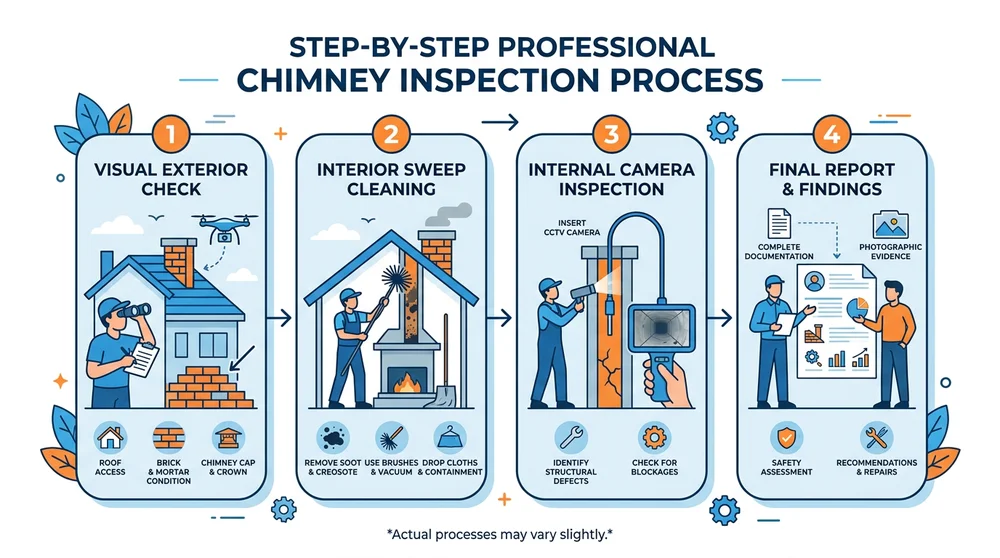
First, the visual exterior check: We examine the chimney crown, cap, and flashing for cracks, corrosion, or missing parts that could let water in, leading to spalling (where bricks crumble). Water damage is a silent destroyer, weakening the structure over time.
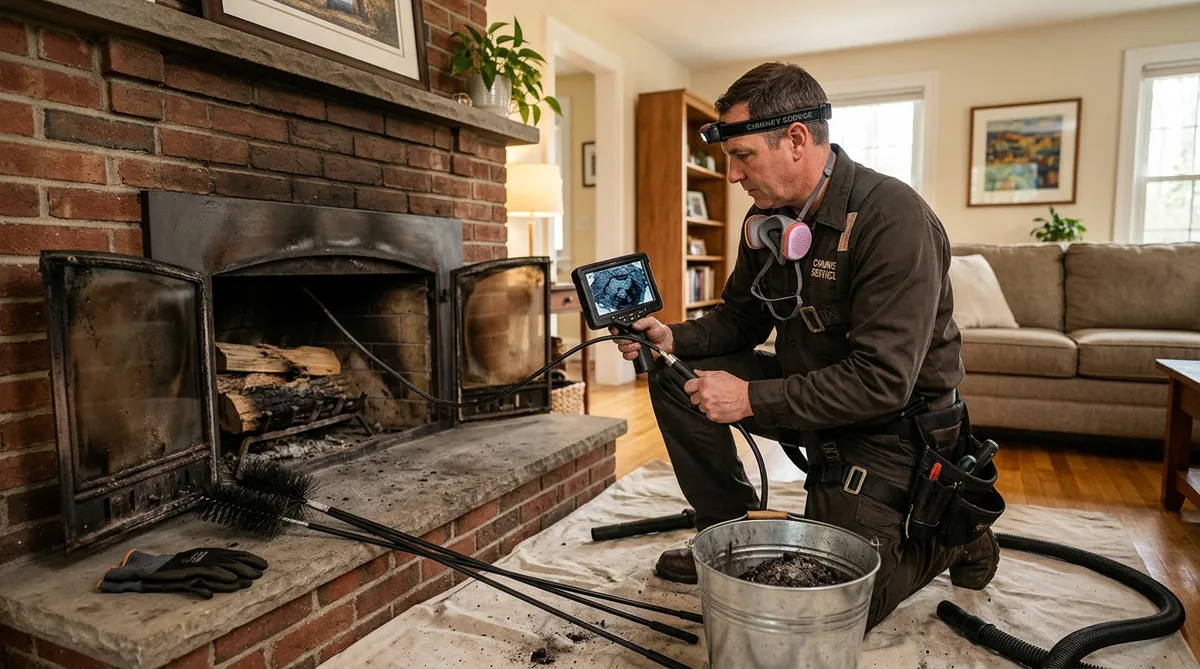
Next, the interior sweep: Using specialized brushes and vacuums, we remove all creosote, soot, and debris from the flue. For masonry chimneys, this might involve a wire brush; for metal prefabricated ones, softer tools to avoid damage. We measure buildup levels and advise on frequency—some homes need sweeps every six months if they're heavy users.
Then comes the internal inspection: With a camera (in a Level 2 if needed), we scope the liner for cracks, gaps, or blockages. This reveals issues like offset flues or deteriorating mortar joints that could compromise safety. We'll also check the firebox, damper, and smoke chamber for wear.
Finally, the report: You'll get a detailed summary with photos, recommendations, and any urgent fixes—like installing a new liner or repairing the crown. The whole process takes 1-2 hours for most homes and costs $150-300, a small price compared to the risks.
Insider tip: Choose a CSIA-certified sweep. They use the right tools and know local codes. If your chimney hasn't been cleaned in years, opt for a Level 2 video inspection to uncover hidden problems.
Signs Your Chimney Needs Immediate Attention
Don't wait for the annual mark if these warning signs appear. Poor draft—where smoke billows into the room instead of up the chimney—signals blockage. A foul, acrid smell when the fireplace is off? That's creosote fermenting. Yellowish stains on the exterior or falling debris inside indicate structural issues.
If your fires burn with more smoke than usual or you notice creosote flakes in the firebox, act fast. These are your chimney's way of crying for help. We've turned around emergency jobs where delays could have been disastrous—better safe than sorry.
Preventing Risks: Simple Habits for Chimney Health
Beyond annual sweeps, maintain good habits. Use a fireplace screen to catch embers, and never leave fires unattended. Burn only clean, dry wood, and consider a wood stove thermometer to ensure optimal burn temps (above 250°F to minimize creosote).
For multi-flue chimneys, inspect all sections. And if you're in a region with harsh winters, check for ice dams that could damage the structure. These proactive steps, combined with professional care, ensure your chimney lasts decades without drama.
In the end, skipping your chimney sweep isn't worth the risk. Creosote buildup, chimney fires, and carbon monoxide threats are real, but they're preventable with routine maintenance. As contractors who've fixed countless chimney mishaps, we see it time and again: A little prevention saves big headaches. Stay safe this season—your family and home will thank you.