Is a Whole-House Generator Worth the Investment? Weighing Costs Against Power Outage Realities
Power outages strike without warning, leaving homeowners in the dark—literally. Whether it's a summer storm knocking out the grid or winter ice weighing down power lines, the frustration of spoiled food, interrupted work, or worse, compromised safety is all too real. As contractors at ContractorLink.pro, we've seen firsthand how a whole-house generator can be a game-changer for some families. But is it worth the hefty upfront cost? In this post, we'll dive into the nitty-gritty: installation expenses, ongoing maintenance, and how factors like your area's outage frequency, medical dependencies, and home office setup tip the scales. By the end, you'll have the pro insights to make an informed decision.
What Is a Whole-House Generator and How Does It Work?
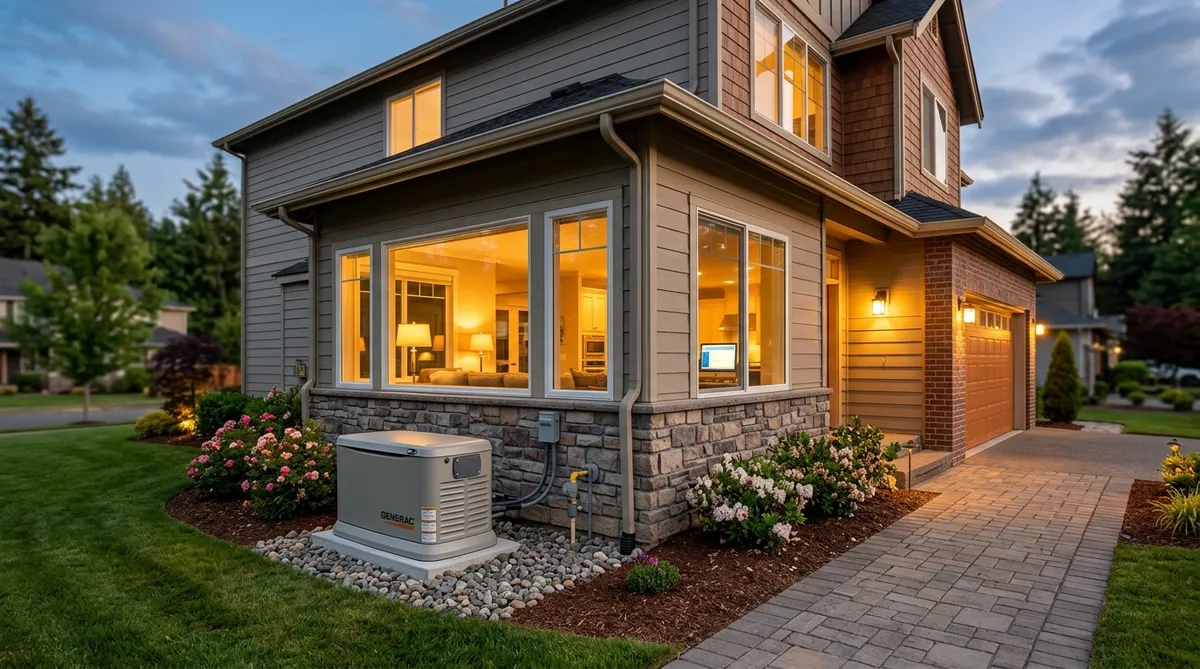
A whole-house generator, also known as a standby generator, is a permanent backup power system installed outside your home, typically near the utility meter. Unlike portable generators that you wheel out during an outage, these units automatically detect when the power goes out and kick in within seconds, seamlessly powering your entire home.
Most models run on natural gas, propane, or diesel, connecting directly to your home's electrical panel via a transfer switch. This setup ensures critical systems—like lights, refrigerators, HVAC, and even well pumps—stay operational. Capacities range from 7kW for smaller homes to 20kW or more for larger properties, with prices reflecting that power level.
From our experience installing these systems, the key advantage is reliability. No fumbling with extension cords or worrying about fuel runs in bad weather. But reliability comes at a price, which we'll unpack next.
Breaking Down the Costs: Upfront and Long-Term
Let's talk numbers, because that's where many homeowners get sticker shock. The average cost for a whole-house generator installation ranges from $5,000 to $15,000, depending on size, fuel type, and your home's electrical setup. A basic 10-20kW unit might run $4,000-$6,000 for the generator itself, but add in professional installation—crucial for safety and code compliance—and you're looking at $10,000-$12,000 total for a mid-sized home.
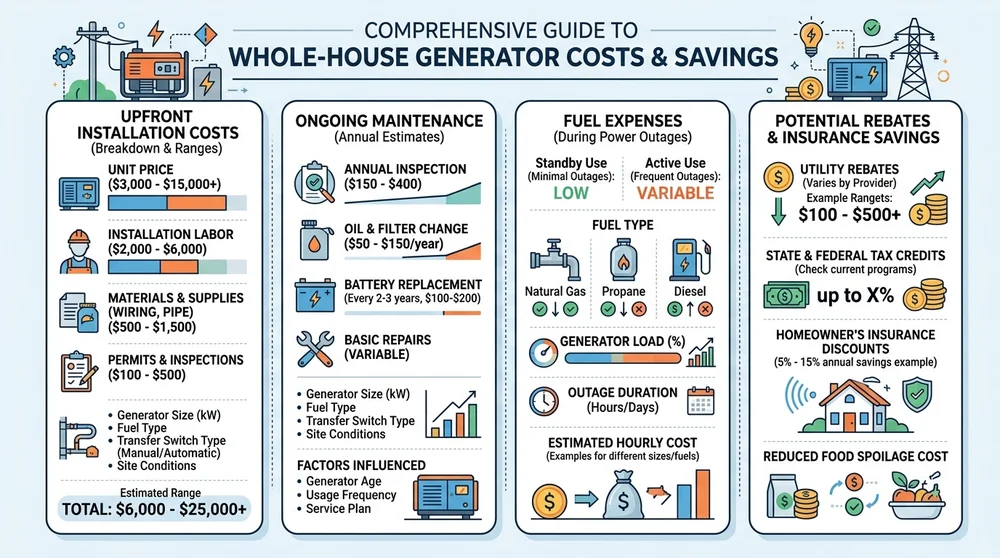
Why the range? Factors like site preparation (digging for gas lines or concrete pads), electrical upgrades, and permits play a big role. In areas with strict building codes, like coastal regions prone to hurricanes, costs can climb higher due to reinforced mounting.
Ongoing expenses add up too. Fuel costs vary: natural gas is convenient if you're already hooked up (about $0.50-$1 per hour of runtime), while propane tanks need refilling ($200-$500 annually if used sparingly). Maintenance is non-negotiable—annual servicing runs $200-$500, including oil changes, battery checks, and load testing. Over 10 years, you could spend $3,000-$5,000 on upkeep, not counting rare repairs like a $1,000 alternator fix.
Insurance perks can offset some costs; many providers offer discounts of 5-15% on premiums for generator owners, potentially saving $100-$300 yearly. And in outage-heavy zones, tax credits or rebates (check local utilities or FEMA programs) might knock off $500-$2,000 upfront.
As pros, we always advise getting multiple quotes from licensed electricians. Skimping here could lead to voided warranties or safety hazards—definitely not worth the savings.
Outage Frequency: How Often Does the Power Go Out in Your Area?
The biggest question: how reliable is your local grid? If outages are rare—a few hours every couple of years—a generator might feel like overkill. But in storm-prone areas like the Southeast or Midwest tornado alleys, blackouts can last days, making backup power a necessity.
Consider this: the U.S. averages 1.5 major weather-related outages per year per household, but that's national. In California, wildfire risks mean weeks-long disruptions; Florida hurricanes can sideline power for a week. Use tools like the EIA's outage maps or your utility's historical data to gauge your risk. If you've had more than three significant outages (over 4 hours) in the last five years, the investment starts to pencil out.
ROI-wise, think about spoiled groceries ($200-$500 per event), hotel stays during extended blackouts ($100/night), or lost productivity. For frequent outages, a generator pays for itself in 5-10 years through avoided hassles. We've installed units in rural areas where lines go down weekly—those clients rave about the peace of mind.
Medical Needs: When Power Is a Lifeline
For households with medical dependencies, the equation changes dramatically. If someone relies on powered equipment like CPAP machines, oxygen concentrators, or dialysis setups, outages aren't just inconvenient—they're dangerous. The CDC notes that power failures contribute to thousands of emergency visits annually for at-risk individuals.
A whole-house generator ensures these devices run uninterrupted. For example, a standard CPAP needs about 50-100W; most generators handle that easily, plus essentials like room lighting and charging medical devices. We've worked with families where a parent's ventilator was at stake—installing a generator wasn't a luxury; it was life-saving.
Cost-benefit here skews heavily toward yes. Medicare or insurance might cover part of the install if medically necessary (consult your provider), and the emotional security is priceless. If medical needs factor in, prioritize generators with medical-grade reliability, like those with extended runtime and quiet operation to avoid disturbing rest.
Home Office Dependency: Keeping Work Flowing During Blackouts
In our increasingly remote world, a home office outage can mean missed deadlines and lost income. If you're self-employed, freelancing, or in a job requiring constant connectivity, downtime hits your wallet hard. A single day without power could cost $200-$1,000 in productivity, per studies from Upwork.
Whole-house generators shine here, powering computers, routers, printers, and even server setups without a hitch. No need for battery backups that fizzle after hours; these units run as long as fuel lasts—days on a full propane tank.
We've seen professionals in tech-heavy homes swear by them, especially post-pandemic when hybrid work solidified. If your setup includes high-draw items like multiple monitors or HVAC to keep servers cool, calculate your load: a 10kW unit covers most offices under 2,000 sq ft. For frequent remote workers in outage-prone areas, the generator's ability to maintain workflow makes it a solid business expense—potentially tax-deductible if you claim home office deductions.
Pros and Cons: A Balanced View from the Field
Pros:
- Seamless Operation: Auto-start means no manual intervention; ideal for elderly or mobility-limited homeowners.
- Property Value Boost: Adds 1-3% to resale value, per real estate experts, appealing to buyers in unreliable grid areas.
- Comprehensive Coverage: Powers the whole home, not just select outlets.
- Longevity: Quality units last 20-30 years with proper care.
Cons:
- High Initial Cost: Not budget-friendly for everyone.
- Noise and Emissions: Even quiet models hum at 60-70 dB; placement matters to avoid neighbor complaints.
- Fuel Dependency: Gas shortages during widespread disasters can limit runtime.
- Overkill for Mild Climates: If outages are brief and rare, simpler options suffice.
In our installs, the pros outweigh cons for 70% of clients, but it's personal.
Alternatives to a Full Whole-House System
Not sold on the full monty? Consider these:
- Portable Generators: $500-$2,000, great for essentials but manual and fuel-hungry.
- Solar Battery Systems: Like Tesla Powerwall ($10,000+ installed), eco-friendly but pricier per kWh and weather-dependent.
- Partial Home Kits: Transfer switches for key circuits ($1,000-$3,000) pair with portables for targeted power.
For light needs, a UPS battery for your office or fridge ($100-$500) bridges short gaps. But for whole-home reliability, nothing beats standby.
Making the Decision: Is It Right for You?
Ultimately, a whole-house generator's worth hinges on your unique situation. Tally your outage history, assess medical or professional risks, and crunch the numbers—use online calculators from Generac or Kohler for estimates. If outages disrupt your life more than once a year or pose health threats, it's likely a yes.
As contractors, we recommend starting with an energy audit to size the right unit and consulting licensed pros via platforms like ContractorLink.pro. Peace of mind during the next storm? That's the real return on investment.
(Word count: 1,248)