Pre-Winter Furnace Tune-Up: What a Tech Actually Checks to Keep You Warm and Safe
As the leaves turn and temperatures drop, there's no better time to get your furnace ready for the cold months ahead. At The Pipeline, we've seen countless homeowners skip their annual furnace tune-up, only to face breakdowns, skyrocketing energy bills, or worse—safety hazards—when the first frost hits. But what exactly happens during that service call? As pros who've tuned up thousands of systems, we're pulling back the curtain on the pre-winter furnace tune-up. This isn't just a quick once-over; it's a thorough checklist designed to optimize performance, extend your furnace's life, and keep your family safe.
Understanding the process empowers you to make informed decisions about your home's heating. Whether you have a gas, electric, or oil-fired furnace, the core steps are similar, though specifics can vary by type. A typical tune-up takes 1-2 hours and costs $75-$200, depending on your location and system complexity. It's a small investment compared to emergency repairs, which can run into the thousands. Let's dive into what your technician actually does, step by step.
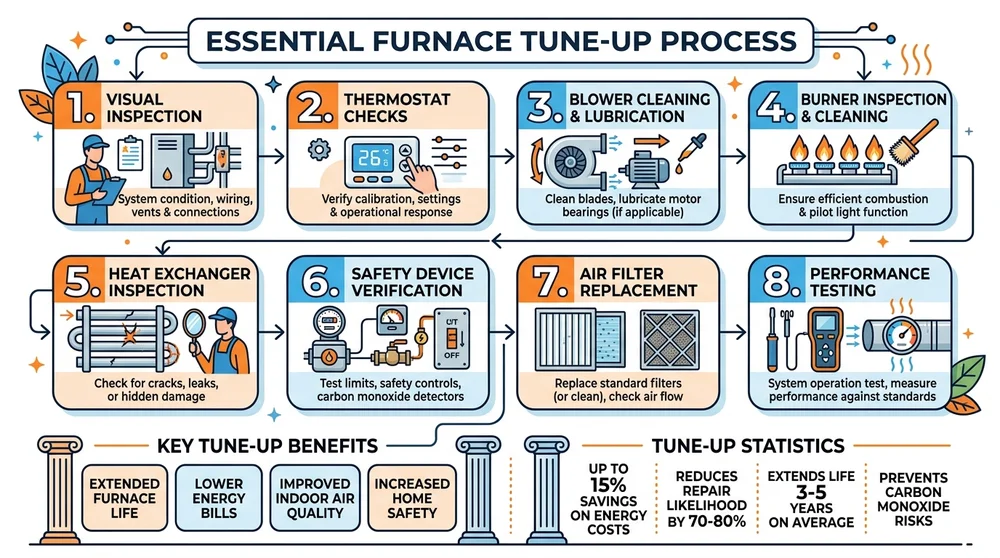
Initial Visual Inspection: Spotting the Obvious (and Hidden) Issues
Every tune-up starts with a visual walkthrough—no tools needed yet, just experienced eyes. Your tech begins by examining the furnace's exterior and surrounding area for signs of wear, damage, or neglect. They'll check for rust, corrosion, or cracks on the cabinet, which could indicate leaks or structural weaknesses. Loose panels or improper sealing around the unit are red flags for air leaks that waste energy and let in dust.
Next, they inspect the venting system. For gas furnaces, this means looking at the flue pipe and exhaust vent for blockages, dents, or disconnections. Birds' nests, leaves, or even ice buildup from last winter can obstruct airflow, leading to dangerous carbon monoxide buildup. They'll also peek at the air intake—ensuring it's clear of debris like leaves or spiderwebs.
Why does this matter? A simple visual check can prevent 30-40% of common failures. As a homeowner, you can mimic this by walking around your furnace monthly, wiping down the exterior, and clearing vents. But pros know where to look for subtle issues, like early signs of heat exchanger cracks, which could turn deadly if ignored.
Thermostat and Electrical Components: Ensuring Smart, Safe Operation
With the basics cleared, the tech moves to the brain of your system: the thermostat and wiring. They test the thermostat for accuracy—does it read the room temperature correctly? An outdated or malfunctioning thermostat might cause uneven heating or short-cycling, where the furnace turns on and off too frequently, stressing the system.
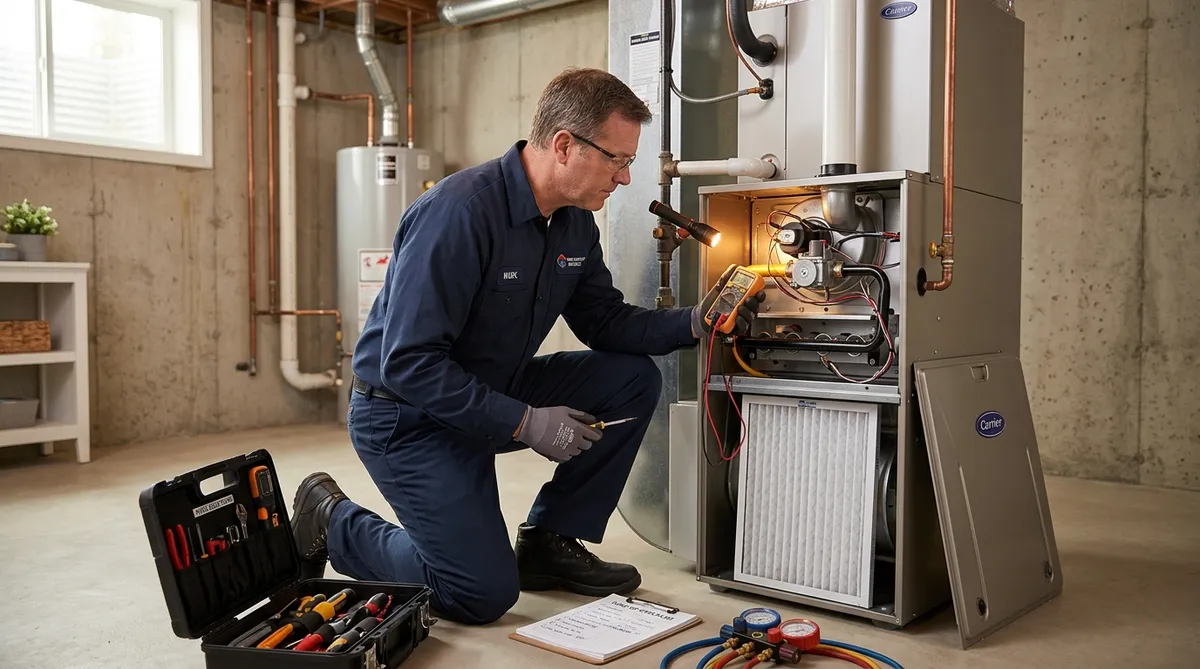
Electrical checks are crucial, especially for safety. They'll inspect all wiring for frays, loose connections, or signs of overheating (like melted insulation). Capacitors, relays, and the control board get a once-over; these components regulate power flow and can fail silently, leading to no heat when you need it most. For gas furnaces, they'll verify the ignition system—whether it's a hot surface igniter or pilot light—ensuring it lights reliably without sputtering.
Pro tip: If your thermostat is over 10 years old, consider upgrading to a programmable or smart model during the tune-up. It can save up to 10% on energy bills by optimizing run times. Technicians often calibrate or replace batteries on the spot, but always ask them to explain any electrical tweaks—they're preventing potential fires or shocks.
Cleaning the Blower and Airflow System: Breathing New Life into Your Furnace
Now comes the dirty work: cleaning. Dust and debris accumulate inside your furnace over the summer, reducing efficiency and straining the motor. The tech removes the blower assembly, a fan that circulates warm air through your ducts. They'll vacuum out dirt from the blades and housing, then lubricate the motor bearings if it's not sealed. A clean blower can improve airflow by 20-30%, meaning faster, more even heating.
They'll also clean or replace the air filter—something you should do monthly yourself, but pros ensure it's the right size and type (like a high-MERV filter for better air quality). Clogged filters force the blower to work harder, hiking energy use by up to 15%.
Beyond the blower, they'll inspect and clean the evaporator coils (if it's a forced-air system) for any buildup. For furnaces with humidifiers or air purifiers attached, those get a wipe-down too. Homeowners, take note: Schedule filter changes in your calendar, and use a soft brush to gently clean accessible vents. This preemptive cleaning extends motor life and keeps indoor air cleaner, reducing allergy triggers.
Burner and Heat Exchanger Inspection: The Heart of Heat Production
This is where the magic (and danger) happens—the combustion chamber. For gas and oil furnaces, the tech removes the burner assembly to inspect for soot, rust, or uneven wear. They clean the burners meticulously, often using a wire brush or compressed air to remove carbon deposits that cause inefficient burning and higher fuel use.
The heat exchanger, a series of metal tubes that transfers heat from combustion gases to your air without mixing them, gets a close look. Using a mirror, flashlight, or even a camera probe, they'll check for cracks, pinholes, or warping. A compromised exchanger can leak deadly gases like carbon monoxide into your home. If damage is found, the tech will recommend replacement—it's not a DIY job, as it involves specialized tools and safety protocols.
They'll also test the gas pressure and flame quality. A blue, steady flame is ideal; yellow or flickering suggests improper air-fuel mix, which could lead to incomplete combustion. Adjustments here ensure your furnace runs at peak efficiency, potentially saving 5-10% on heating costs. As a pro tip, install a carbon monoxide detector near the furnace and bedrooms—test it monthly, and never ignore beeps.
Safety Devices and Gas Line Checks: Prioritizing Protection
Safety isn't an afterthought; it's woven throughout the tune-up. The tech verifies all safety switches: the limit switch (shuts off if overheating), rollout switch (detects flame issues), and pressure switch (ensures proper venting). Each is tested by simulating failures to confirm they trip correctly.
For gas systems, they check the supply line for leaks using soapy water or an electronic detector—bubbles or alarms mean immediate shutoff and repair. The shutoff valve is exercised to ensure it works smoothly. Oil furnaces get similar fuel line inspections for cracks or clogs.
Draft testing is key: They'll use a manometer to measure airflow in the exhaust, confirming hazardous gases vent outside. If your furnace has a draft inducer motor, it's cleaned and tested for noise or vibration. These checks comply with codes like those from the International Fuel Gas Code, preventing tragedies. Homeowners can help by keeping the area around the furnace clear of flammable materials and scheduling annual checks without fail.
System Performance Testing: Putting It All Together
With cleaning and inspections done, the tech fires up the furnace for a full operational test. They'll monitor temperature rise—how much hotter the air gets after passing through the exchanger (typically 40-70°F for gas units). Amp draw on the blower motor is checked against specs to spot electrical strain.
They'll also assess overall efficiency using tools like a combustion analyzer, which measures oxygen levels, CO production, and fuel efficiency. Adjustments to the air shutter or gas valve fine-tune the burn for optimal performance. For multi-stage or variable-speed furnaces, they'll verify seamless transitions between speeds.
Finally, a static pressure test checks ductwork for restrictions—too much resistance means poor airflow and higher bills. If issues are found, the tech might suggest duct sealing or cleaning as add-ons. This holistic test ensures your system is balanced, quiet, and ready for winter demands.
Why Skip the Tune-Up? The Risks and Rewards
We've covered the nuts and bolts, but let's talk real-world impact. Neglecting a tune-up can void warranties, increase breakdowns (furnaces fail most in peak season), and spike energy use by 20% or more due to dirt and inefficiency. On the flip side, a well-maintained furnace lasts 15-20 years instead of 10-12, qualifies for rebates on efficient models, and provides peace of mind.
As contractors, we've fixed furnaces that should've been tuned up—cracked exchangers from unchecked soot, motors burned out from dirty blowers. But the good news? Most tune-ups reveal minor issues fixable on the spot, averting big problems. For pre-winter prep, aim to book in September or October before the rush.
In summary, a furnace tune-up is your system's annual physical, catching issues early and ensuring reliable heat. By knowing what pros check, you're better equipped to maintain your setup year-round. Stay warm, stay safe, and keep your home running smoothly.
(Word count: 1247)