Is Fall the Best Time to Replace Your HVAC System? Why Off-Peak Seasons Mean Savings and Speed
The Timing Game: Why Season Matters for HVAC Replacement
As a homeowner, you've probably felt that familiar dread when your air conditioner sputters out on a scorching summer day or your furnace fails during a brutal winter storm. Replacing an HVAC system is a big investment—both in time and money—so timing it right can make all the difference. From our years in the trenches at ContractorLink.pro, we've seen how the seasons play a huge role in everything from pricing to project timelines. And if you're wondering, 'Is fall the best time to replace your HVAC system?' the answer is a resounding yes for most folks. Let's break down why off-peak seasons like fall offer unbeatable perks, including better pricing, faster scheduling, and more contractor availability.
Fall sits in that sweet spot between the sweltering demands of summer cooling and the urgent needs of winter heating. While spring and summer see a rush of AC repairs and replacements, and winter brings a flurry of furnace fixes, autumn tends to be calmer. This lull means contractors aren't buried under emergency calls, giving you leverage as a customer. But don't just take our word for it—let's dive into the details with some pro insights to help you decide if now's the time to upgrade your home's climate control.
Understanding Off-Peak Seasons for HVAC Work
In the HVAC world, 'peak season' aligns with extreme weather. Summer's heat waves drive everyone to crank up their ACs, overwhelming systems and contractors alike. Come winter, the cold snaps do the same for heating units. Fall and early spring, however, are transitional periods where the pressure eases off. Temperatures are mild, so urgent breakdowns are less common, and homeowners aren't scrambling to beat the next big weather event.
This off-peak dynamic isn't just about weather—it's about supply and demand. With fewer jobs on the docket, contractors can focus on planned replacements like yours. For instance, scheduling a full HVAC swap in July might mean waiting weeks or paying a premium for rush service. In October? You could have quotes back in days and installation wrapped up before the first frost. We've connected countless homeowners through ContractorLink.pro during these windows, and the feedback is consistent: smoother processes and happier outcomes.
Beyond the basics, off-peak timing lets you avoid the chaos of supply chain hiccups that plague busy seasons. Parts for popular systems are more readily available without backorders, ensuring your project doesn't drag on. If you're eyeing energy-efficient models with rebates, fall applications often process faster too, as utility companies aren't swamped.
Better Pricing: How Fall Keeps Costs Down
One of the biggest draws of fall HVAC replacement is the pricing sweet spot. During peak times, contractors hike rates to cover overtime, expedited shipping, and the sheer volume of work. In off-peak, competition for jobs increases, so bids tend to be more competitive—and lower.
Expect savings of 10-20% compared to summer peaks, depending on your location. For a mid-range system costing $5,000-$10,000 installed, that's real money back in your pocket. Why the discount? Contractors have fixed overhead like trucks, tools, and staff salaries, so filling slower months with steady work helps their bottom line without the need for premium pricing.
Pro tip: Shop around in early fall, say September, when contractors are eager to lock in projects before winter. Use platforms like ContractorLink.pro to compare licensed pros side-by-side. Look for bundle deals too—some offer free duct cleaning or thermostat upgrades during off-peak to sweeten the pot. And don't forget seasonal promotions; manufacturers often push end-of-year incentives to clear inventory for new models.
We've seen homeowners negotiate even better by bundling HVAC with other fall tasks, like gutter cleaning or insulation checks. Just remember, while prices are lower, quality shouldn't be. Always verify warranties and energy ratings (aim for SEER 16+ for cooling efficiency) to ensure long-term savings outweigh the upfront deal.
Faster Scheduling: Get It Done Before the Chill Sets In
Nothing's more frustrating than a drawn-out home project that disrupts your routine. In peak seasons, backlogs can stretch installations to a month or more. Fall flips that script, with many contractors offering slots within a week or two of your call.
This speed stems from lighter workloads. Technicians aren't juggling 10 emergency repairs a day, so they can dedicate full crews to your replacement. A typical HVAC swap takes 1-3 days: day one for removal and prep, day two for installation, and a quick follow-up for testing. In fall, you avoid overlapping with holidays or weather delays that complicate winter work.
From a practical standpoint, quicker scheduling means less downtime for your home. No sweating through a partial summer without AC or shivering in early winter. Plus, getting it in before the heating season lets you test the new system under real conditions, catching any tweaks early.
Homeowners we've advised often pair this with a full home energy audit in fall. It's the perfect time to assess insulation, seals, and vents alongside your HVAC upgrade, maximizing efficiency. Schedule consultations now to ride the wave of availability—delaying to spring might mean competing with everyone else's resolutions.
More Contractor Availability: Access Top Talent Without the Rush
With fewer urgent jobs, fall opens the door to a wider pool of skilled contractors. In busy seasons, the best pros book up months in advance, leaving you with whoever's available—which isn't always ideal. Off-peak, you can cherry-pick from experienced teams who specialize in your system type, whether it's a heat pump, gas furnace, or ductless mini-split.
Availability also means more time for thorough assessments. A good contractor will visit your home, evaluate ductwork, measure square footage, and discuss your lifestyle needs—like zoning for multi-story homes or smart thermostat integration. This personalized approach is harder to get when everyone's in crisis mode.
At ContractorLink.pro, we emphasize matching you with licensed, insured pros who carry strong reviews. In fall, response times to inquiries drop dramatically, so you get detailed proposals faster. Look for certifications from NATE (North American Technician Excellence) or affiliations with ACCA (Air Conditioning Contractors of America) to ensure pro-level work.
Another perk: Contractors have more flexibility for custom requests. Want to relocate vents or integrate air purification? Off-peak is when they can accommodate without rescheduling headaches. We've heard stories of homeowners landing their first-choice contractor in fall after being waitlisted elsewhere—availability breeds options.
Preparing Your Home for Fall HVAC Replacement
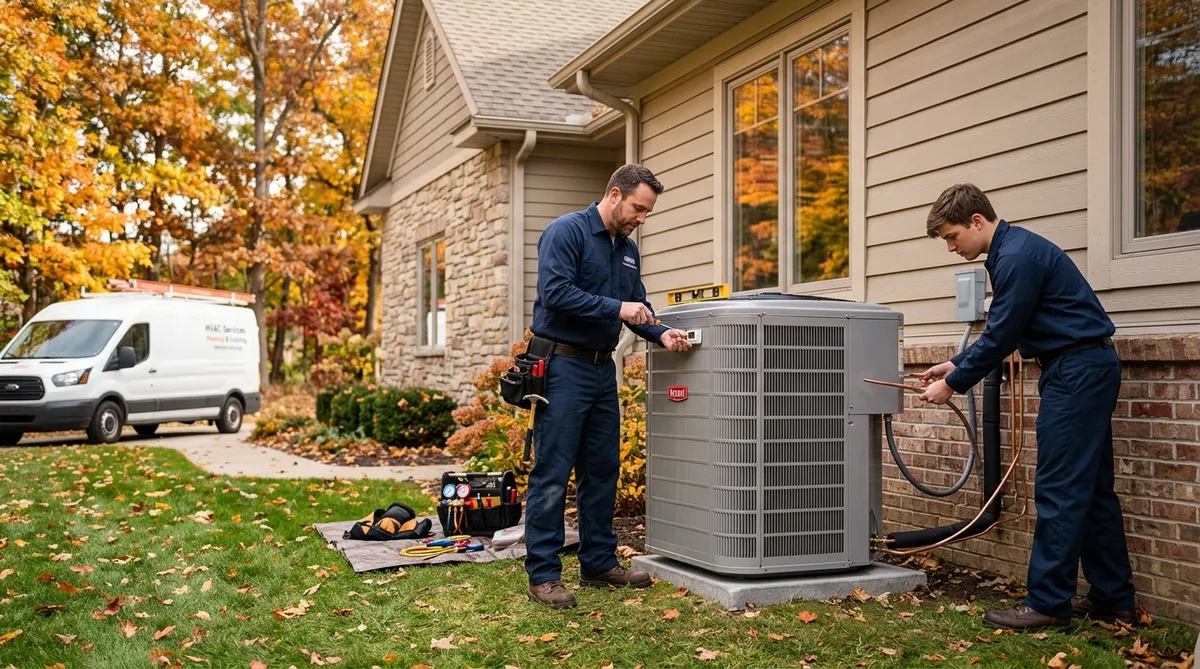
Jumping into a replacement? Prep work smooths the path. Start by clearing space around your outdoor unit—trim bushes, remove debris—so installers can access it easily. Inside, ensure the attic or basement pathway is clear for indoor component swaps.
Gather your home's specs: age of current system, fuel type (gas, electric), and any recent efficiency upgrades. This helps contractors quote accurately. If your system's over 10-15 years old, it's prime for replacement—older units guzzle energy and break down more.
Signs it's time: uneven temperatures, strange noises, skyrocketing bills, or frequent repairs. Fall's mild weather makes diagnostics easier, without the discomfort of testing in extremes.
Budget-wise, factor in $3,000-$7,000 for a basic central system, up to $15,000 for high-end whole-home setups. Financing options abound, especially off-peak. And eco-conscious? Opt for models with low-GWP refrigerants to future-proof against regulations.
What to Expect During the Installation Process
A pro replacement is methodical. Day one: Shut off power, remove old unit, cap lines, and prep electrical/plumbing. Safety first—our teams always use proper venting and leak tests.
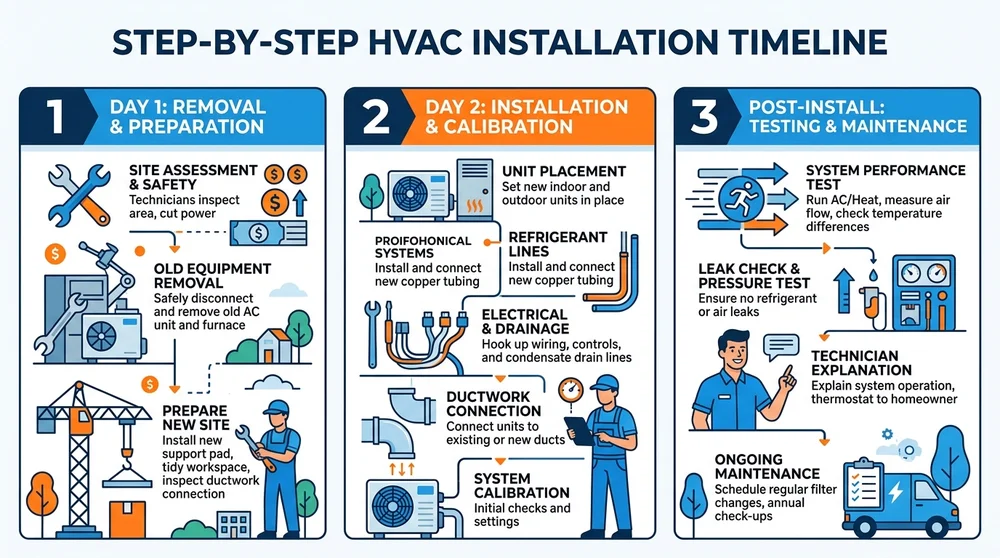
Day two: Install new components, connect ductwork, charge refrigerant, and calibrate. Expect some noise and dust, but minimal disruption. Post-install, they'll run cycles, check airflow, and explain maintenance—like changing filters quarterly.
Fall timing shines here: No rushing against weather, and you can enjoy the new system's comfort as temps drop. Longevity? A well-installed unit lasts 15-20 years with care.
Maximizing Your HVAC Investment Year-Round
Replacing in fall isn't just timely—it's strategic. New systems pair perfectly with fall's focus on home sealing: Add weatherstripping, inspect windows, and consider smart vents for even distribution.
Energy savings add up too. Modern HVACs cut bills by 20-40%, and fall installs qualify for rebates from ENERGY STAR or local utilities. Track usage post-install to verify efficiency.
In wrapping up, yes—fall is often the best time to replace your HVAC system. The combo of better pricing, faster scheduling, and ample contractor availability makes it a no-brainer for savvy homeowners. If your system's on its last legs, reach out to pros now through resources like ContractorLink.pro. Beat the rush, save some cash, and step into winter with reliable comfort. Your home—and wallet—will thank you.