Spotting Knob-and-Tube Wiring: Essential Guide for Older Homeowners on Safety and Insurance Risks
As seasoned contractors who've wired up countless homes from the early 1900s to modern builds, we've seen it all when it comes to electrical systems. If you're a homeowner in a house built before the 1950s, there's a good chance you're dealing with knob-and-tube wiring—or at least remnants of it. This outdated system was once the gold standard for bringing electricity into homes, but today, it's more of a relic that can turn into a real headache. In this post, we'll break down how to spot knob-and-tube wiring, why it's a safety concern, and what it means for your insurance. Our goal? Equip you with the knowledge to keep your home safe without needing a full demo crew on speed dial.
What Exactly Is Knob-and-Tube Wiring?
Knob-and-tube wiring, often just called K&T, was the go-to electrical setup from the late 1800s through the 1940s. Picture this: two separate insulated wires—one hot and one neutral—running through your home's walls, ceilings, and floors. These wires are supported by porcelain knobs where they pass through framing, and they're separated by ceramic tubes where they run parallel to joists or studs. No ground wire in sight, and definitely no modern plastic sheathing like you see in today's Romex cables.
Back in the day, this system was innovative. It allowed electricity to flow safely without the wires touching, reducing short-circuit risks. Homes built before 1920 are prime suspects, but you might find it lingering in additions or untouched attics even in mid-century houses. As pros, we've ripped out miles of this stuff, and it's always a mix of nostalgia and relief when we replace it with something current.
Why does it matter now? Well, K&T wasn't designed for the power-hungry world we live in. Your grandparents' light bulbs drew a fraction of the juice that your smart fridge or home theater does today. Overloading these old circuits is like asking a horse-drawn cart to haul a semi-truck—it's just not built for it.
Visual Signs to Look for in Your Home
The best way to tell if your home has knob-and-tube wiring is a visual inspection, but we're not talking about tearing open walls (leave that to the pros). Start with accessible areas like your attic, basement, crawlspace, or even exposed outlets in older rooms. Grab a flashlight, wear a dust mask, and proceed with caution—safety first, always.
Check the Attic or Basement
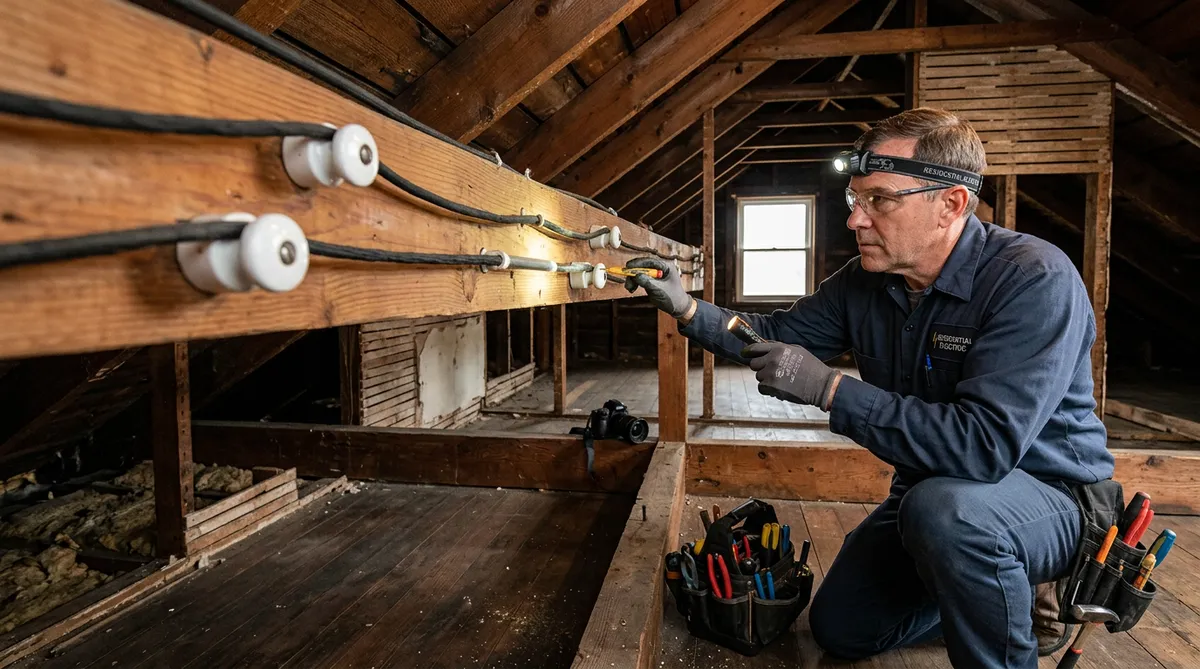
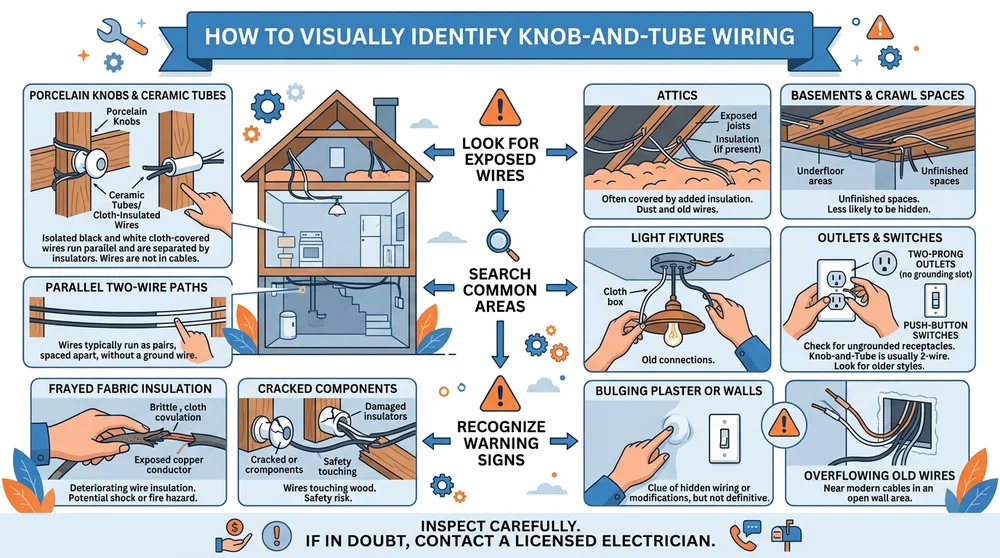
Head to your attic if it's accessible. Look along the wooden joists for those telltale porcelain knobs. They're small, white or brown insulators, about the size of a doorknob (hence the name), nailed into the wood every few feet to hold the wires in place. The wires themselves are cloth-insulated, often with a rubbery coating that's probably cracked and brittle after decades of settling dust and temperature swings.
In basements, peek behind unfinished walls or around pipes. You'll see the tubes—short ceramic sleeves that protect the wires where they run side by side. If the wires look like they're from a black-and-white movie set, with no green grounding conductor, bingo—that's K&T.
Pro tip: Don't touch anything. Old insulation can be friable (that's contractor speak for crumbly and hazardous), and you don't want to risk a shock or inhaling asbestos if it's present in nearby materials.
Inspect Outlets and Light Fixtures
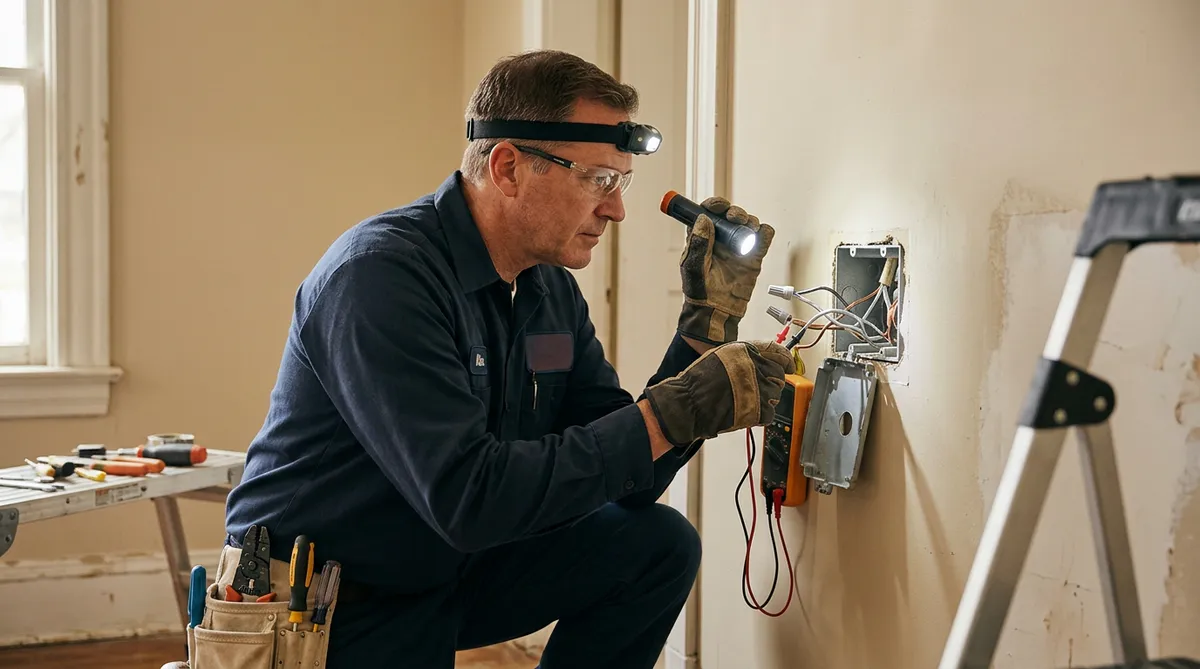
Pop off an outlet cover in an older room, like a bedroom or hallway. Modern wiring uses a grounded three-prong setup, but K&T often feeds into two-prong outlets without that all-important ground. If your outlets are ungrounded and the wiring behind them looks like twin cloth-wrapped strands branching off, it's a red flag.
Light fixtures are another giveaway. Unscrew a ceiling rose or access panel in a vintage fixture. K&T wires enter separately, without the bundled look of contemporary cable. We've found homes where the main panel has a mix—some circuits updated, others still original. If your fuse box (not a breaker panel) has screw-in fuses, that's another clue pointing to K&T era.
Wall and Ceiling Clues
During renovations, we've noticed subtle signs without major demo. Look for bulging plaster or paint bubbles on walls—these can indicate heat buildup from overloaded wires. Or check for old-school fabric-covered cords snaking along baseboards; that's how extensions were often jury-rigged back then.
If you're handy, use a non-contact voltage tester around suspected areas. It won't confirm K&T but can alert you to live wires that feel off. Remember, this is detective work, not a full diagnosis—call in an electrician for the real verdict.
The Safety Risks of Knob-and-Tube Wiring
Here's where we get serious: knob-and-tube wiring isn't just outdated; it's a fire waiting to happen if not handled right. The cloth insulation degrades over time, exposing bare copper that can arc and spark. Without a ground wire, faults don't trip breakers—they build up heat instead.
Overloading is the big killer. K&T circuits are rated for 15-20 amps max, but plugging in a space heater or holiday lights on an old line? That's overload city. We've responded to calls where insulation near wires melted, starting smoldering fires in walls. And get this: if mice or pests have chewed through the covering (common in attics), shorts become inevitable.
Statistically, homes with K&T are at higher risk for electrical fires, per the National Fire Protection Association. Add in modern demands like EVs charging in garages, and it's a recipe for disaster. As contractors, we always advise against DIY fixes here— one wrong move, and you're looking at costly damage or worse.
Practical advice: If you suspect K&T, limit high-draw appliances on those circuits. Use surge protectors religiously, and never daisy-chain extension cords. But honestly, inspection and upgrade are your best bets for peace of mind.
Insurance Implications You Can't Ignore
Now, let's talk money—because a fire isn't the only burn you'll feel. Many insurance companies view knob-and-tube as a high-risk feature. Some won't insure homes with it at all, or they'll slap on hefty premiums. Others require a full rewire before issuing a policy, especially if you're buying or refinancing.
We've helped clients navigate this nightmare. Imagine closing on your dream Victorian only to have the insurer balk at the wiring. Policies often exclude coverage for fires caused by known hazards like unmaintained K&T. And if you've got it but haven't disclosed it? That claim could get denied faster than you can say 'policy fine print.'
The workaround? Get an electrical inspection before buying or renewing insurance. Certified electricians can document the extent—maybe it's partial, and you can mitigate with arc-fault breakers or targeted updates. In states like California or New York, where older homes abound, insurers are stricter, but options like specialty policies exist.
Bottom line: Disclose, inspect, and plan. It's cheaper than a total loss.
What to Do If You Discover Knob-and-Tube Wiring
Found it? Don't panic—we've got your back with actionable steps. First, hire a licensed electrician for a professional assessment. They'll use tools like circuit tracers to map it out without invasive work. Expect to pay $200-500 for this, but it's worth every penny.
Options for Handling It
Full rewiring is the gold standard. It involves fishing new cables through walls, which can run $8,000-$20,000 depending on your home's size. But it's not always necessary. If K&T is in low-use areas like attics, you might add subpanels or partial updates to modern standards.
Knobs and tubes can't be spliced into safely, so pros avoid that. Instead, we cap off old lines and run new ones parallel. For insurance, aim for compliance with the National Electrical Code (NEC)—grounded outlets, GFCIs in wet areas, and AFCI protection everywhere.
DIY Prep and Cost-Saving Tips
While waiting for the pro, clear access: Move furniture from walls, label your breaker box. Budget-wise, get multiple quotes and check for rebates on energy-efficient upgrades. In our experience, tackling it during a broader reno (like a kitchen remodel) saves big on labor.
If selling, disclose it upfront. Buyers appreciate transparency, and it avoids post-sale lawsuits.
Modern Alternatives and Long-Term Peace of Mind
Switching to today's wiring—like NM-B (Romex) or conduit systems—brings grounding, higher capacity, and smart home compatibility. We've installed systems that handle 100+ amps effortlessly, with room for solar tie-ins or EV chargers.
Looking ahead, regular maintenance is key. Even post-upgrade, annual inspections catch issues early. As pros at ContractorLink.pro, we connect folks with vetted electricians who make this process smooth.
In wrapping up, spotting knob-and-tube wiring is about empowering yourself as a homeowner. It's a common foe in older homes, but with vigilance, you can sidestep the risks and keep your castle safe. Stay proactive, and your home will thank you—for decades to come.