How to Keep Track of Every Appliance in Your Home (and Why It Matters)
Why Tracking Your Home Appliances is a Game-Changer
As a homeowner, you've likely invested a small fortune in appliances—from the sleek refrigerator humming in your kitchen to the reliable washer in the laundry room. But how often do you think about keeping tabs on them? In our experience as contractors at ContractorLink.pro, we've seen countless situations where a simple inventory could have saved homeowners time, money, and headaches. Maintaining an equipment inventory isn't just busywork; it's a smart strategy that pays off in warranty claims, efficient maintenance, and even a smoother home sale.
Imagine discovering a leak from your dishwasher only to realize the warranty expired last year because you lost track of the purchase date. Or picture prepping your home for sale and scrambling to recall the age and condition of every major appliance. An inventory eliminates these scenarios. It empowers you to stay proactive, ensuring your home runs smoothly and retains its value. Let's dive into why this matters and how you can get started.
The Benefits of an Appliance Inventory: Warranty Claims Made Easy
One of the biggest perks of tracking your appliances is streamlining warranty claims. Manufacturers offer warranties ranging from one to ten years, covering defects, repairs, or even full replacements. But without documentation, proving eligibility becomes a nightmare. We've helped clients who couldn't claim a free repair on a faulty oven simply because they couldn't produce the original receipt or serial number.
Start by noting key details for each appliance: make, model, serial number, purchase date, and warranty duration. Store receipts digitally or in a dedicated folder. When an issue arises, like a malfunctioning AC unit, you can quickly reference your inventory and contact the manufacturer with all the info at hand. This not only speeds up the process but also increases your chances of approval.
Pro tip: Set calendar reminders for warranty expiration dates. That way, you're prompted to schedule a professional inspection just before coverage lapses, potentially catching issues early and extending the appliance's life. In our line of work, we've seen homeowners save hundreds by leveraging warranties they forgot they had—don't let yours slip away.
Streamlining Maintenance with a Centralized Inventory
Regular maintenance keeps appliances efficient, extends their lifespan, and prevents costly breakdowns. But with a busy household, it's easy to forget when the dryer vent last needed cleaning or the HVAC filter was replaced. An inventory acts as your personal maintenance roadmap, logging service history, recommended schedules, and any recurring issues.
For instance, refrigerators should have coils cleaned every six months, while water heaters benefit from annual flushing to prevent sediment buildup. By tracking these in your inventory, you create a schedule tailored to your home. Use it to note energy usage patterns too—spotting a spike in your oven's consumption might signal a failing heating element before it fails completely.
As contractors, we recommend categorizing appliances by type: kitchen (stove, microwave), laundry (washer, dryer), and systems (furnace, water softener). For each, include maintenance tips from the manual. Digital tools like spreadsheets or apps make this effortless—more on that later. The result? Fewer emergency calls, lower utility bills, and appliances that perform like new. One client we worked with reduced their energy costs by 15% just by following a maintenance log they started after our advice.
Boosting Resale Value: How Inventory Impresses Buyers
When it's time to sell, your home's appliances can make or break a deal. Buyers want assurance that they're not inheriting outdated or problematic equipment. A well-maintained inventory showcases your diligence, providing transparency that builds trust and justifies a higher asking price.
Include details like installation dates, recent repairs, and efficiency ratings (e.g., Energy Star certification). During showings, you can hand over a printed or digital copy, highlighting upgrades like a new energy-efficient dishwasher installed in 2022. This not only speeds up the selling process but can add thousands to your home's value—reputable appliances signal a cared-for property.
In competitive markets, we've advised sellers to use their inventory for staging: emphasize warranties still in effect or recent services. Buyers' inspectors will appreciate the documentation, reducing post-offer negotiations. Ultimately, it's about peace of mind—for you and the new owners.
Step-by-Step Guide to Creating Your Appliance Inventory
Ready to build your own? It's simpler than you think. Start with a walkthrough of your home, armed with a notebook or phone. For each appliance, gather these essentials:
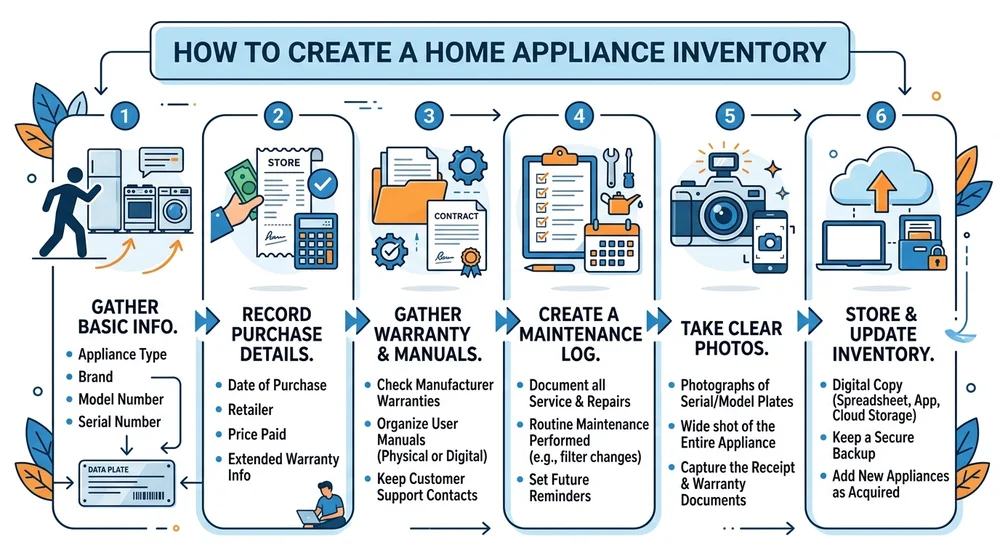
- Basic Info: Brand, model number, serial number (usually on a sticker inside or on the back).
- Purchase Details: Date bought, store or online retailer, original cost.
- Warranty and Manuals: Expiration date, contact info for manufacturer, and a scanned copy of the manual.
- Maintenance Log: Dates of services, what was done, and by whom (DIY or pro).
- Photos: Snap pics of the appliance, labels, and any modifications.
Begin with high-impact items: refrigerator, oven, washer/dryer, HVAC system, and water heater. These are the ones most likely to need warranties or affect resale. For built-ins like dishwashers, check installation records from when your home was built or renovated.
If you're unsure about serial numbers or history, consult your homeowner's manual or contact the manufacturer with a photo. As pros, we often help with this during routine inspections—it's a quick add-on service.
Tools and Apps to Keep Your Inventory Organized
Gone are the days of dusty binders. Modern tools make tracking seamless and accessible from anywhere. Here's what we recommend:
Spreadsheets: Free options like Google Sheets or Excel. Create columns for each data point and rows for appliances. Shareable with family or your contractor.
Home Management Apps: Try HomeZada or Sortly. These specialize in inventories, with features for scanning barcodes, setting reminders, and even insurance integration. HomeZada, for example, tracks warranties and generates reports for resale.
Dedicated Inventory Software: For tech-savvy folks, Encircle or MyStuff2 offer photo uploads and cloud storage. They're great for detailed logs, including repair invoices.
Smart Home Integration: If you use Alexa or Google Home, link apps that notify you of maintenance due dates via voice reminders.
Choose based on your comfort level—start simple and scale up. Update your inventory annually or after any purchase/repair. Digital backups prevent loss from disasters like fires.
Common Mistakes to Avoid and Pro Tips for Success
Even with the best intentions, pitfalls happen. Don't overlook small appliances like microwaves or garbage disposals—they add up in warranties and efficiency. Avoid vague entries; 'bought last year' won't help with claims—be specific.
Another error: neglecting updates. Life changes—new appliances, moves—require revisions. Set a quarterly review to keep it current.
Pro tips from the field:
- Involve the Family: Assign tasks so everyone knows where to find info during emergencies.
- Integrate with Insurance: Share your inventory with your provider for accurate coverage; it can lower premiums by proving upkeep.
- Budget for Pros: While DIY maintenance is great, hire licensed contractors for complex tasks like HVAC tune-ups. Use platforms like ContractorLink.pro to connect with vetted experts.
- Go Green: Track energy ratings to identify upgrades that save money and the planet.
By avoiding these, your inventory becomes a reliable asset, not a forgotten chore.
Wrapping It Up: Your Home, Better Managed
Tracking every appliance in your home might seem like extra effort upfront, but the rewards are undeniable. From securing warranty claims and optimizing maintenance to enhancing resale appeal, a solid inventory keeps your household humming efficiently. As contractors who've fixed it all, we can attest: proactive homeowners face fewer surprises and enjoy greater peace of mind.
Take the first step today—grab that spreadsheet or app and start listing. Your future self (and wallet) will thank you. For more home tips from the pros, stay tuned to The Pipeline.