How Much Does It Actually Cost to Repipe a House? Breaking Down the Key Variables
Repiping a house might sound like a daunting project, but as seasoned contractors, we've seen how it can breathe new life into an aging plumbing system. If your pipes are corroding, leaking, or simply outdated—especially in homes built before the 1980s—replacing them can prevent costly water damage and improve efficiency. But the big question on every homeowner's mind is: how much does it really cost? The answer isn't a flat number; it depends on several variables like materials, home size, and access to the plumbing lines. In this post, we'll break it down step by step, drawing from our years of hands-on experience, so you can spot a fair quote from a mile away.
Why Repipe in the First Place?
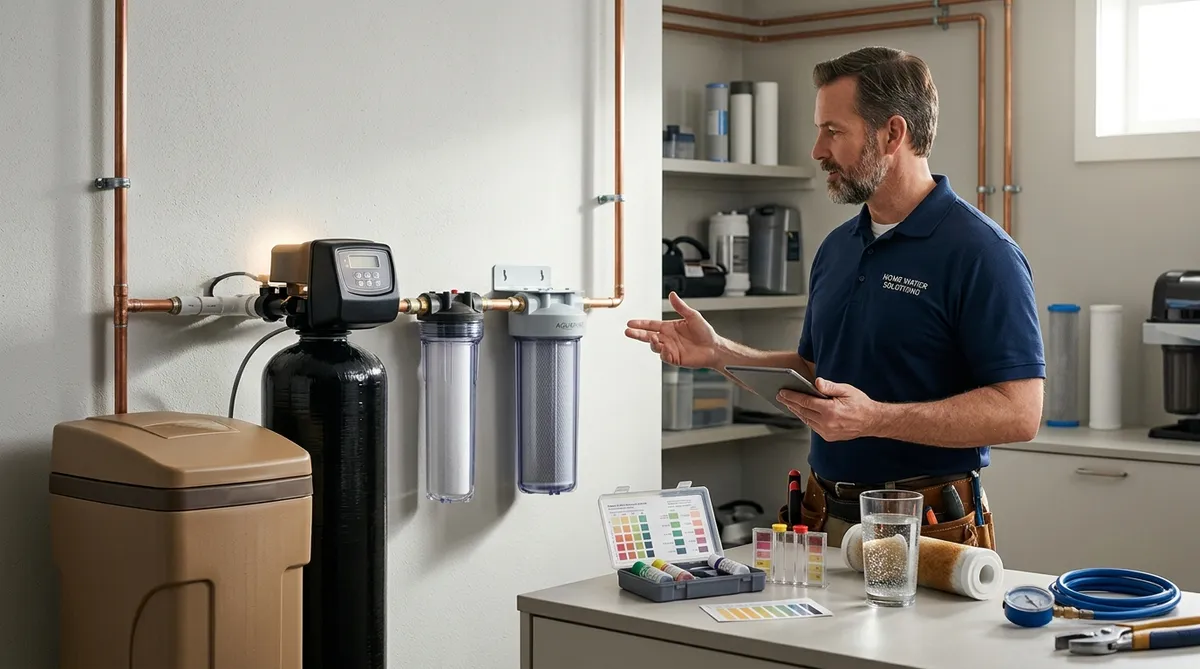
Before diving into costs, let's quickly cover why you might need to repipe. Older homes often have galvanized steel pipes that rust over time, leading to reduced water pressure, discolored water, or even bursts. Copper pipes, while durable, can develop pinhole leaks from water chemistry issues. And if you're dealing with polybutylene pipes from the '70s and '80s, those are notorious for failing and causing floods.
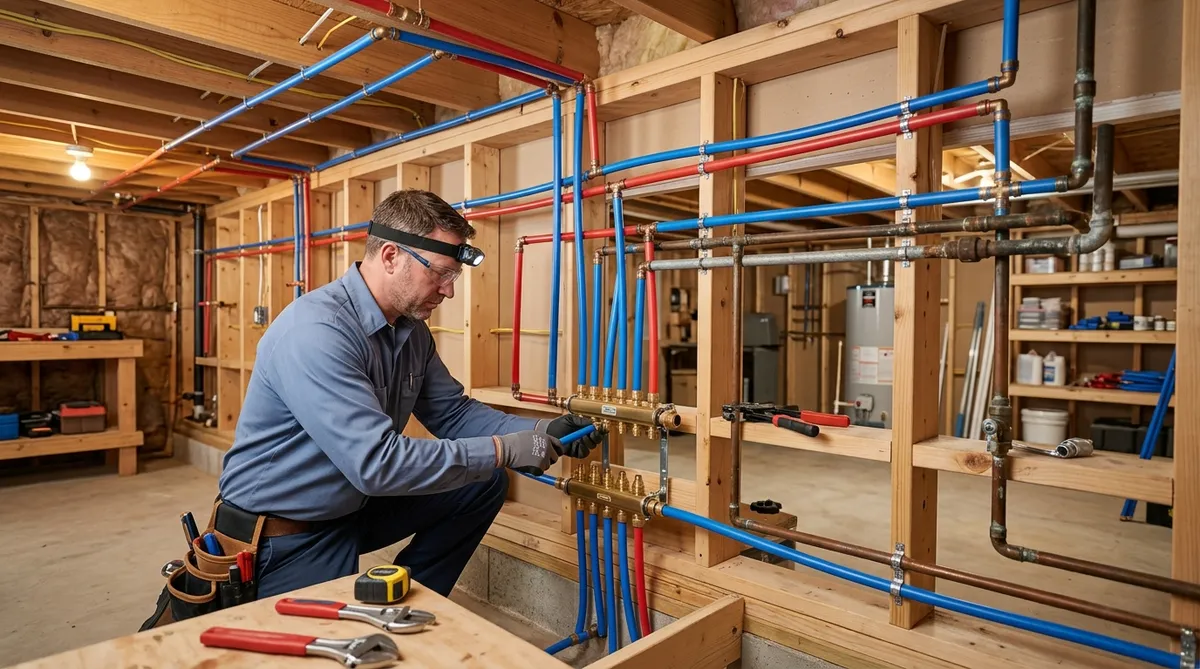
Repiping isn't just about fixing problems—it's an upgrade. Modern materials like PEX (cross-linked polyethylene) offer flexibility, corrosion resistance, and easier installation. We've repiped hundreds of homes, and the peace of mind it brings is worth every penny. Now, onto the costs.
Material Choices and Their Impact on Cost
The type of piping material you choose is one of the biggest cost drivers. Each option has pros, cons, and price points that affect the total bill. Here's a realistic breakdown based on what we see in the field:
- Copper Pipes: The gold standard for durability, copper is what most pros recommend for longevity—lasting 50+ years. Expect to pay $2.50 to $4 per linear foot for materials alone. Installation adds labor costs because copper requires soldering, which is skilled work. Total for a typical 2,000 sq ft home? Around $8,000 to $15,000. It's pricier upfront but holds value if you're selling your home.
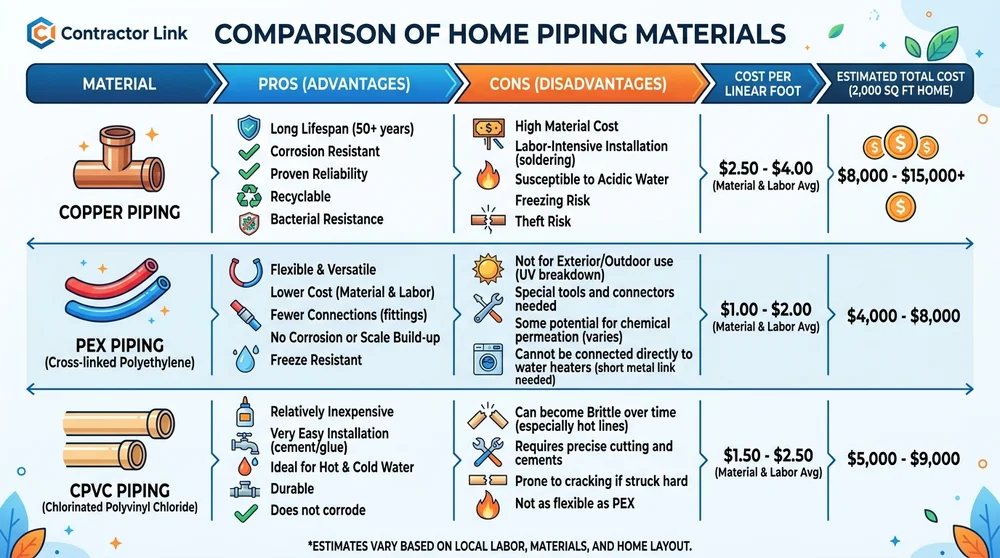
PEX Pipes: This flexible plastic tubing is a game-changer for cost savings and ease. At $0.50 to $2 per linear foot, it's about half the price of copper. PEX resists freezing and corrosion, and we can often install it faster using crimp or expansion fittings—no open flames needed. For the same 2,000 sq ft house, you're looking at $4,000 to $8,000 total. It's ideal for DIY-friendly pros, but always hire licensed plumbers to meet code.
CPVC Pipes: Chlorinated polyvinyl chloride is another plastic option, rigid like PVC but safe for hot water. Costs run $1 to $3 per foot. It's a middle-ground choice for budgets, totaling $5,000 to $10,000 for an average home. However, it's less flexible than PEX, so installation might take longer in tight spaces.
Other Options like Galvanized or Cast Iron: We rarely recommend these for new installs—they're outdated and prone to issues. If your home has them, replacement is non-negotiable, but stick to modern materials.
Pro tip: Factor in fittings, valves, and shut-off systems. These can add 20-30% to material costs. Always ask your contractor for a detailed material list in the quote to compare apples to apples.
How Home Size and Layout Affect Pricing
Your home's square footage and layout play a huge role in repiping costs because they determine the total length of pipe needed—typically 200-500 linear feet for a standard single-family home. But it's not just size; the number of bathrooms, stories, and overall complexity matter too.
Small Homes (Under 1,500 sq ft): A cozy bungalow or condo might only need 150-300 feet of pipe. Base costs here range from $3,000 to $7,000, depending on materials. We've done quick jobs in one-story homes for under $5,000 with PEX, especially if the plumbing is accessible.
Average Homes (1,500-3,000 sq ft): This is the sweet spot for most families. Expect $6,000 to $12,000. Multi-story homes add expense because we have to run pipes vertically, which means more labor and potential drywall repairs. A two-bathroom setup with a kitchen and laundry? That's pushing toward the higher end.
Large or Custom Homes (Over 3,000 sq ft): Mansions or homes with multiple levels and fixtures can hit $15,000 to $25,000 or more. If you've got a home theater, outdoor kitchen, or irrigation system, that pipe run extends further. In our experience, sprawling layouts in older Victorians can double the time due to irregular framing.
Layout quirks like slab foundations (common in newer builds) versus crawl spaces also influence costs. Slab homes require breaking concrete to access lines, adding $1,000-$3,000 in demo and repair fees. Crawl spaces are easier but might involve more insulation work to prevent freezing.
To estimate your own: Measure your home's footprint and count fixtures (sinks, toilets, showers). A rough rule of thumb is $10-$20 per square foot for the entire job, but get multiple quotes to confirm.
Access Issues: The Hidden Cost Multiplier
One of the sneakier factors is how easily we can access your existing pipes. If everything's out in the open, great—costs stay low. But hidden lines behind walls, under floors, or in attics can inflate the bill quickly.
Wall and Ceiling Access: In finished homes, we might need to cut drywall to expose pipes, then patch and repaint. This adds $2,000-$5,000 for labor and materials. Pro move: Use flexible endoscopic cameras to map lines first, minimizing cuts. We've saved clients thousands by planning routes through attics or basements.
Floor and Foundation Challenges: Slab-on-grade homes mean jackhammering concrete, which is noisy and dusty. Removal and repouring can tack on $3,000-$6,000. Crawl spaces are better, but tight ones require special tools and more manpower—up to 20% extra labor.
Outdoor and Multi-Level Access: Running pipes to garages, pools, or upper floors involves trenching or ladder work, increasing safety precautions and time. In urban areas with shared walls (townhomes), coordination with neighbors can delay things, indirectly raising costs via permits.
Dust and disruption are real—expect temporary relocation of furniture and potential water shutoffs. Budget 10-30% more for access-heavy jobs. Ask contractors about their mitigation strategies, like using dust barriers or phased work to keep your home livable.
Labor, Permits, and Additional Expenses
Beyond materials and access, labor is 40-60% of the total cost. Licensed plumbers charge $75-$150 per hour, with full repipes taking 3-10 days for a team of 2-4. In high-cost areas like California, rates skew higher; rural spots might be lower.
Permits are non-negotiable—$200-$500 depending on your locality. They ensure code compliance, like proper venting and backflow prevention. We've seen fines for skipping them, so don't cut corners.
Other add-ons:
- Water Heater and Fixture Upgrades: If your old system can't handle new pipes, add $1,000-$3,000.
- Testing and Cleanup: Pressure tests and hauling debris cost $500-$1,000.
- Warranties: Look for 1-5 year guarantees; they add value without much extra.
Total national average? $7,000-$15,000 for a standard repipe. But variables can swing it 50% either way.
Evaluating Quotes Like a Pro
Getting quotes is straightforward, but evaluating them requires a keen eye. Aim for 3-5 from licensed, insured contractors via platforms like ContractorLink.pro. Red flags: Quotes under $4,000 for a full job (too good to be true) or vague breakdowns.
What to look for:
- Detailed line-item costs for materials, labor, and extras.
- Timeline and disruption plan.
- References from similar projects.
- Material specs (e.g., PEX type A vs. B).
Compare total vs. per-foot pricing. If one quote is 30% higher, ask why—better materials or thorough access planning? Negotiate on non-essentials like finishes, but never on quality.
In our experience, investing in a solid repipe now saves thousands in emergencies later. We've turned nightmare floods into smooth upgrades for countless homeowners.
Final Thoughts from the Field
Repiping costs vary widely, but armed with this breakdown, you're better equipped to budget and choose wisely. Whether it's copper for longevity or PEX for savings, the right choice depends on your home and needs. Consult local pros for a site-specific estimate—they'll factor in your unique setup. At the end of the day, a reliable plumbing system is the backbone of any home, keeping things flowing smoothly for years to come.