Tankless vs. Traditional Water Heaters: The Real Cost Math, Sizing Traps, and Maintenance Reality
When it comes to providing hot water for your home, the debate between tankless and traditional water heaters is a common one. Many homeowners are enticed by the promise of endless hot water and energy savings with a tankless system. But before rushing into an upgrade, it’s crucial to understand the real costs, sizing considerations, and ongoing maintenance involved.
The True Cost Math: Upfront and Long-Term Expenses
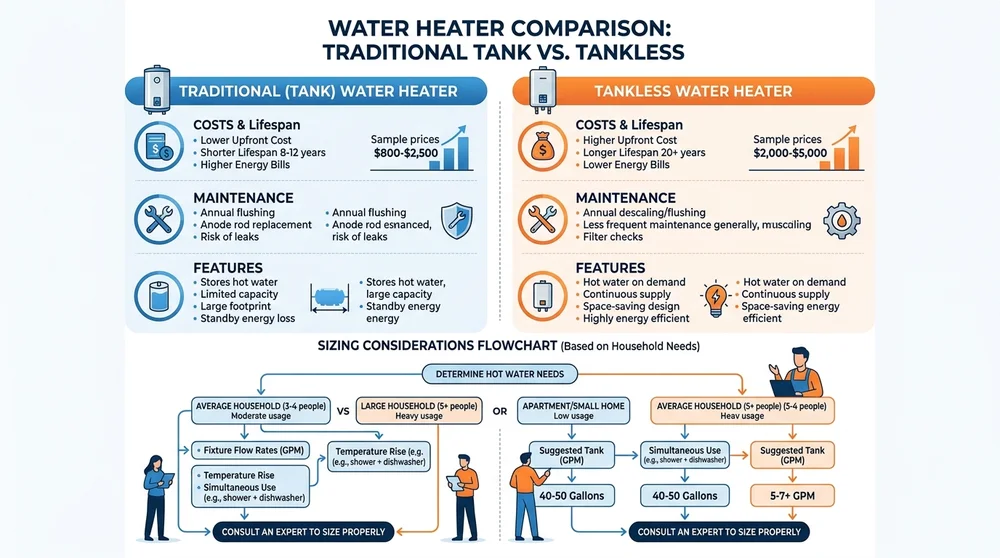
Traditional Water Heaters:
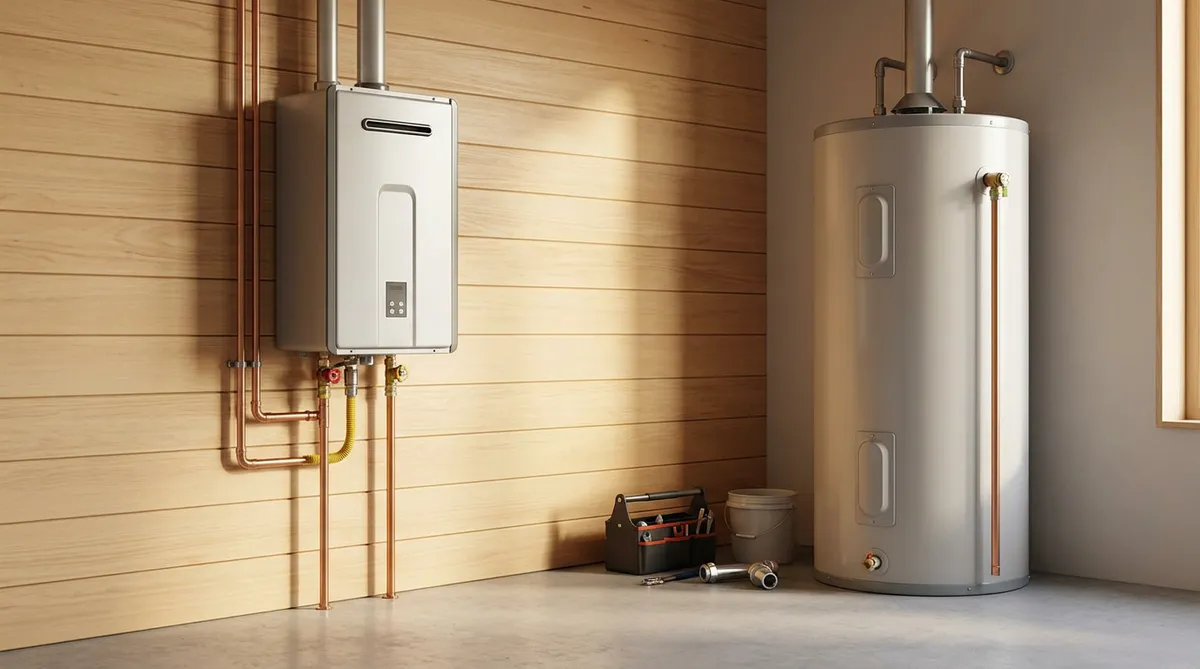
A standard tank water heater typically costs between $800 and $1,500 including installation. These units have a lifespan of about 10-15 years. While the initial investment is lower, they tend to be less energy-efficient, leading to higher utility bills over time.
Tankless Water Heaters:
On the surface, tankless models seem more expensive, with prices ranging from $2,000 to $4,500 installed. The higher upfront cost is due to the unit itself and the potential need for electrical or gas line upgrades. However, they often last 20 years or more, offering potential savings in replacement costs.
Long-Term Cost Considerations:
- Energy Efficiency: Tankless units heat water on demand, reducing standby heat loss. This can lower energy bills by 20-30%, but the actual savings depend on your usage patterns.
- Replacement Costs: While tankless units last longer, they can be more expensive to repair or replace if they develop issues.
- Installation Costs: Upgrading to a tankless system might require significant modifications, especially if your existing system isn’t compatible.
Sizing Traps: Getting the Right Fit for Your Household
Choosing the wrong size can lead to frustration—either running out of hot water or paying for a unit that’s too large and inefficient.
Assess Your Household Hot Water Needs:
- Number of Bathrooms: More bathrooms generally mean higher hot water demand.
- Number of Occupants: More people mean more simultaneous hot water use.
- Typical Usage Patterns: Do you often run multiple showers, laundry, and dishwashers at once?
Tankless Sizing Tips:
- Flow Rate: Measured in gallons per minute (GPM). For example, a shower might use 2.5 GPM, a dishwasher around 1.5 GPM, and a washing machine about 2 GPM.
- Calculate Your Peak Demand: Add up the GPM for all fixtures likely to run simultaneously.
- Match Your Unit: Choose a tankless heater that can handle your peak GPM. For instance, if you need 6 GPM during peak times, select a unit rated for at least that flow rate.
Common Sizing Mistakes:
- Overestimating capacity, leading to unnecessary expense.
- Underestimating, resulting in cold showers.
Maintenance Reality: The Flushing Trap and Other Responsibilities
Annual Flushing:
Tankless water heaters require regular flushing to remove mineral buildup, especially in areas with hard water. This process involves:
- Turning off the unit and water supply.
- Connecting a flushing kit with vinegar or a descaling solution.
- Running the solution through the system for about 45 minutes.
Neglecting this maintenance can reduce efficiency and shorten the unit’s lifespan.
Other Maintenance Tips:
- Check the Filter: Clean or replace filters periodically.
- Inspect for Leaks: Regularly examine connections and the unit for signs of corrosion or leaks.
- Professional Service: Schedule annual inspections with a licensed technician to ensure optimal operation.
Traditional Tank Maintenance:
While generally less maintenance-intensive, traditional tanks may need an anode rod replacement every 3-5 years to prevent corrosion.
Making the Right Choice for Your Home
Switching to a tankless water heater can be a smart move for energy savings and space-saving benefits. However, it’s not a one-size-fits-all solution. Carefully evaluate your household’s hot water needs, budget for the higher initial investment, and commit to regular maintenance.
Consulting with a licensed contractor can help you determine the best system for your home, ensuring you avoid common sizing traps and unexpected costs. Remember, a well-chosen and properly maintained water heater is a long-term investment that can provide reliable hot water for years to come.
Final Thoughts
The decision between tankless and traditional water heaters involves more than just the sticker price. By understanding the true costs, sizing correctly, and committing to maintenance, you can enjoy the benefits of your hot water system without surprises. Homeowners who take the time to assess their needs and consult with pros will be better positioned to make a choice that fits their lifestyle and budget — now and in the future.