What to Ask Before Signing a Solar Panel Contract: Payback Math, Roof Requirements, Warranties, and Sales Red Flags
Why Asking the Right Questions Matters for Your Solar Investment
As a homeowner eyeing solar panels, you're probably excited about the promise of lower utility bills, energy independence, and even a greener footprint. But in the world of home improvements, solar installations are a big commitment—financially and structurally. We've seen it all as contractors: families thrilled with their systems and others regretting hasty decisions due to overlooked details in the contract.
Before you sign on the dotted line, arm yourself with targeted questions. This isn't about being skeptical; it's about making an informed choice that pays off for years. We'll dive into payback math, roof condition requirements, warranty transfers, and red flags in sales pitches. These insights come straight from pros who've installed hundreds of systems, helping you avoid pitfalls and maximize benefits.
Crunching the Numbers: Understanding Payback Math
One of the first things to grill your solar contractor about is the payback period—the time it takes for your investment to recoup through energy savings and incentives. Don't just accept a glossy brochure's promise of '5-7 years'; demand a detailed breakdown.
Start by asking: 'Can you provide a customized payback calculation based on my current energy usage, local rates, and available rebates?' A reputable installer will use tools like the National Renewable Energy Laboratory's (NREL) PVWatts calculator to model your specific scenario. They'll factor in your roof's orientation, shading from trees or buildings, and your utility's net metering policy, which credits excess power back to your bill.
Key elements to probe:
- Upfront Costs vs. Savings: What's the total system price after federal tax credits (like the 30% Investment Tax Credit through 2032)? Subtract ongoing savings—aim for at least $1,000 annually in most U.S. regions. For a $25,000 system, that means a 7-10 year payback is realistic, not the aggressive 3-year claims some salespeople push.
- Incentives and Financing: Ask about state rebates, local utility programs, or low-interest loans. 'How does this affect my monthly cash flow?' If they're offering leases or power purchase agreements (PPAs), clarify ownership—do you get the tax credits, or the company?
- Long-Term Projections: Request a 25-year cash flow analysis. Inflation on energy rates (typically 2-3% yearly) can shorten payback, but rising maintenance costs might extend it. Pro tip: If the math doesn't add up to savings exceeding your loan interest, walk away.
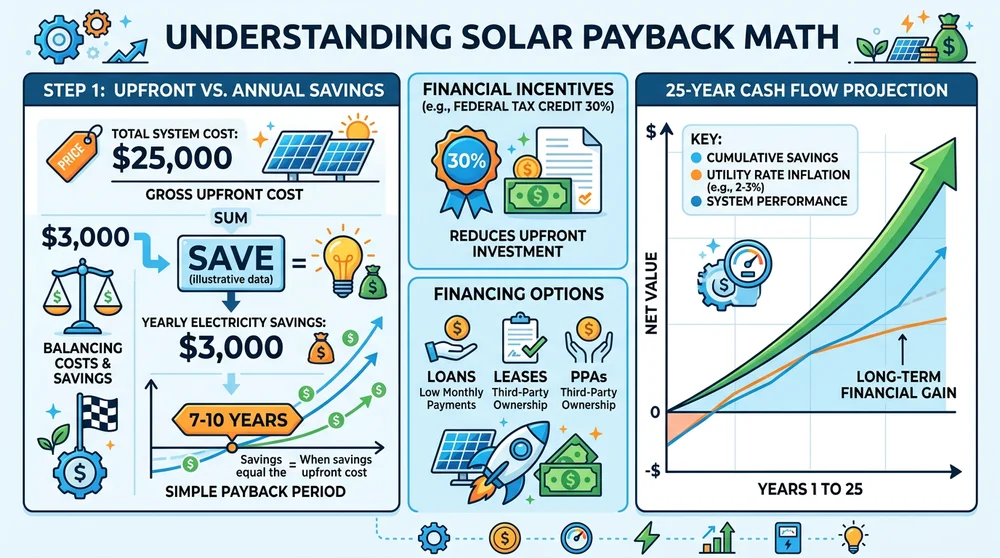
We've helped homeowners negotiate better deals by insisting on transparent spreadsheets. One client discovered their 'quick payback' quote ignored shading, adding two years to the timeline—knowledge that saved them from overpaying.
Roof Condition Requirements: Is Your Home Ready for Solar?
Solar panels aren't just slapped on any roof; they demand a solid foundation to last 25-30 years. A weak roof could mean costly removals later, so ask upfront: 'What roof assessments do you perform, and what condition must my roof be in for installation?'
Expect a thorough inspection covering age, material, and structural integrity. Most installers require roofs less than 10-15 years old, or they'll insist on a replacement first—at your expense. For asphalt shingles, common in many homes, panels add weight (3-4 pounds per square foot), so inquire: 'Will you check for leaks, rot, or inadequate framing?'
Practical advice:
- Material Compatibility: Tile or metal roofs? Ask about mounting methods to avoid drilling issues. 'Do you offer rail-less systems to minimize penetrations?'
- Warranty Implications: Your roof's warranty might void if panels are installed improperly. 'How do you ensure the installation doesn't affect my roof warranty?'
- Future-Proofing: If your roof is nearing replacement, consider timing. 'Should I replace the roof before solar, or can we coordinate?' In one case, we advised a client to reroof first, avoiding $5,000 in panel removal fees down the line.
Don't skip this—poor roof prep leads to leaks and denied insurance claims. Insist on a written report from a certified roofer, not just the solar team's opinion.
Warranty Transfer: Ensuring Long-Term Protection
Solar systems come with strong warranties—typically 25 years on panels, 10-12 on inverters—but what happens if you sell your home? Ask: 'Is the warranty transferable, and under what conditions?'
Performance warranties guarantee 80-90% output after 25 years, but transferability varies. Some companies require fees or inspections; others make it seamless. Probe deeper: 'What does the full warranty cover—inverter failures, labor, or just parts?'
Homeowner tips:
- System Components: Panels might be warrantied by the manufacturer (e.g., SunPower's 40-year coverage), but installation work often has shorter terms. 'Who handles repairs if the installer goes out of business?'
- Transfer Process: 'Do you provide documentation for easy transfer to new owners?' This boosts resale value—homes with transferable solar warranties sell for 4-6% more, per Zillow studies.
- Exclusions: Watch for clauses voiding coverage due to 'acts of God' or improper maintenance. Ask for a sample contract highlighting these.
As contractors, we always recommend reviewing the fine print with a third party. One family we worked with transferred their warranty hassle-free, adding $10,000 to their home's value when they moved.
Spotting Red Flags in Aggressive Sales Pitches
Solar sales can feel like a high-pressure car dealership—promises of 'free panels' or 'government grants' that sound too good. Ask: 'Can you explain your financing without incentives first?' This reveals if the deal holds up.
Common red flags:
- Urgency Tactics: 'Sign today for a special discount!' Legit installers give time to decide. We've seen 'limited-time' offers that vanish, leaving buyers overcommitted.
- Vague Savings Claims: If they won't customize to your bill, it's a dodge. 'Show me how this matches my utility statements.'
- Leasing vs. Buying Confusion: PPAs seem cheap upfront but lock you in. Ask: 'What are the escalation clauses—do payments rise yearly?'
- Unlicensed or Uninsured: Verify NABCEP certification and local licensing. 'Are you bonded and insured for workmanship?'
- Door-to-Door Pressure: Reputable firms use consultations, not cold calls. If they push emotional appeals like 'save the planet now,' pause and research.
Pro move: Record pitches (with permission) and cross-check with the Better Business Bureau. A client dodged a scam by questioning a 'no-money-down' lease that hid balloon payments.
Final Thoughts: Empower Yourself for a Solar Success Story
Signing a solar contract is like building a long-term partnership—get the details right, and it'll power your home reliably for decades. By questioning payback math, roof readiness, warranty transfers, and sales tactics, you're not just buying panels; you're investing wisely.
At ContractorLink.pro, we connect you with vetted pros who prioritize transparency. Take your time, get multiple quotes, and consult a financial advisor if needed. Your dream solar setup is within reach—make sure it's built to last.