
Do Gutter Guards Actually Prevent Clogs? The Hidden Maintenance, Material Pitfalls, and When to Skip Them
Do Gutter Guards Really Prevent Clogs?
Gutter guards have become a popular home improvement item, promising to keep your gutters free of debris and save you from the tedious task of manual cleaning. The idea is appealing: install a barrier, forget about gutter maintenance, and enjoy a clog-free roofline. But the reality is a bit more complicated. Not all gutter guards are created equal, and some can even create new problems.
In this post, we’ll explore how different gutter guard designs work, why they sometimes trap debris instead of preventing clogs, how they can contribute to ice dam formation in winter, and when sticking to regular manual cleaning might be your best bet.
How Gutter Guards Work
Gutter guards come in various styles, each designed to block leaves, twigs, and other debris from entering your gutters while allowing water to flow freely.
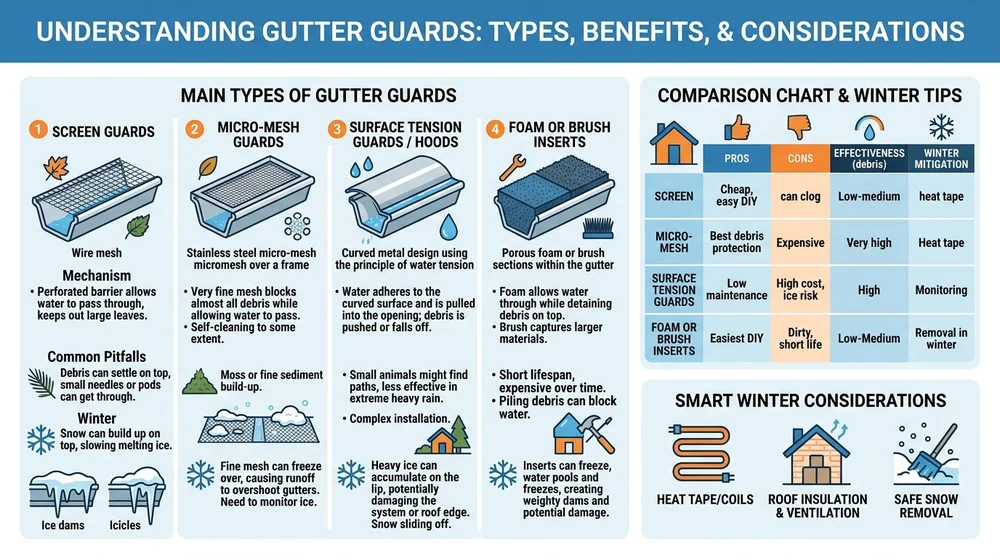
- Screen Guards: These are metal or plastic screens that sit over the gutter opening. They have small holes that let water through but block larger debris.
- Mesh Guards: Similar to screens but with finer mesh, offering better debris filtration.
- Reverse Curve or Surface Tension Guards: These direct water downward while forcing debris to slide off the surface.
- Bottle Brush or Brush Guards: These have bristles that allow water to pass through but trap debris.
While they sound straightforward, each type has its own quirks and potential pitfalls.
The Hidden Maintenance Challenges
Debris Still Gets Trapped
Contrary to marketing claims, many gutter guards don’t eliminate the need for cleaning. Fine debris like pine needles, small leaves, or shingle grit can still get trapped, especially in screen and mesh guards. Over time, this debris accumulates, creating blockages that hinder water flow.
Clogging and Overflow
When debris builds up on or behind the guard, it can cause water to overflow during heavy rains. This overflow can damage your fascia, soffits, or even cause basement flooding if your drainage system isn’t properly maintained.
Maintenance of the Guards Themselves
Some guards require periodic maintenance—removing leaves caught on top, rinsing off dirt, or replacing damaged sections. Neglecting this can turn your gutter system into a debris trap.
Material Pitfalls and Durability
Corrosion and Degradation
Metal guards made from aluminum or steel can corrode over time, especially in salty or humid environments. Plastic guards may become brittle or warp under UV exposure.
Weight and Installation Issues
Heavy materials might require professional installation to ensure they stay in place. Improper installation can lead to gaps, allowing debris to enter.
Compatibility with Roof Types
Certain gutter guard materials and styles don’t work well with specific roofing materials. For example, surface tension guards may not be suitable for shingle roofs, leading to poor water flow or damage.
When Gutter Guards Can Cause Ice Dams
In colder climates, gutter guards can sometimes contribute to ice dam formation. Here’s how:
- Trapped Debris and Meltwater: Debris trapped behind guards can prevent proper drainage, causing water to back up and freeze.
- Reduced Snow Melt Drainage: Some guards prevent snowmelt from draining efficiently, leading to ice buildup at the roof edge.
- Insulation Effects: If guards trap heat or prevent snow from sliding off, they can promote ice dam formation.
Ice dams can cause roof leaks, damage to shingles, and interior water problems. If you live in a cold climate, it’s crucial to choose the right gutter system and consider additional insulation or heating cables.
When to Skip Gutter Guards and Stick to Manual Cleaning
Despite their promises, gutter guards are not foolproof. In many cases, regular manual cleaning remains the most reliable and cost-effective method.
- Cost-Effectiveness: Installing high-quality guards can be expensive. Over time, maintenance and repairs may outweigh the cost savings.
- Thorough Cleaning: Manual cleaning allows you to remove all debris, inspect for damage, and ensure proper water flow.
- Better for Certain Roof Types: Flat or complex roofs may benefit more from manual inspections rather than guards that can trap debris.
- Climate Considerations: In areas prone to heavy snowfall or ice dams, manual cleaning combined with proper insulation might be safer.
Practical Tips for Homeowners
- Choose the Right Guard: Research and select a guard style suited to your local climate, roof type, and debris load.
- Regular Inspection: Even with guards, inspect your gutters at least twice a year—spring and fall.
- Scheduled Cleaning: Plan for manual cleaning during these inspections to remove accumulated debris.
- Monitor for Ice Dams: In winter, watch for ice buildup at the roof edge and consider additional measures like heating cables.
- Professional Help: When in doubt, hire licensed contractors to assess your gutter system and recommend the best solution.
Final Thoughts
Gutter guards can be a helpful tool, but they are not a magic bullet for clog-free gutters. Understanding their limitations, material considerations, and potential winter issues can help you make an informed decision. Sometimes, sticking with regular manual cleaning, combined with proper gutter and roof maintenance, remains the most effective and economical approach.
Remember, no system is entirely maintenance-free—staying proactive with inspections and cleaning is the best way to protect your home’s foundation and roof integrity.