Wet Basement Woes? Interior Drainage, Exterior Waterproofing, and Finding the Perfect Fix
Understanding the Causes of a Wet Basement
A wet or damp basement is more than just an inconvenience; it can lead to mold growth, structural damage, and health issues. Before jumping into solutions, it's essential to understand what causes basement moisture.
Common causes include:
- Poor drainage around the foundation
- Cracks in the foundation walls
- Hydrostatic pressure pushing water inward
- Improper grading directing water toward the house
- Leaking windows or plumbing
Once you identify the root cause, you can choose the most effective waterproofing method.
Interior Drainage Systems: The Quick Fix
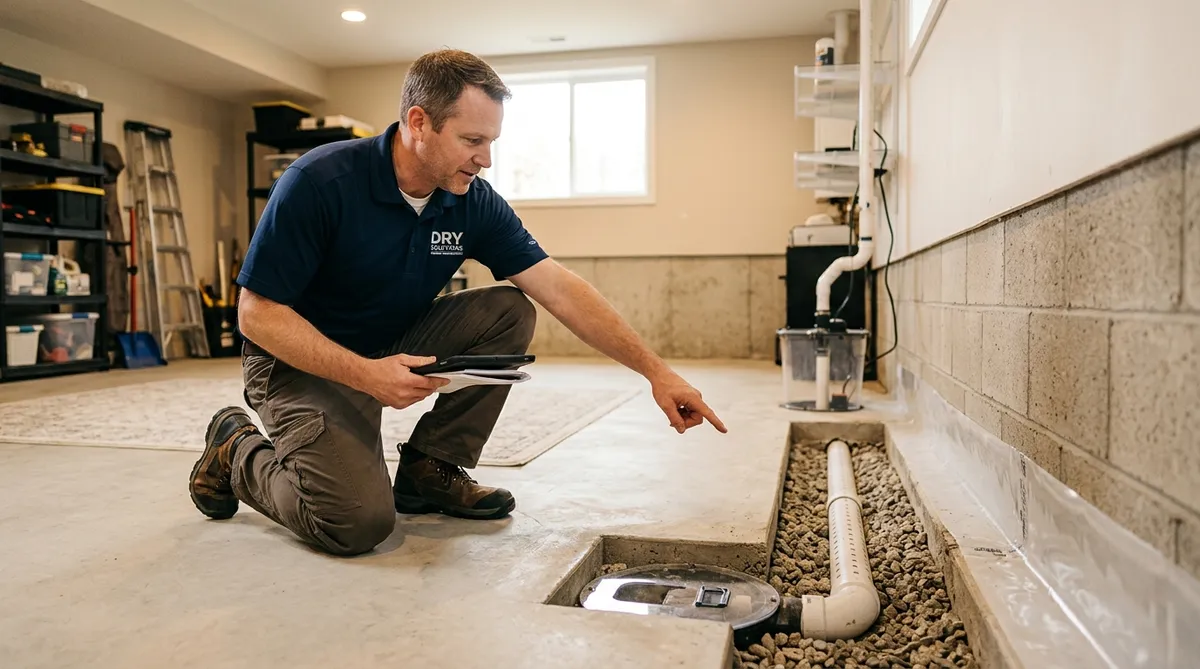
Interior drainage systems are installed inside your basement to divert water away from the walls and floor. They are often the go-to solution for existing water problems or when external access is limited.
How They Work
An interior drainage system typically involves:
- Installing a perforated pipe (weeping tile) along the perimeter of the basement floor.
- Covering the pipe with gravel and a waterproof membrane.
- Connecting the pipe to a sump pump that actively removes water.
Pros and Cons
Pros:
- Relatively quick and less invasive to install.
- Effective for managing groundwater that has already infiltrated.
- Can be combined with interior sealing for added protection.
Cons:
- Does not address the root external causes of water intrusion.
- May require ongoing maintenance of the sump pump.
- Doesn't prevent water from entering; it only manages it.
Best For
- Basements with existing water issues.
- Homes where exterior excavation isn't feasible.
- Quick mitigation while planning longer-term solutions.
Exterior Waterproofing: The Long-Term Solution
Exterior waterproofing involves treating the outside of your foundation to prevent water from penetrating in the first place.
How It Works
This method includes:
- Excavating around the foundation to expose the walls.
- Applying waterproof membranes or coatings to the exterior walls.
- Installing or repairing drainage systems like French drains.
- Ensuring proper grading away from the foundation.
Pros and Cons
Pros:
- Addresses the source of water infiltration.
- Provides a more permanent solution.
- Can improve overall foundation health.
Cons:
- More invasive and costly.
- Requires significant excavation.
- Disruptive to landscaping and landscaping repairs needed afterward.
Best For
- Homes with chronic or severe water intrusion.
- Foundations with cracks or structural issues.
- Long-term prevention rather than temporary fixes.
Which Fix Matches Your Problem?
Choosing between interior drainage and exterior waterproofing depends on your specific situation.
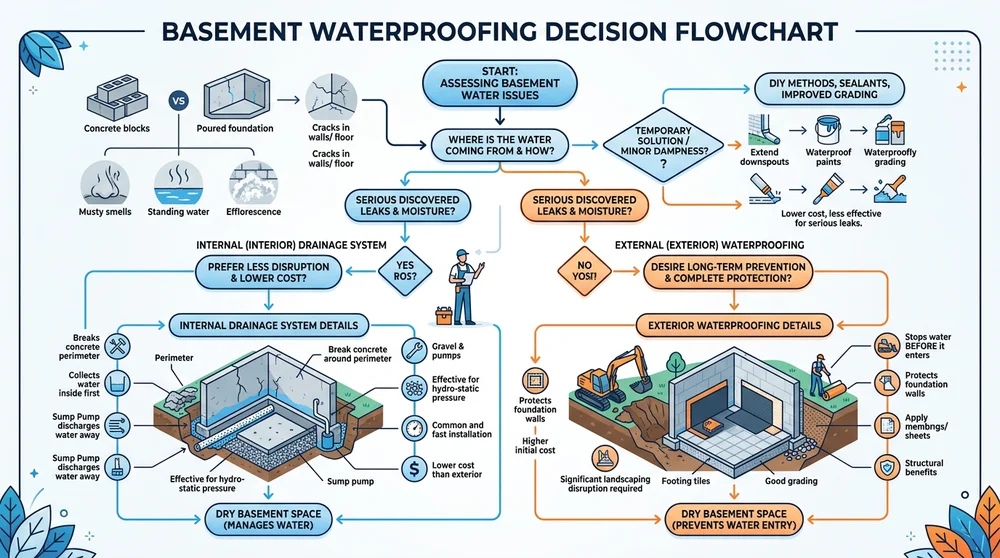
When to Opt for Interior Drainage
- Your basement is already wet.
- You need a quick fix.
- External access is limited or costly.
- The water issue is primarily groundwater-related.
When to Consider Exterior Waterproofing
- You notice ongoing dampness despite interior measures.
- The foundation has cracks or structural concerns.
- You want a long-term, preventive approach.
- You’re planning major renovations or foundation repairs.
Combining Both Approaches
In many cases, a combination of exterior waterproofing and interior drainage offers the best protection. Exterior work prevents water ingress, while interior systems manage any residual moisture.
Final Tips from the Pros
- Get a professional assessment: A licensed contractor can identify the root cause and recommend the best solution.
- Maintain proper grading: Ensure soil slopes away from your foundation.
- Keep gutters and downspouts clear: Proper drainage on your roof prevents water from pooling around your foundation.
- Monitor and maintain your systems: Regularly check sump pumps and exterior drainage components.
A wet basement doesn’t have to be a permanent problem. With the right approach and expert guidance, you can keep your basement dry and your home protected for years to come.