When Does a Majestic Tree Become a Costly Liability? Spotting Leaning Risks, Trunk Rot, and Trimming vs. Removal Costs
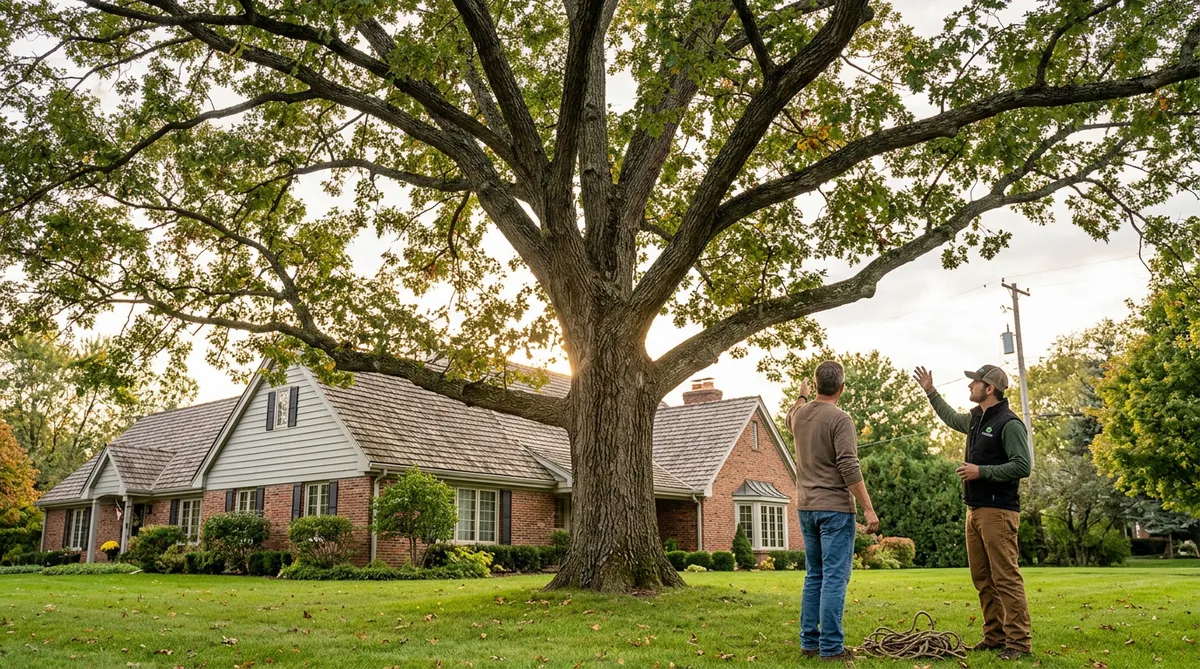
A tall, lush tree can dramatically boost your home's beauty and value, providing shade, privacy, and a natural aesthetic. However, trees are living organisms that can deteriorate over time, especially if they develop internal decay or structural issues. If left unchecked, a seemingly healthy tree can turn into a serious hazard, risking damage to your roof, power lines, or even causing injury.
Understanding the early signs of tree decline and knowing when to call in the pros for trimming or removal can save you money and prevent disaster. Here's what every homeowner should watch for.
Recognizing the Signs of a Leaning Tree
A slight lean in a tree can be natural, especially if it’s growing on a slope. But a significant or increasing lean may indicate root instability or internal decay.
What to Look For:
- Persistent leaning over time: If the tree's lean has become more pronounced over months or years.
- Cracks or splits in the trunk: Especially near the base.
- Uneven or exposed roots: Roots that are lifting out of the ground or are visibly damaged.
- Soil erosion or leaning soil: Changes in ground stability around the base.
Why It Matters:
A leaning tree, especially one with compromised roots, is at higher risk of falling during storms or high winds. Early detection allows for strategic trimming or removal before disaster strikes.
Spotting Trunk Rot and Internal Decay
Many homeowners overlook internal decay because it’s not always visible from the outside. However, certain signs can indicate a compromised trunk.
Signs of Trunk Rot:
- Hollow trunks: You can often hear or feel hollow spaces when tapping or pressing on the trunk.
- Fungal growth: Mushrooms, conks, or other fungi growing on the trunk or at the base.
- Cracks or splits: Especially if they extend deep into the trunk.
- Bark damage or peeling: Areas where bark is missing or peeling away.
- Dead or dying branches: Especially if they are located in the upper canopy.
Why It Matters:
Internal decay weakens the structural integrity of the tree, making it more susceptible to falling. Detecting these issues early can help you decide whether trimming or complete removal is necessary.
Trimming vs. Removal: Costs and Considerations
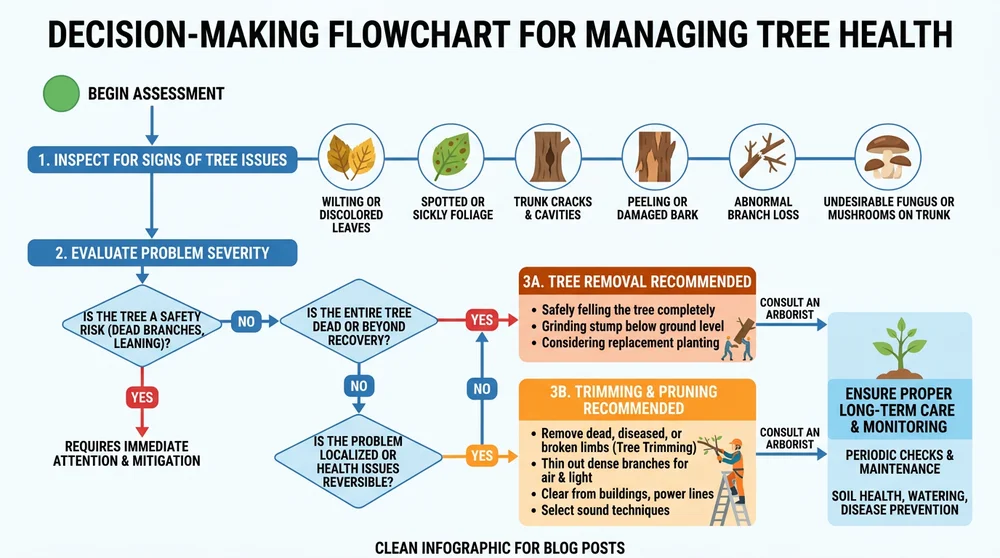
Deciding whether to prune or remove a problematic tree depends on the severity of the issues and the potential risks involved.
Trimming (Pruning)
- Purpose: Remove dead, diseased, or hazardous branches to improve safety and health.
- Cost Range: Typically $200 to $1,000, depending on tree size and complexity.
- When to Consider: If the tree is mostly healthy but has some dead branches or minor leaning issues.
- Limitations: Trimming doesn’t address root or trunk decay; it’s a temporary safety measure.
Full Removal
- Purpose: When the tree is severely decayed, structurally unstable, or poses an imminent risk.
- Cost Range: Usually $500 to $3,000 or more, depending on size, location, and complexity.
- When to Consider: If internal decay is extensive, the tree is leaning dangerously, or it’s close to structures or power lines.
- Additional Costs: Stump grinding and debris removal may add to the total.
Making the Decision
Consulting with a certified arborist is crucial. They can assess the tree’s health, stability, and risks, providing a professional recommendation tailored to your situation.
Prevention and Maintenance Tips
- Regular Inspections: Schedule annual or bi-annual tree health assessments.
- Proper Pruning: Remove dead or weak branches early to prevent decay and reduce wind resistance.
- Root Care: Avoid soil compaction or construction near the root zone.
- Storm Preparedness: During storms, be cautious of trees that show signs of instability.
When to Call the Pros
If your tree exhibits any of the warning signs—such as leaning, trunk rot, fungal growth, or cracked branches—it's time to contact a licensed arborist. They can perform a detailed assessment, including potentially using tools like resistograph or sonic tomography to evaluate internal decay.
By staying vigilant and proactive, you can enjoy the beauty of your trees while keeping your home and loved ones safe. Remember, when in doubt, it’s always better to err on the side of caution and seek professional advice.
Your trees are a valuable part of your landscape—treat them with care to ensure they remain a source of pride, not peril.