
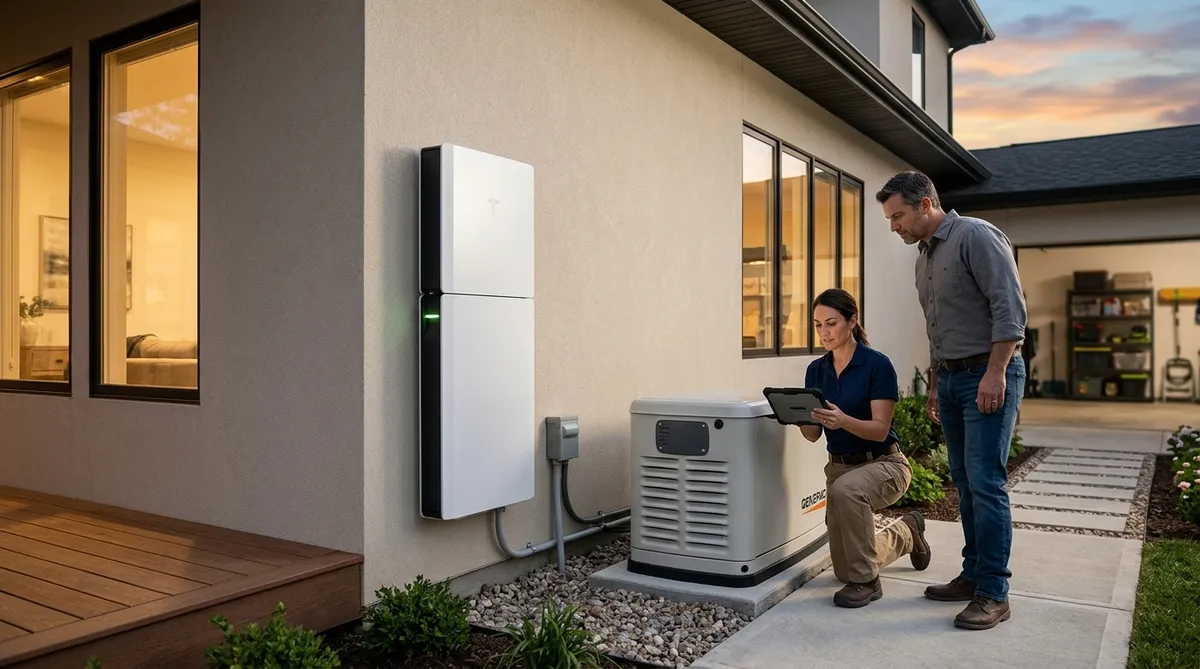
Whole-Home Battery Backup vs. Standby Generator: Which Is the Right Power Solution for Your Home?
Power outages can be more than just an inconvenience—they can disrupt your daily life, compromise your home’s safety, and even damage appliances. As homeowners seek reliable backup power solutions, two options stand out: whole-home battery backups and standby generators. While both serve the purpose of keeping your lights on and appliances running during outages, they differ significantly in cost, runtime, maintenance, and ideal use cases. In this guide, we'll break down the honest costs, runtimes, and scenarios where each option shines.
Understanding the Basics
Whole-Home Battery Backup
A whole-home battery backup system stores electricity, typically from the grid or solar panels, in large batteries. During an outage, the system seamlessly switches to battery power, providing clean, silent, and emissions-free energy to your home.
Key Features:
- Quiet operation
- No fuel required
- Can be integrated with solar panels
- Usually connected to your electrical panel
Standby Generator
A standby generator is a fuel-powered machine, usually running on natural gas, propane, or diesel, that automatically kicks in when the power goes out. It generates electricity on-site, providing a reliable backup source.
Key Features:
- Powerful and capable of running entire homes
- Automatic transfer switch
- Can run for extended periods
- Emits noise and exhaust
Cost Comparison
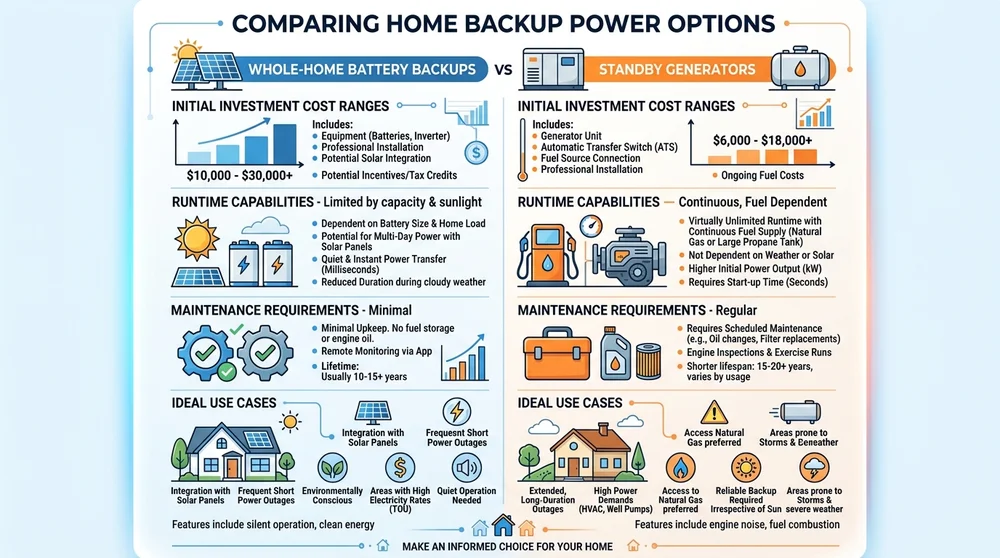
Initial Investment
Whole-Home Battery Backup:
- Typically ranges from $10,000 to $20,000 including installation.
- Cost depends on capacity, brand, and whether it’s paired with solar.
Standby Generator:
- Usually costs between $7,000 and $15,000 for the unit and installation.
- Larger, more powerful units cost more.
Operating & Maintenance Costs
Battery Backup:
- Minimal ongoing costs.
- Batteries may need replacement every 10-15 years, costing around $5,000 to $10,000.
- No fuel costs or emissions.
Generator:
- Fuel costs vary depending on usage.
- Regular maintenance (oil changes, filter replacements) can cost $200 to $500 annually.
- Potentially expensive repairs over time.
Long-Term Cost Considerations
While the upfront costs are comparable, the ongoing expenses and maintenance requirements can influence your decision. Batteries are low-maintenance but may need replacement after a decade, whereas generators require fuel and regular upkeep.
Runtime and Power Capacity
Whole-Home Battery Backup
- Runtime: Typically provides power for a few hours during an outage, enough for essential circuits.
- Capacity: Ranges from 10 kWh to over 100 kWh; larger systems can support more appliances.
- Limitations: Not ideal for extended outages unless multiple batteries are installed.
Standby Generator
- Runtime: Can run continuously as long as fuel is available.
- Capacity: Capable of powering entire homes, including HVAC, refrigerators, and lighting.
- Limitations: Fuel supply limits runtime; during prolonged outages, refueling or fuel delivery is necessary.
Use-Case Scenarios
Whole-Home Battery Backup Is Ideal When:
- You experience frequent short outages.
- You want a silent, emissions-free solution.
- You have solar panels and want to maximize renewable energy use.
- You prefer low maintenance and minimal noise.
- Your budget favors a lower ongoing cost.
Standby Generator Is Ideal When:
- You face long or infrequent outages.
- You need to power your entire home continuously.
- You have a reliable fuel supply or access to fuel delivery.
- You want a solution that can run for days if necessary.
- Noise and emissions are less of a concern.
Final Thoughts
Choosing between a whole-home battery backup and a standby generator depends on your specific needs, budget, and the typical outage duration in your area. Batteries offer a clean, quiet, and low-maintenance solution for short-term outages and are increasingly compatible with solar energy. Generators, on the other hand, provide robust, long-term power for extended outages, especially when fuel availability isn't an issue.
Consult with a licensed home energy professional to assess your home's power needs, local outage patterns, and budget constraints. With the right backup system in place, you can enjoy peace of mind knowing your home is prepared for whatever power disruptions come your way.